 Save
Save My neighbor Klaus taught me to make schnitzel on a rainy afternoon when I showed up unannounced at his kitchen door. He didn't fuss or follow a recipe—he just grabbed a pork chop, placed it between plastic wrap, and started pounding with practiced rhythm, talking the whole time about how his mother made it every Friday. Within minutes, the meat was paper-thin and ready, and he moved through the breading stations like he was dancing. That first bite, still warm with that shattering crust that released a buttery sound, made me understand why this simple dish is so beloved across Germany.
I made this for my daughter's first dinner at her own apartment, and she called me the next day just to tell me how the kitchen smelled like my version. She'd tried restaurant schnitzels before, but something about homemade—the way the butter and oil blend together, the slight char at the edges—felt like coming home to her. It became her go-to dish whenever she wanted to feel capable in the kitchen.
Ingredients
- Pork chops or chicken breasts (4, about 150 g each): Boneless cuts work best because you can pound them evenly; the thickness matters more than the exact weight, so aim for that 1/4-inch target and you'll nail it.
- All-purpose flour (100 g): This is your first barrier, helping the egg adhere and creating the initial crisp layer before the breadcrumbs take over.
- Eggs (2 large) and milk (2 tbsp): The milk thins the egg just enough so it clings without becoming gluey, a small detail that changes everything.
- Fine dry breadcrumbs (150 g): Use panko if you want extra crunch, or fine breadcrumbs for a more delicate crust—both are authentic, just different moods.
- Vegetable oil or clarified butter (120 ml): Clarified butter is traditional and tastes better, but any neutral oil works; the amount seems generous until you realize you need enough to almost halfway coat the cutlet for that restaurant-quality golden color.
- Salt and freshly ground black pepper: Season generously—thin meat needs bold seasoning to shine through all those layers.
Tired of Takeout? 🥡
Get 10 meals you can make faster than delivery arrives. Seriously.
One email. No spam. Unsubscribe anytime.
Instructions
- Pound the meat to paper-thin:
- Place each piece between plastic wrap and strike it with a meat mallet or the flat end of a rolling pin, working from the center outward with steady, even strokes until it reaches 1/4 inch thick. The plastic keeps splatter off your counter and lets you see exactly how even your work is.
- Season with intention:
- Sprinkle both sides of the pounded cutlets generously with salt and pepper—this is your only chance to season the meat itself, so don't hold back.
- Set up your breading stations:
- Arrange three shallow plates or bowls in a line: flour in the first, beaten eggs mixed with milk in the second, breadcrumbs in the third. This assembly-line method keeps your hands slightly less messy and your rhythm smooth.
- Bread each cutlet with precision:
- Coat the meat in flour and shake off the excess, then dip it into the egg mixture, making sure every surface is wet, then press it gently into breadcrumbs—don't mash it or you'll compress the coating and lose the crunch. If you feel like the coating is thin, a second dip in egg and breadcrumbs is perfectly fine and adds to the crispiness.
- Heat your fat to the right temperature:
- Get the oil or clarified butter hot enough that it shimmers and a breadcrumb sizzles immediately when it hits the pan—medium-high heat is your target, and this usually takes about 2–3 minutes. If it's not hot enough, the coating will absorb oil and become greasy; too hot and the outside burns before the inside cooks.
- Fry until golden and cooked through:
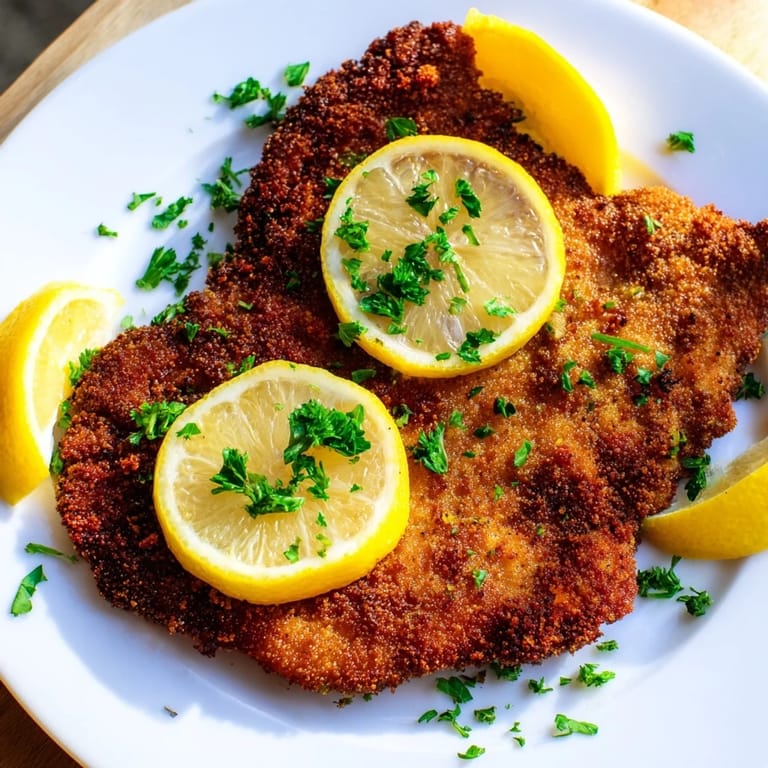
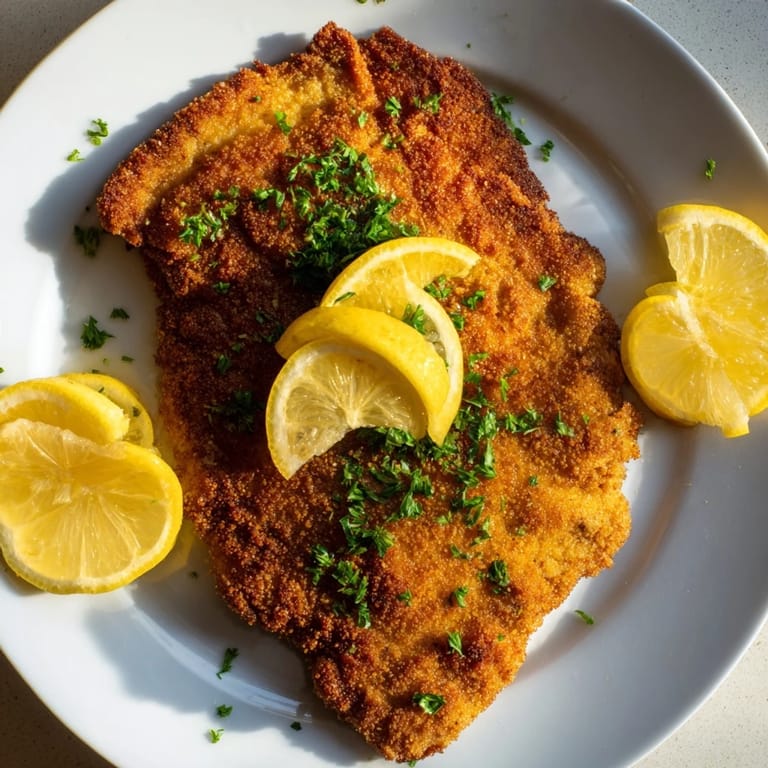
- Add the cutlets carefully (they'll sizzle dramatically) and let them sit undisturbed for 2–3 minutes until the bottom is deep golden, then flip and cook the other side for another 2–3 minutes. You're looking for a color that's almost mahogany, and the meat should be opaque and firm when you press it lightly with your finger.
- Drain and rest briefly:
- Transfer the schnitzels to a paper towel-lined plate for just a minute—long enough to remove excess oil but not so long that they cool down and lose their crackle.
- Serve while the warmth still matters:
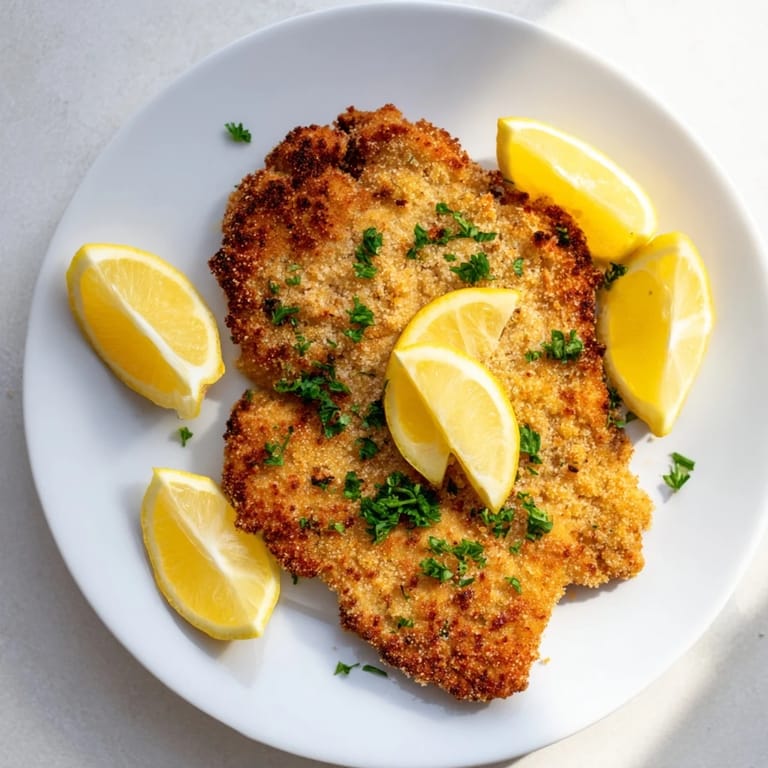
- Plate immediately with fresh lemon wedges and a scatter of chopped parsley if you have it, and watch how people's faces change at that first bite.
 Save
Save My friend Maria once complained that her schnitzel was always soggy, and I realized she was stacking them on a plate right after frying, steaming away all that crispness she'd worked so hard to create. That one small change—giving them a minute on paper towels and serving them immediately—transformed her entire relationship with this dish. Sometimes the magic isn't in fancy ingredients; it's in respecting the cooking process.
The Sound of a Perfect Schnitzel
There's an actual noise that tells you everything is going right—when that cutlet hits the hot fat, it should sizzle loudly and immediately, almost aggressively. If you hear just a quiet hiss, your pan isn't hot enough and you'll end up with an oily coating instead of a crispy shell. Listen for that confident sizzle, and you're halfway to success.
Side Dish Wisdom
In Germany, schnitzel never appears alone—potato salad dressed with vinegar and a little warmth, crisp cucumber salad with dill, or golden fries are the traditional companions. The acidity and crunch of these sides balance the richness of the fried coating, and together they create a meal that feels complete and generous. My favorite pairing is actually the simplest: a cold pilsner beer and a wedge of lemon to squeeze over everything while it's still steaming.
Timing and Freezing
You can pound and bread your cutlets several hours ahead, then cover them with plastic wrap and refrigerate until you're ready to fry—in fact, this helps the breadcrumbs adhere even better. If you want to be ambitious, you can even bread them, freeze them, and fry directly from frozen, adding just 1–2 minutes to the cooking time and keeping the centers juicier than if you'd thawed them first. Just remember to work in smaller batches when cooking frozen cutlets so your pan temperature doesn't plummet.
- Refrigerate breaded cutlets for up to 8 hours, or freeze for up to three months.
- Never thaw frozen schnitzels before frying—they cook more evenly straight from the freezer.
- Leftover cooked schnitzel tastes wonderful cold the next day, sliced into a sandwich with mustard and pickles.
 Save
Save This is the kind of dish that reminds you why simple food, made with care and attention to small details, outshines complicated recipes every single time. Once you've made schnitzel at home, you'll understand why it's been feeding German families for generations.
Recipe Questions
- → What type of meat is best for schnitzel cutlets?
Boneless pork chops or chicken breasts pounded to about 1/4 inch thickness work best for even cooking and tenderness.
- → How do you achieve a crispy crust on the cutlets?
Coat the meat evenly in flour, egg mixed with milk, and fine dry breadcrumbs without pressing too firmly. Fry in hot oil or clarified butter until golden.
- → What is the purpose of pounding the meat thin?
Pounding tenderizes the meat and ensures quick, even cooking with a delicate texture.
- → Which fats are recommended for frying?
Vegetable oil or clarified butter (Butterschmalz) are ideal for frying due to their high smoke points and flavor.
- → What sides complement this dish traditionally?
Potato salad, cucumber salad, or fries are common traditional accompaniments, enhancing the overall meal experience.
- → Can veal be used instead of pork or chicken?
Yes, substituting veal creates an authentic Wiener schnitzel with a similar preparation and flavor profile.