 Save
Save There's something about a salad that doesn't feel like deprivation—and this one taught me that lesson while I was trying to impress someone at a lunch party years ago. I'd thrown together whatever colorful things I had on hand: quinoa I'd been meaning to cook, some chickpeas from the pantry, fresh herbs because it was summer and they were practically growing out of my kitchen window. The moment everyone asked for the recipe, I realized I'd stumbled onto something that felt both indulgent and genuinely nourishing, the kind of dish that works whether you're eating alone at your desk or feeding a crowd on a sunny afternoon.
I made this for a friend who'd just started eating more plant-based meals, and watching her face light up when she realized how satisfying it was felt like a small victory. She kept coming back for another bite, asking what made it taste so complete, and I realized it was the way the lemon and garlic dressing brought everything together into something greater than its parts. That's when I stopped thinking of it as just a salad and started seeing it as a conversation starter.
Ingredients
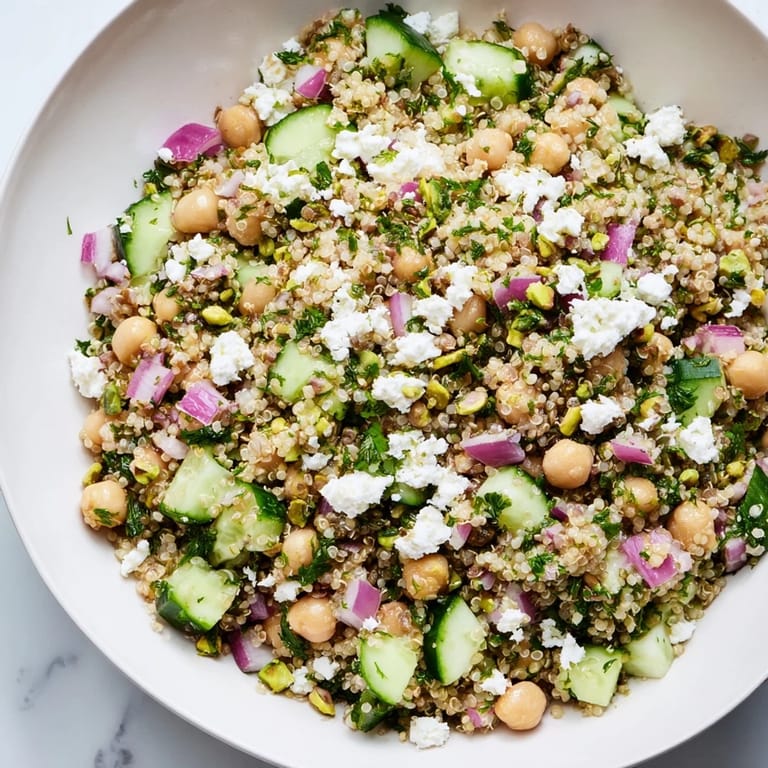
- Quinoa or bulgur, 1 cup uncooked: The grain base that absorbs all the flavors around it; quinoa gives a lighter texture while bulgur is slightly chewier—pick whichever you're in the mood for.
- Water, 2 cups: For cooking the grain, measured out simply and in the right ratio to ensure fluffy results.
- Canned chickpeas, 1 can drained and rinsed: The protein that makes this feel substantial; rinsing them removes excess sodium and that metallic taste canned goods sometimes have.
- Cucumber, 1 large diced: Adds refreshing crunch and helps balance the richness of the feta and nuts.
- Red onion, 1/2 small finely chopped: A little sharpness that brightens the whole dish without overpowering it.
- Feta cheese, 3/4 cup crumbled: Creamy, salty, tangy—it's the ingredient that transforms this from healthy to genuinely craveable.
- Fresh parsley, 1/2 cup chopped: Brings a clean, almost peppery note that makes everything taste fresher.
- Fresh mint, 1/4 cup chopped: A whisper of brightness that cuts through the richness and feels almost surprising in a savory context.
- Pistachios or slivered almonds, 1/3 cup toasted and chopped: Toast them yourself if you can—that's where the real magic happens, when they become nutty and warm instead of just crunchy.
- Extra virgin olive oil, 3 tablespoons: Use one you actually like tasting because this small amount matters more than you'd think.
- Lemon juice, 2 tablespoons freshly squeezed: Bottled will work in a pinch, but fresh really does change the brightness.
- Garlic, 1 clove minced: Becomes almost sweet when whisked into oil and lemon, softening the acidity.
- Sea salt and black pepper: The final adjustments that make it taste like you, not like a recipe.
Tired of Takeout? 🥡
Get 10 meals you can make faster than delivery arrives. Seriously.
One email. No spam. Unsubscribe anytime.
Instructions
- Prepare your grain:
- Rinse the quinoa or bulgur under cool running water—this step actually matters because it removes the bitter coating on quinoa and makes both grains taste cleaner. Bring the water to a boil in your saucepan, add the grain, then lower the heat to a gentle simmer, cover it, and let it cook until it's tender with just a tiny bit of resistance when you bite down, about 12 minutes for quinoa or 15 for bulgur.
- Cool it down:
- Spread the cooked grain on a cutting board or wide plate if you're in a hurry, or just fluff it with a fork and let it sit at room temperature for a few minutes. You want it cool enough to handle comfortably but still warm when it goes into the bowl—warm grains actually absorb flavors better.
- Build your salad:
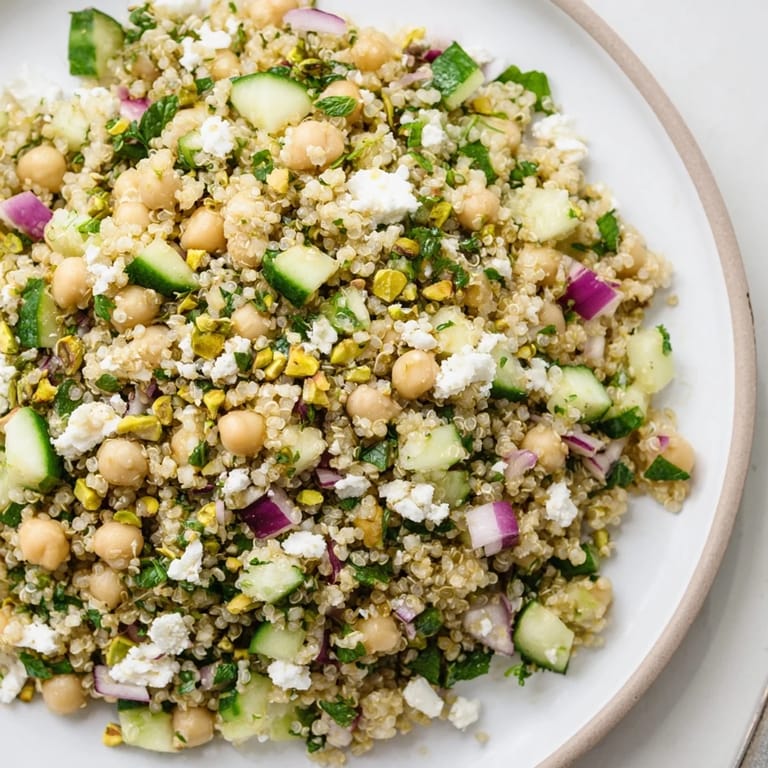
- In a large bowl, combine your cooled grain with the drained chickpeas, diced cucumber, red onion, crumbled feta, parsley, mint, and toasted nuts. This is where it starts to look beautiful, so take a moment to appreciate it before you dress it.
- Make the dressing:
- In a small bowl, whisk together the olive oil, lemon juice, minced garlic, salt, and pepper—the garlic will soften as the lemon juice works on it, creating a dressing that's smooth and balanced. Taste it before you pour it on the salad and adjust if it needs more lemon brightness or a touch more salt.
- Bring it together:
- Pour the dressing over the salad and toss everything gently, being careful not to crush the chickpeas or pulverize the feta into dust. Taste a bite and adjust the seasoning—sometimes you need just a pinch more salt, sometimes a squeeze more lemon, and that intuition is yours alone.
 Save
Save There was an afternoon when I made this salad on autopilot, not really thinking, just assembling ingredients while on a work call. By the time I sat down to eat it, the flavors had melded into something almost transcendent—the lemon and garlic had softened, the feta had started to yield, the nuts were still holding their dignity. I realized that sometimes the best meals are the ones we don't overthink.
Why This Salad Works
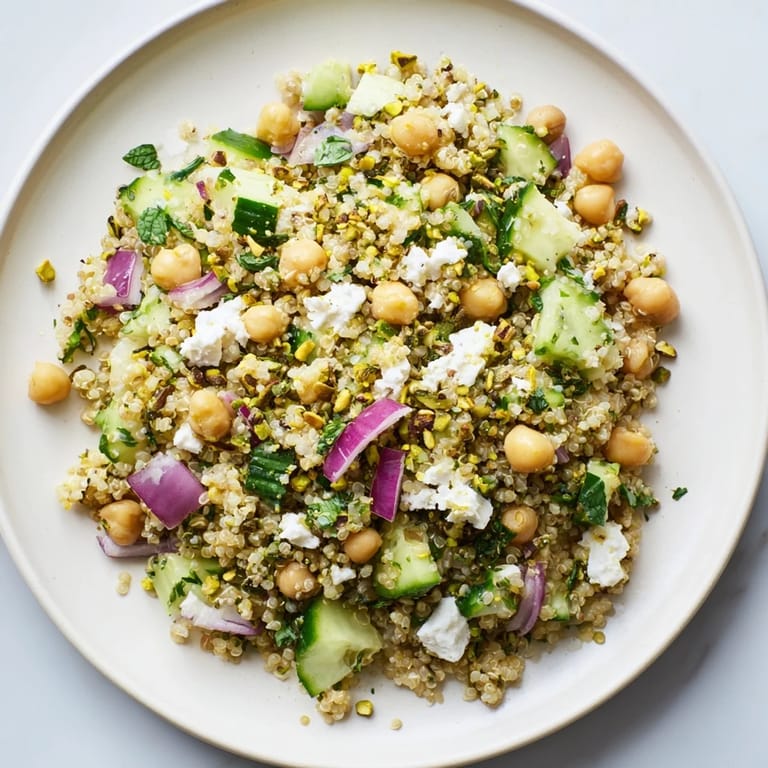
There's an elegance to Mediterranean cooking that comes from letting each ingredient speak for itself while also supporting everything else around it. The grain provides ballast, the chickpeas add protein and earthiness, the fresh herbs and lemon dressing keep everything feeling alive and bright, and the feta and nuts add the richness that makes you feel satisfied rather than deprived. It's a formula that works because it's balanced—nothing is fighting for attention, but nothing is invisible either.
Making It Your Own
The beautiful thing about this salad is that it's more of a framework than a strict recipe. I've made it with diced avocado stirred in at the last second, with sun-dried tomatoes for a warmer note, with walnuts when pistachios were too expensive that week. For a vegan version, cashew cream or just extra lemon and olive oil replaces the feta entirely. The core structure stays the same, but the details shift with what you have and what you're craving.
Serving and Storage
This salad is forgiving in the best way—it works chilled straight from the fridge, it works at room temperature on a summer day, and it works as a side dish next to grilled chicken or fish if you want to make it part of a larger meal. I've packed it in jars for lunch and eaten it three days later with barely any degradation in quality. Store it in an airtight container, keep the dressing separate if you're being careful about texture, and it will last you through most of the week.
- Make the components ahead and assemble everything together just before eating if you want maximum crunch and freshness.
- Double the dressing recipe if you like things more generous with oil and lemon—there's no harm in that.
- If the salad sits for a while and starts to feel dry, just toss in a splash more olive oil and a squeeze more lemon juice.
 Save
Save This salad has become something I reach for when I want to feel good about what I'm eating without any sacrifice of actual pleasure. It's the kind of dish that reminds you that nourishing food and delicious food are not opposing forces—they're the same thing.
Recipe Questions
- → Can I substitute quinoa with bulgur?
Yes, bulgur can be used as an alternative to quinoa, providing a similar texture and nutty flavor when cooked properly.
- → How do I toast the nuts evenly?
Toast nuts in a dry skillet over medium heat, stirring frequently until golden and fragrant, which usually takes about 3-5 minutes.
- → Is it possible to make this dish vegan?
To make it vegan, omit the feta cheese or use a plant-based cheese alternative without compromising the fresh flavors.
- → How should the salad be stored if made in advance?
Store the salad in an airtight container refrigerated for up to two days. Add dressing just before serving to keep freshness.
- → What are good additions to enhance flavor?
Adding diced avocado or sun-dried tomatoes can provide extra richness and depth, complementing the vibrant ingredients well.