 Save
Save My grandmother used to make cepelinai on Sunday mornings, filling our kitchen with the smell of bacon crisping in a cast-iron pan while potato dough rested on the counter. The first time I tried shaping them myself, my hands were shaking slightly—I was terrified the filling would burst through as I sealed each dumpling. But there's something magical about that moment when you feel the dough come together perfectly, warm and smooth in your palms, and you know you've got the touch. Now every time I make them, I'm transported back to her kitchen, watching her work with such quiet confidence. These dumplings have become my way of keeping that memory alive.
I remember serving these to my partner's family for the first time, nervous about whether this very Lithuanian dish would land with people who'd never had them before. As they took their first bites, the whole table went quiet—then someone asked for seconds before finishing their first plate. That's when I realized cepelinai aren't just food; they're a conversation starter, a bridge between different kitchens and families.
Ingredients
- Starchy potatoes (1.5 kg raw, peeled): The foundation of everything—they need to be starchy so they hold together without becoming gluey. Russet or Yukon Gold work beautifully.
- Boiled and mashed potatoes (2 medium): This is the secret ingredient nobody talks about; they add moisture and help bind everything together in a way that pure raw potato can't.
- Salt (1 tsp): Season generously here because the dough absorbs it.
- Potato starch (1 tbsp, optional): If your potatoes release a lot of liquid, this saves you; if you can't find it, just squeeze harder.
- Ground pork (250 g) and ground beef (150 g): The combination gives better flavor than either alone, but use what you have on hand.
- Onion and garlic for filling: Raw onion and garlic matter here because they stay sharp and bright inside the dumpling.
- Bacon or smoked pork belly (150 g, diced): Don't skip this or use regular pork—the smoke and fat are what make the sauce sing.
- Sour cream (300 ml): Full-fat is non-negotiable; anything else tastes thin and sad.
- Fresh dill (1 tbsp, chopped): Optional on paper, essential in spirit—it brightens everything and feels very Lithuanian.
Tired of Takeout? 🥡
Get 10 meals you can make faster than delivery arrives. Seriously.
One email. No spam. Unsubscribe anytime.
Instructions
- Prepare the potatoes:
- Grate your raw potatoes on the fine side of the grater and immediately wrap them tightly in cheesecloth or a clean kitchen towel. Squeeze with all your strength—this is the moment that determines everything. You want them as dry as possible, almost uncomfortably squeezed.
- Capture the starch:
- Pour the liquid you just squeezed out into a bowl and let it sit for a few minutes; the white starch will settle to the bottom. Carefully pour off the water and reserve that starch—it's your insurance policy if the dough gets too wet.
- Build the dough:
- Combine the squeezed raw potatoes with the mashed boiled potatoes, salt, and a spoonful of that reserved starch. Mix gently with your hands until it feels like a cohesive, slightly sticky dough. If it's still too wet, add more starch one pinch at a time.
- Make the filling:
- In a separate bowl, combine ground pork, ground beef, finely chopped onion, minced garlic, salt, and pepper. Mix with your hands until everything is evenly distributed and the mixture holds together when squeezed.
- Shape the dumplings:
- Wet your hands under cold water (this prevents sticking, trust me). Take a portion of potato dough about the size of a large egg, flatten it into a thin patty in your palm, and place a heaping tablespoon of meat mixture in the center. Carefully fold the dough edges up and around the filling, sealing it completely so no meat peeks through. Shape into an oval that's roughly the size of your thumb—it should feel smooth and whole in your hand.
- Simmer gently:
- Bring a large pot of salted water to a gentle simmer (not a rolling boil; this matters because rough water tears them apart). Carefully slide the dumplings in, a few at a time, and let them settle. They'll sink at first, then float after 15–20 minutes; cook them for another 5–10 minutes after floating until they feel completely firm when you tap one with a spoon.
- Create the sauce:
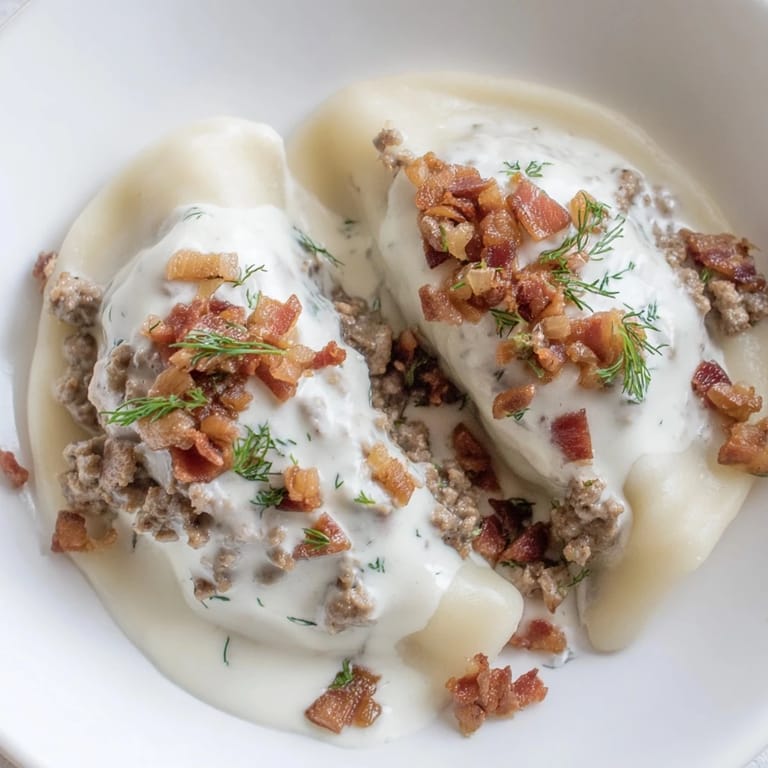
- While the dumplings cook, dice your bacon and fry it in a skillet over medium heat until the edges are crispy and the fat is rendered. Add finely chopped onion and let it soften in that bacon fat until golden. Lower the heat and stir in the sour cream and fresh dill, heating just until steaming—never let it boil or it will separate.
- Serve with confidence:
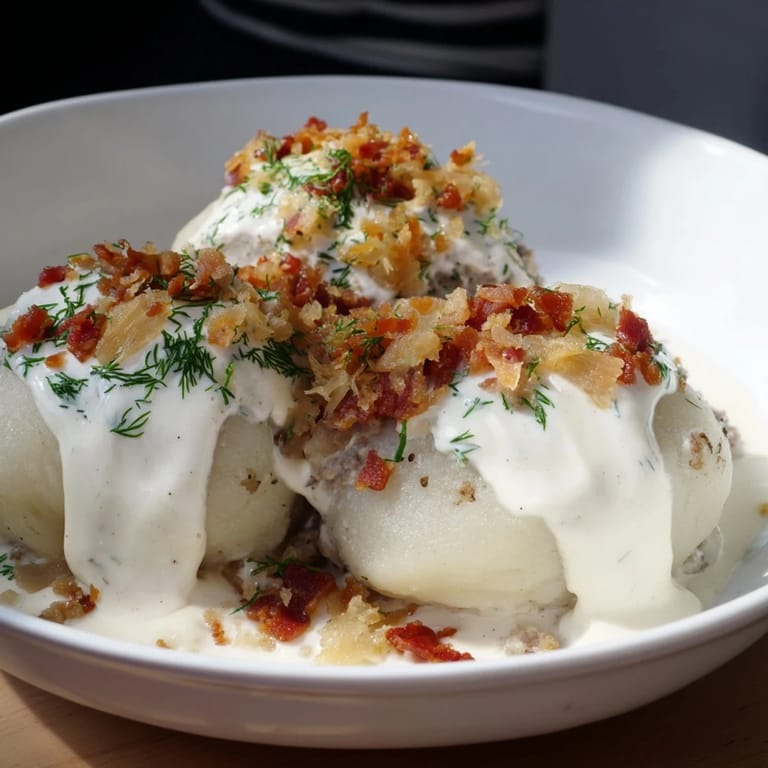
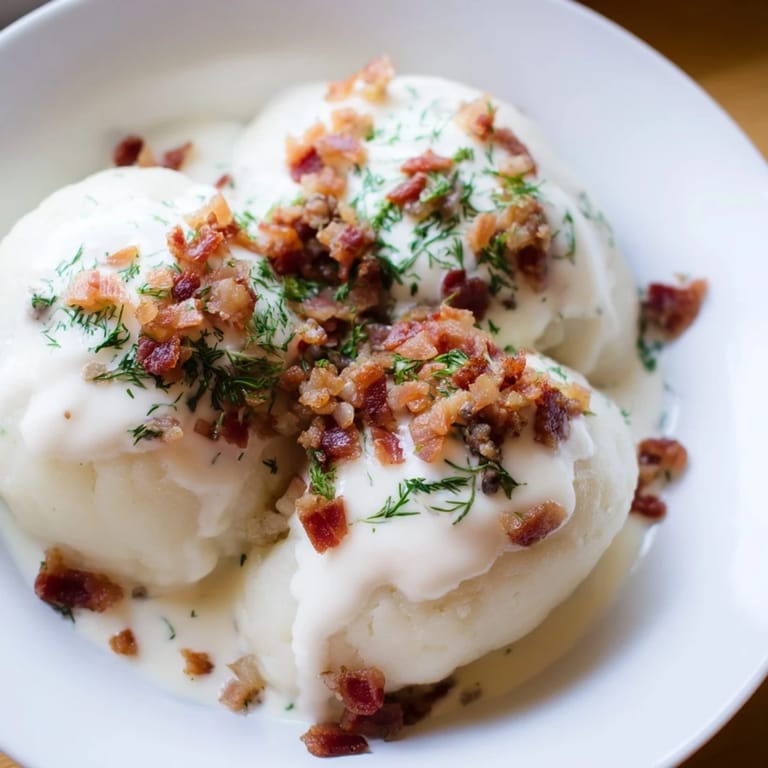
- Transfer the dumplings to a serving platter with a slotted spoon and ladle that glorious bacon and sour cream sauce generously over the top. Watch people's faces as they taste them.
 Save
Save There was an afternoon when my sister came home exhausted from work and I had cepelinai waiting for her. She sat at the table, took one bite, and suddenly tears were running down her face—not from sadness, but from the comfort of it all. That's when I understood these aren't just dumplings; they're a way of saying you're loved.
The Art of Getting the Dough Right
The dough is temperamental, but only because it's alive in a way—it responds to humidity in the air, the starch content of your specific potatoes, even the season. On humid days, you'll need more starch; on dry days, less. The key is to trust your hands more than the recipe. If it feels too wet and sticky after you've mixed it, add starch in tiny amounts. If it feels crumbly and won't hold together, wet your hands and keep mixing. You're looking for something that feels smooth and slightly tacky, like a baby's skin.
When to Make Them Ahead
These dumplings are perfect for a Sunday afternoon when you have time to shape them slowly, paying attention to each one. But if you're planning ahead, you can shape them and freeze them on a baking sheet, then transfer to a bag for later—cook them straight from frozen, just add a few extra minutes to the simmering time. I've also discovered that leftover cepelinai are incredible the next day, sliced and pan-fried in butter until they're golden and crispy. It's a totally different dish, but equally delicious.
Variations Worth Trying
While the traditional meat-filled version is sacred to me, there are beautiful variations that honor the spirit of the dish. For vegetarians, a filling of sautéed mushrooms, caramelized onions, and fresh herbs becomes deeply satisfying. You can also mix half the meat filling with grated cheese and herbs for a richer flavor, or even make a small batch with a spiced potato and caramelized onion filling for variety. The framework is flexible; what matters is treating the dough with respect and whatever filling you choose with generosity.
- A handful of fresh herbs like parsley or chives mixed into the meat filling adds brightness.
- Smoked paprika in the filling echoes the bacon in the sauce and creates beautiful depth.
- Save any extra sauce to drizzle over mashed potatoes or roasted vegetables the next night.
 Save
Save Make cepelinai when you want to cook something that feels like love. They take time and attention, but the result is worth every moment.
Recipe Questions
- → What type of potatoes work best for Cepelinai?
Starchy potatoes are ideal as they provide the right texture and help bind the dough when grated and mashed.
- → Can the filling be varied?
Yes, while traditional fillings use pork and beef, vegetarian alternatives with sautéed mushrooms and onions can be used.
- → How do I prevent the dumplings from falling apart during cooking?
Use potato starch or ensure potatoes are well squeezed to bind the dough firmly. Simmer dumplings gently without boiling vigorously.
- → What is the best way to serve Cepelinai?
Serve hot topped with a sauce made from crispy bacon, sautéed onions, sour cream, and dill for a balance of smoky and creamy flavors.
- → Is potato starch necessary in the dough?
Potato starch is optional but helps the dough hold together better. If unavailable, squeeze the grated potatoes thoroughly to remove excess liquid.
- → Can I prepare the dough ahead of time?
Preparing the dough ahead is possible, but shape and cook dumplings fresh to maintain texture and prevent drying.