 Save
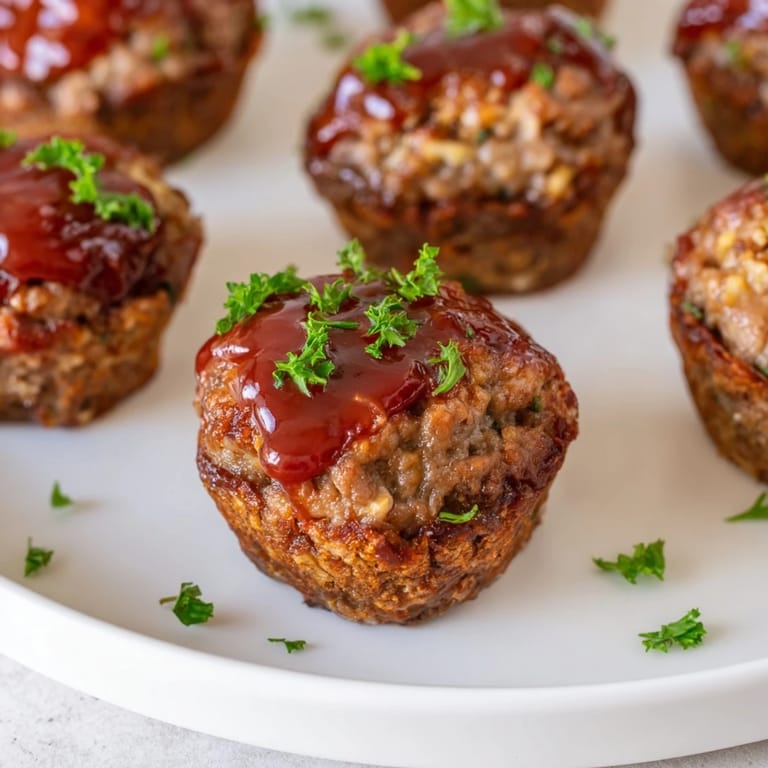
Save There's something about watching a meatloaf transform from a flat, forgettable casserole dish into twelve perfect little parcels of savory comfort that made me realize I'd been approaching this dish all wrong. The first time I baked mini meatloaf bites, my daughter grabbed one straight from the cooling rack—still steaming—and said nothing but took another bite, which was all the validation I needed. That maple-mustard glaze caramelizes into this glossy, tangy-sweet shell that tastes restaurant-quality, and honestly, I've stopped making the traditional loaf altogether. There's an ease to this format that feels like a gift, especially on nights when everyone's hungry at different times.
I remember pulling these out of the oven during a chaotic Tuesday when my mother-in-law dropped by unannounced, and instead of panicking about the simple dinner I had planned, I suddenly had something that looked intentional and impressive. The smell hit her the moment she walked in—that caramelized maple-mustard-beef combination that somehow smells more sophisticated than it should. She ate two in a row without asking what they were, and when she finally did, her surprise that something so polished came from a muffin tin made my entire week.
Ingredients
- Ground beef (85% lean): The sweet spot between flavor and moisture—lean enough that you won't end up with grease pooling in your tin, but still rich enough that the bites stay tender.
- Breadcrumbs: This is your secret to a tender crumb—don't skip soaking them in milk, or you'll end up with dense, rubbery bites.
- Milk: Acts as a binder that keeps everything from becoming tough, especially important since you're not adding extra fat from cheese or cream.
- Egg: Your structural insurance—it holds everything together without being noticeable in the final bite.
- Onion and celery: Finely diced means they disappear into the mixture, adding depth without texture that some people find jarring.
- Garlic, parsley, and thyme: These are your flavor understated, never shouting, just quietly making everything taste more like food and less like just meat.
- Worcestershire sauce: The umami backbone that makes people say 'there's something good in this' even if they can't name it.
- Maple syrup and Dijon mustard: The glaze is where this recipe earns its keep—the sweetness plays against the mustard's spice in a way that feels both familiar and special.
Tired of Takeout? 🥡
Get 10 meals you can make faster than delivery arrives. Seriously.
One email. No spam. Unsubscribe anytime.
Instructions
- Set your stage:
- Preheat your oven to 375°F and lightly grease a muffin tin—this step takes thirty seconds but saves you from cursing later when something sticks.
- Soften the crumbs:
- Combine breadcrumbs and milk in a large bowl and let them sit for a few minutes while you gather the rest of your ingredients. You're watching them absorb the liquid, which is what keeps these bites from turning into hockey pucks.
- Build the mixture:
- Add the beef, egg, finely diced onion and celery, garlic, parsley, Worcestershire sauce, salt, pepper, and thyme to your breadcrumb mixture. Mix gently with your hands until everything is just combined—this is crucial, because overmixing activates the gluten in the breadcrumbs and makes everything tough.
- Fill the tin:
- Divide the mixture evenly among the muffin cups, pressing lightly to fill each one. I use a small ice cream scoop to keep portions even, which also means cooking time is consistent across the board.
- Make the glaze:
- Whisk together maple syrup, Dijon mustard, and ketchup in a small bowl. Taste it—it should make your eyes widen a little at how balanced it is.
- First glaze:
- Spoon or brush half of the glaze over the tops of each mini meatloaf. The glaze will seep down the sides as they bake, creating this glossy exterior.
- First bake:
- Bake for 20 minutes, then remove the tin from the oven and brush the remaining glaze on top. This two-step glaze approach lets each layer caramelize slightly, building flavor instead of just coating.
- Final bake and rest:
- Return to the oven for another 5 minutes, until the internal temperature reaches 160°F. Let them rest for 5 minutes—this is when the residual heat finishes cooking the centers and the juices redistribute so nothing's dry.
- Release and serve:
- Run a thin knife around each meatloaf to loosen it, then gently lift out. They should come free easily, and that small moment of release is satisfying in a way that shouldn't matter but does.
 Save
Save There was an evening when my son came home from school exhausted and asked for 'something that tastes like home,' and I reheated three of these alongside some simple mashed potatoes, and something about the ritual of the meal—small portions, that glossy glaze catching the kitchen light—made the moment feel bigger than it was. Food can do that sometimes, turning a regular Tuesday into something that sticks with you.
Why the Muffin Tin Method Works
The muffin tin isn't just a cute hack—it's genuinely a better vessel for meatloaf. Each bite cooks evenly from all sides, which means no dry edges or undercooked centers, and the structure of the tin naturally portions the mixture for you. I stopped fighting with unmolding a traditional loaf the moment I realized I was making my life harder for no reason, and this format turned something I used to dread into something I actually look forward to making.
Making It Your Own
The base recipe is solid, but it's also forgiving enough to adapt without losing its soul. I've added smoked paprika for depth, a small dash of hot sauce for someone who likes that heat, and once I used ground turkey because someone had a lighter preference that week. The formula stays true—breadcrumbs and milk, meat, seasonings, glaze—so the variations never feel like experiments gone wrong, just gentle iterations of something that already works.
Serving and Storage Wisdom
These are versatile enough to shine alongside mashed potatoes, roasted vegetables, or even a simple green salad if you want something lighter. I've also served them cold as part of a lunch spread, which surprised me by being genuinely delicious and requiring zero reheating.
- Refrigerate leftovers in an airtight container for up to three days, and they reheat beautifully in a 350°F oven for about 10 minutes.
- Freeze the unbaked mini meatloaves in the muffin tin, then pop them out and bag them for up to two months of future dinners ready to go.
- Make a double batch while you're at it—the prep time barely increases, and having backups in the freezer means you're never more than 30 minutes away from a solid dinner.
 Save
Save These mini meatloaf bites have become one of those recipes I make without thinking anymore, reaching for them when I'm tired or when I need to impress someone without actually trying. That's the mark of a keeper recipe, isn't it?
Recipe Questions
- → What type of ground meat works best?
Ground beef with moderate fat content, around 85% lean, provides moist and flavorful bites. For variations, ground turkey or chicken can be used for a lighter option.
- → How do I prevent the bites from drying out?
Mixing breadcrumbs with milk before combining with meat helps retain moisture. Avoid overmixing the meat blend to keep tenderness.
- → Can the glaze be adjusted for different tastes?
Yes, the glaze combines maple syrup, Dijon mustard, and ketchup, but you can add smoked paprika or hot sauce for added depth or heat.
- → What is the ideal baking temperature and time?
Bake at 375°F (190°C) for about 25 minutes total, applying glaze halfway through to create a caramelized finish without burning.
- → How should leftovers be stored?
Store any extra pieces in an airtight container in the refrigerator for up to 3 days, or freeze for up to 2 months to maintain freshness.