 Save
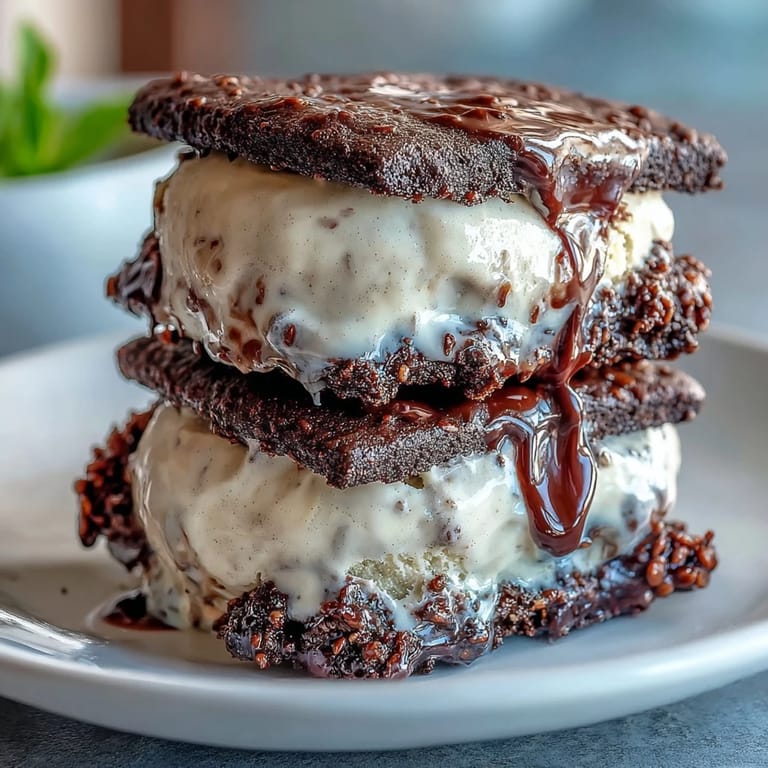
Save My neighbor's grandmother arrived from Taiwan with a small jar of black sesame paste, and I watched her eyes light up when she tasted my attempt at recreating her favorite childhood treat. She didn't say much, just nodded and asked for the recipe, which meant everything. That afternoon shifted something in how I think about desserts—it's not about impressing with complexity, but about capturing a moment of quiet joy in something simple and elegant. Black sesame ice cream sandwiches became my love letter to that conversation, to her generosity, and to the magic of discovering flavors that feel both entirely new and somehow familiar at once.
I brought these to a dinner party on a warm evening in July, still nervous about whether the ice cream had churned properly, and watched my usually reserved host actually close his eyes while eating one. His wife asked for seconds before he'd finished his first bite, and suddenly the whole table wanted to know what made them taste so different from regular ice cream. That's when I realized this dessert does something special—it slows people down, makes them pay attention, reminds them that food can be an experience rather than just something sweet to end a meal.
Ingredients
- Whole milk: Use fresh, quality milk here because it's a core flavor builder—the fat content matters more than you'd think when you're building something creamy from scratch.
- Heavy cream: This is what gives the ice cream its luxurious texture; don't skimp or substitute, as the fat is essential for that silky mouthfeel.
- Granulated sugar: Divided between the ice cream and cookies, it sweetens without overpowering the delicate sesame flavor.
- Large egg yolks: These create the custard base that makes homemade ice cream so rich; they're also why chilling the mixture beforehand is non-negotiable.
- Black sesame paste (unsweetened): This is the soul of the recipe—find it in Asian markets or online, and make sure it's unsweetened or your ice cream will be cloyingly sweet.
- Pure vanilla extract: A small amount rounds out the flavor without announcing itself; it's the supporting actor that makes the lead shine.
- All-purpose flour: The base for chewy cookies that hold their shape when wrapped around cold ice cream.
- Black sesame seeds (toasted and ground): If you can find them already toasted, great; if not, toast them yourself in a dry pan for about two minutes until fragrant, then grind in a food processor.
- Unsalted butter, softened: Softened means room temperature—cold butter won't cream properly with the sugar, and your cookies will be dense instead of tender.
Tired of Takeout? 🥡
Get 10 meals you can make faster than delivery arrives. Seriously.
One email. No spam. Unsubscribe anytime.
Instructions
- Heat your cream and milk until steaming:
- Pour them into a saucepan and watch for small bubbles forming around the edges—you're not looking for a boil, just that moment when heat starts to rise off the surface and you can smell the dairy warming. This step matters because it's about to temper your egg yolks without scrambling them.
- Whisk your egg yolks pale and thick:
- This takes longer than you think, maybe three to four minutes of whisking, but you're essentially incorporating air and creating an emulsion base. The pale, ribbon-like texture tells you the sugar has dissolved and the eggs are ready for the hot milk.
- Temper those eggs slowly:
- Pour the hot milk into the eggs in a thin stream while whisking constantly—this is not the time to rush. If you dump it all at once, you'll have scrambled eggs in your ice cream base, which is not the vibe.
- Cook the custard to the magic temperature:
- Return everything to the saucepan and stir over low heat until it reaches 170°F or coats the back of a spoon thickly enough that when you run your finger across it, the line stays. This usually takes five to seven minutes and requires patience and a good thermometer.
- Fold in the black sesame paste smoothly:
- Once off heat, whisk in the sesame paste, vanilla, and salt until completely smooth with no lumps. The warm custard will help integrate the paste more easily than if you add it to cold cream.
- Chill your mixture properly:
- Strain it through a fine sieve to catch any cooked egg bits, then let it cool to room temperature before refrigerating for at least two hours. This step prevents ice crystals and gives you a smoother final texture.
- Churn until it looks like soft serve:
- Follow your ice cream maker's instructions, but you're looking for that moment when it looks thick and creamy, like soft serve—then move it to the freezer to firm up completely.
- Mix your dry cookie ingredients:
- Whisk together flour, ground sesame seeds, baking soda, and salt in one bowl so the leavening is evenly distributed and you won't have patches of dense cookie.
- Cream your butter and sugar until fluffy:
- This takes about three minutes with an electric mixer and is worth doing properly—you're incorporating air that will make the cookies tender instead of compact. The mixture should look pale and almost mousse-like.
- Combine wet and dry without overworking:
- Mix just until no flour streaks remain; overworking develops gluten and makes tough cookies instead of chewy ones. Stop as soon as everything comes together.
- Bake until the edges set but centers stay soft:
- Flatten the dough balls slightly before baking and watch for the ten to twelve minute window when the edges look done but the centers still look slightly underbaked. They'll firm up as they cool and become perfectly chewy.
- Cool cookies completely before assembly:
- Don't skip this—you need them firm enough to hold the ice cream without shattering, and warm cookies won't have the right structure.
- Match your cookies thoughtfully:
- Pair similar-sized cookies so the sandwich holds together evenly; odd-sized pairs can cause the ice cream to squish out unevenly.
- Scoop ice cream generously:
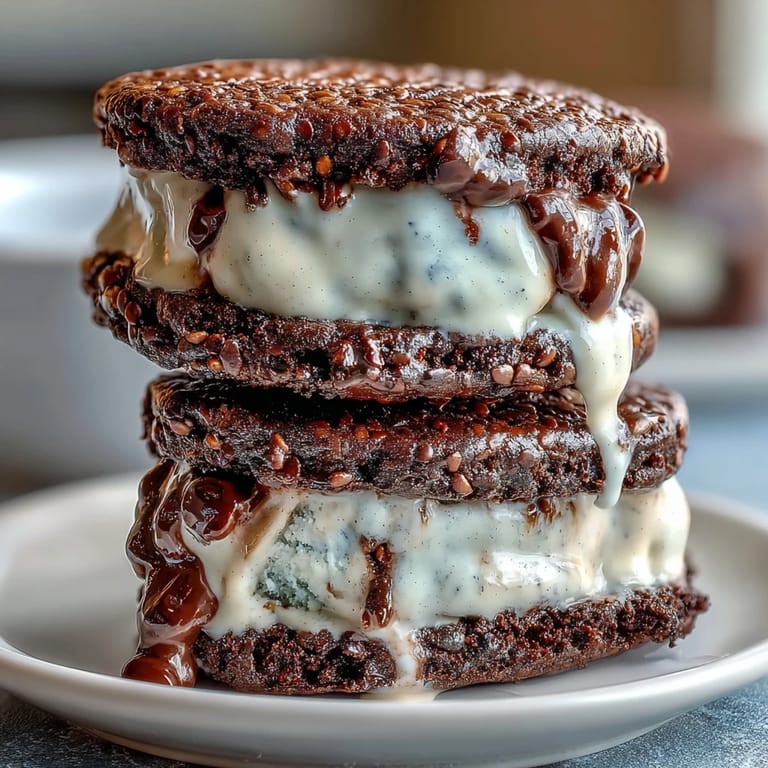
- Put a good-sized scoop on one cookie's flat side, then press gently with the second cookie to spread it evenly without crushing.
- Freeze assembled sandwiches before serving:
- Wrap them in parchment and freeze for at least an hour so the ice cream re-hardens and the sandwich holds together when you bite into it.
 Save
Save One afternoon, my roommate came home from a difficult day at work, saw these in the freezer, and ate one in silence at the kitchen counter. Afterward, she thanked me without elaboration, and that quiet moment told me more than any review ever could about what comfort food actually means. These ice cream sandwiches became something we both reached for on harder days, proof that sometimes the most meaningful meals are the ones that ask for nothing but presence.
The Black Sesame Difference
Black sesame tastes distinctly different from regular white sesame—earthier, slightly more bitter in the best way, with a depth that white sesame simply doesn't have. The first time I tasted it in ice cream form, I understood why my neighbor's grandmother had brought that small jar across the world; some flavors are worth the effort. Once you've experienced ice cream made with it, everything else tastes a bit flat by comparison.
Making Ice Cream Without a Machine
If you don't have an ice cream maker, you can still make this work by pouring the chilled custard into a shallow pan and freezing it for three to four hours, stirring vigorously every thirty minutes. It takes more elbow grease and the texture won't be quite as smooth, but the flavor will be exactly the same, and sometimes effort feels appropriate when you're creating something special. The stirring intervals matter because they break up ice crystals and incorporate air, which is what an ice cream maker does mechanically.
Serving Suggestions and Storage
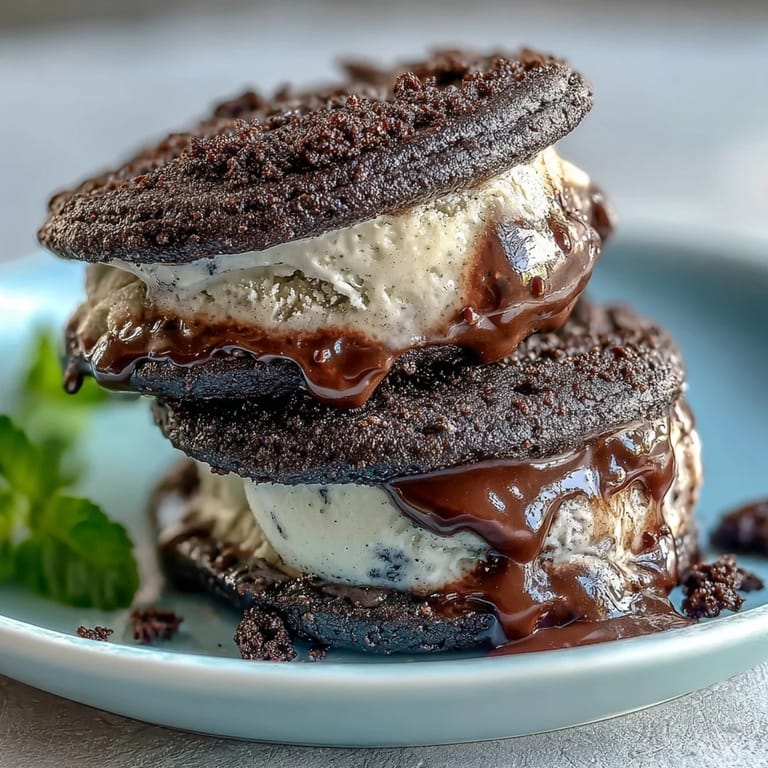
Serve these straight from the freezer with cold green tea or even a delicate oolong to echo the Asian fusion roots of the dessert. They're best eaten within two days of assembly, though they'll keep frozen for up to a week wrapped carefully in parchment and stored in an airtight container. A thin coating of extra toasted black sesame seeds on the ice cream edges looks beautiful and adds textural contrast if you want to go the extra distance.
- Roll the exposed ice cream edges in toasted black sesame seeds right after assembly for visual appeal and added nuttiness.
- Try pairing these with bitter chocolate or a light yuzu curd if you want to experiment with complementary flavors.
- Make extra cookies and freeze them separately so you can assemble fresh sandwiches throughout the week.
 Save
Save These ice cream sandwiches are proof that taking time with food—really taking time—changes not just how something tastes but what it means. Every bite carries the care of tempering eggs, the patience of waiting for ice cream to churn, and the intention of matching cookies in pairs.
Recipe Questions
- → How do I achieve a creamy texture for the black sesame ice cream?
Slowly temper the egg yolks with heated milk and cream, cook gently until thickened, then churn the mixture well before freezing for smooth creaminess.
- → What’s the best way to toast black sesame seeds for the cookies?
Toast seeds in a dry skillet over medium heat, stirring frequently until fragrant and slightly darkened, then grind finely for enhanced flavor.
- → Can I prepare the ice cream mixture ahead of time?
Yes, chilling the mixture for at least 2 hours before churning helps develop flavors and texture.
- → How long should the assembled sandwiches freeze before serving?
Freeze the sandwiches for at least 1 hour to firm up and allow flavors to meld properly.
- → Are there suggested variations to enhance the flavor?
Rolling sandwich edges in toasted sesame seeds adds crunch and intensifies nutty notes; substituting black tahini can offer a subtle twist.
- → What pairs well with the black sesame ice cream sandwich?
Serving with green tea provides a refreshing contrast that complements the rich nutty flavors.