 Save
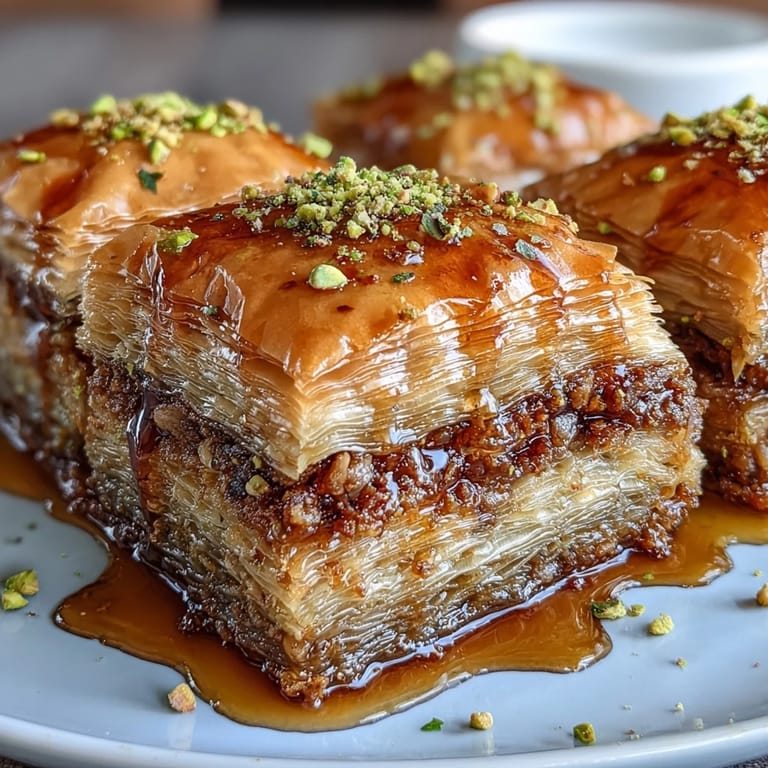
Save My neighbor brought over a tin of pistachio baklava one autumn afternoon, and the moment I bit into that first piece, something clicked. The way the phyllo shattered between my teeth, how the honey syrup pooled in the corners, the subtle earthiness of pistachios cutting through all that sweetness—it felt like a small revelation. I spent the next week pestering her for the recipe, and when she finally relented, I realized this wasn't just a dessert to make on special occasions. It became my answer to every potluck, every friend who needed comforting, every moment that deserved something a little more intentional than store-bought sweets.
I made this for my book club on a snowy evening, and halfway through reading our selection, someone quietly set down their coffee to steal another piece of baklava. By the end of the night, the tin was empty and we'd stopped talking about the book entirely. That's when I knew this recipe had crossed from just-a-dessert into something people actually remembered.
Ingredients
- Phyllo dough (16 oz): This paper-thin pastry is the soul of baklava, and thawing it slowly in the fridge (not on the counter) keeps it tender and cooperative.
- Unsalted butter (1 cup, melted): Use real butter here because it's what creates those golden, shattering layers—margarine will betray you halfway through baking.
- Shelled pistachios (2 cups, finely chopped): Toast them lightly before chopping if you want their flavor to sing, though honestly, raw works beautifully too.
- Granulated sugar (1/2 cup for filling): This sweetens the nuts without overwhelming them, and the grittiness of the sugar actually helps distribute the cinnamon evenly.
- Ground cinnamon (1 tsp): Don't skip this—it's the whisper that makes people stop and ask what that spice is.
- Honey (1 cup): The syrup's backbone, and if you can find really good honey, it makes a noticeable difference in the final taste.
- Water (3/4 cup): This tempering liquid prevents the syrup from becoming cloyingly thick.
- Granulated sugar (1/2 cup for syrup): This balances the honey's intensity and helps the syrup reach the right consistency.
- Lemon juice (1 tbsp): A small splash that cuts through richness with brightness.
- Orange blossom water (1 tsp, optional): If you have it, use it—it transforms this from good to unforgettable.
Tired of Takeout? 🥡
Get 10 meals you can make faster than delivery arrives. Seriously.
One email. No spam. Unsubscribe anytime.
Instructions
- Prepare your workspace and oven:
- Preheat to 350°F and brush your 9x13-inch baking dish with melted butter so the bottom layers don't stick. This step matters more than it sounds.
- Mix the pistachio filling:
- Combine your finely chopped pistachios, 1/2 cup sugar, and cinnamon in a bowl, stirring until the mixture looks evenly spiced. Set it aside and resist the urge to nibble it all before it hits the pastry.
- Build the bottom layers:
- Lay down 8 phyllo sheets one at a time, brushing each with melted butter as you go—this is meditative work, and rushing it shows. When you've finished this first stack, you should have a buttery, slightly translucent foundation.
- Add the first nut layer:
- Sprinkle 1/3 of your pistachio mixture evenly over the phyllo, leaving just a tiny margin around the edges. This is where the magic starts.
- Build the middle layers:
- Layer 4 more phyllo sheets with butter between each, then add another 1/3 of the nuts. Repeat this exact process one more time with 4 sheets and the final third of filling.
- Create the crown:
- Lay down the final 8 phyllo sheets, brushing each with butter to create a golden, protective top layer. At this point, your baklava should feel substantial and smell incredible.
- Cut your pieces:
- Using a sharp knife, cut the baklava into diamonds or squares while it's still slightly warm from assembly—this prevents shattering during cutting. Make clean, confident strokes rather than sawing motions.
- Bake until golden:
- Slide it into the oven for 35–40 minutes, until the top is deeply golden and you can hear a faint crackle when you peek inside. Your kitchen will smell like a Mediterranean dream at this point.
- Prepare the honey syrup:
- While baklava bakes, combine honey, water, 1/2 cup sugar, and lemon juice in a saucepan and bring to a boil. Reduce heat and let it simmer gently for 8–10 minutes until slightly thickened, then stir in orange blossom water if using.
- Pour and cool:
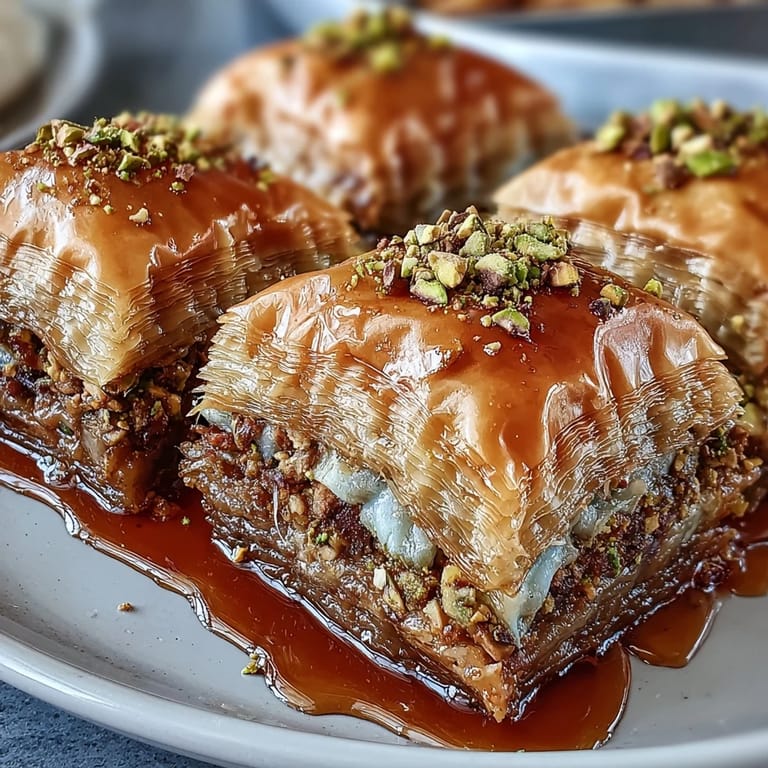
- The moment baklava comes out of the oven, pour that hot syrup evenly across the entire surface—the heat helps it seep down through all those layers. Let it cool completely before serving, which takes patience but creates the perfect texture.
 Save
Save There's a moment, right after you pour that hot syrup over the golden pastry, when the whole dessert seems to whisper thank you. Everything you've layered, every careful brush stroke of butter, every thoughtful pinch of cinnamon—it all converges into something that tastes like home, even if you're tasting it for the first time.
Why Phyllo Demands Respect
Phyllo is finicky, but that's actually its superpower. Those translucent, tissue-paper sheets seem fragile, but when you butter them properly, they crisp up into something almost glass-like. I learned this the hard way by trying to work with phyllo straight from the freezer once—it tore to shreds. Now I thaw it overnight in the fridge, keep unused sheets draped with a damp towel, and handle each one like it matters. It does.
The Syrup Timing That Changes Everything
The magic happens in those thirty seconds after the baklava emerges from the oven, when it's still steaming and the phyllo layers are relaxed and receptive. If you wait until the baklava cools, the syrup sits on top like an afterthought. But if you pour it while everything is hot, the syrup seeps through every layer, sweetening each corner while keeping the surface crisp. I've tested this enough times to be absolutely certain it's worth the attention.
Variations That Work Beautifully
Once you've made this with pistachios, you'll start seeing variations everywhere. Walnuts bring an earthier tone, almonds create a lighter flavor, and mixing nuts adds complexity without fuss. Some versions include clove or cardamom alongside the cinnamon, while others add a whisper of rose water instead of orange blossom water. My favorite discovery was adding finely chopped dried apricots to the pistachio filling—it introduces a subtle tartness that keeps the whole thing from feeling one-note sweet.
- Try a blend of pistachios and walnuts if you want to stretch your ingredients and add depth.
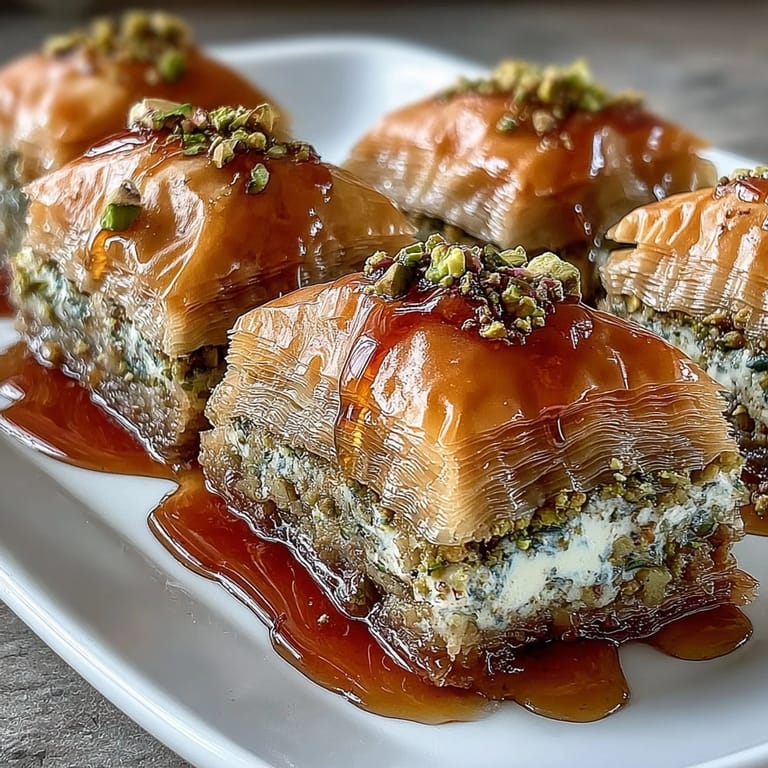
- Dust the finished baklava with finely chopped pistachios or ground cardamom while the syrup is still wet, so they cling to the surface.
- Serve alongside strong coffee or mint tea to balance the richness.
 Save
Save This baklava has become my answer to the question of how to show people you care without saying much at all. A tin of these pieces speaks louder than words ever could.
Recipe Questions
- → What kind of nuts are used in the filling?
Finely chopped pistachios form the rich and flavorful filling, but you can substitute walnuts or a mix of nuts if preferred.
- → How do you achieve the crispy layers?
Brushing each phyllo sheet generously with melted butter before layering helps create crisp and golden textures when baked.
- → What is the purpose of the syrup?
The hot honey syrup is poured immediately after baking, soaking into the layers to add moisture and a fragrant sweetness.
- → Can the syrup be flavored differently?
Yes, adding a touch of orange blossom water or lemon juice enhances the floral and citrus notes in the syrup.
- → What baking dish size is recommended?
A 9x13-inch baking dish is ideal to ensure even layering and baking of the pastry.
- → How should the final dessert be cut?
Using a sharp knife, cut the layered pastry into diamonds or squares before baking for classic presentation.