 Save
Save My friend texted me at 8 AM on Valentine's Day asking if I could make something pink for our brunch gathering, and I found myself standing in the kitchen wondering what would actually work. Then it hit me—beetroot pancakes, the kind that look restaurant-worthy but taste like someone who actually cares made them. The natural color from the beets feels almost magical, turning something so simple into something that feels celebratory without trying too hard.
Last year I made these for a small brunch party and watched my usually skeptical dad take his first bite, then immediately ask for the recipe. He thought the pink color was from food coloring until I told him it was just beets, and something about that honest ingredient shifted how he saw the whole dish. Those pancakes became the thing people texted about for weeks afterward.
Ingredients
- All-purpose flour: The foundation that keeps these pancakes tender and reliable—don't skip the whisking step or you'll end up with dense hockey pucks.
- Granulated sugar: Just enough sweetness to balance the earthy beets without making them taste like dessert for breakfast.
- Baking powder and baking soda: This combination gives you that cloud-like lift that makes people actually excited to eat pancakes.
- Milk and Greek yogurt: The yogurt is the secret—it adds tang and richness while keeping everything moist through cooking.
- Beetroot purée: This is where the magic happens; look for it jarred in the produce section or roast and blend your own if you're feeling ambitious.
- Eggs: They bind everything together and contribute to that golden exterior when cooked.
- Melted butter and vanilla extract: The butter adds flavor and helps achieve that beautiful brown exterior, while vanilla rounds out the taste.
- Fresh strawberries: Use the ripest ones you can find for the compote; frozen works perfectly too if fresh aren't available.
- Lemon juice: A tablespoon might seem small but it brightens the strawberry flavor and keeps the compote from tasting one-dimensional.
Tired of Takeout? 🥡
Get 10 meals you can make faster than delivery arrives. Seriously.
One email. No spam. Unsubscribe anytime.
Instructions
- Start the strawberry compote first:
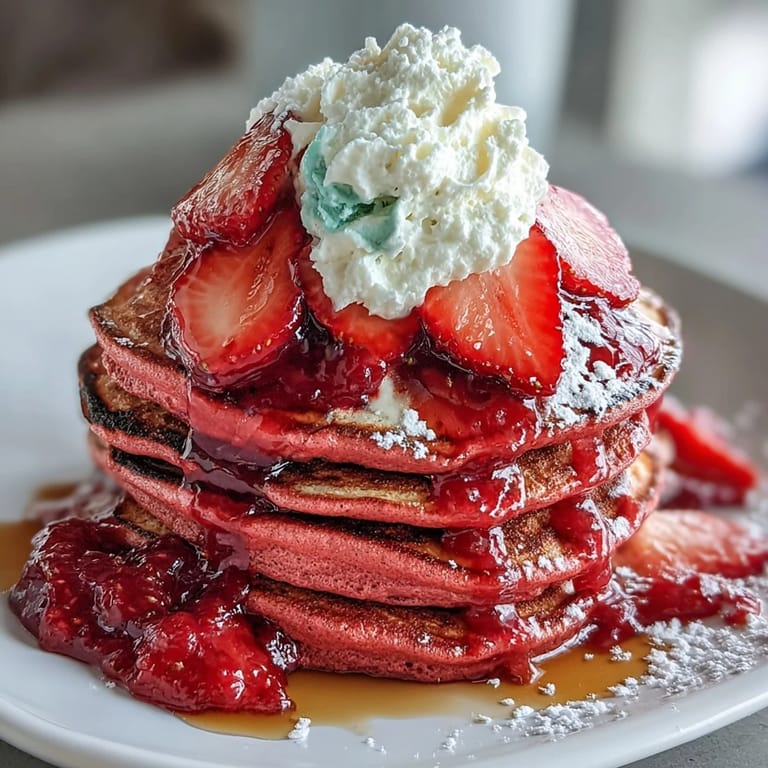
- Combine your strawberries, sugar, and lemon juice in a saucepan over medium heat, stirring occasionally as they soften and release their juices. After about 8 to 10 minutes the fruit will break down into a glossy sauce that smells absolutely incredible—if you want it thicker, stir in that cornstarch slurry now and watch it transform.
- Whisk your dry ingredients together:
- In a large bowl, combine flour, sugar, baking powder, baking soda, and salt, making sure everything is evenly distributed. This step feels tedious but it's what prevents lumpy pancakes and ensures the baking soda and powder work their magic evenly.
- Mix your wet ingredients separately:
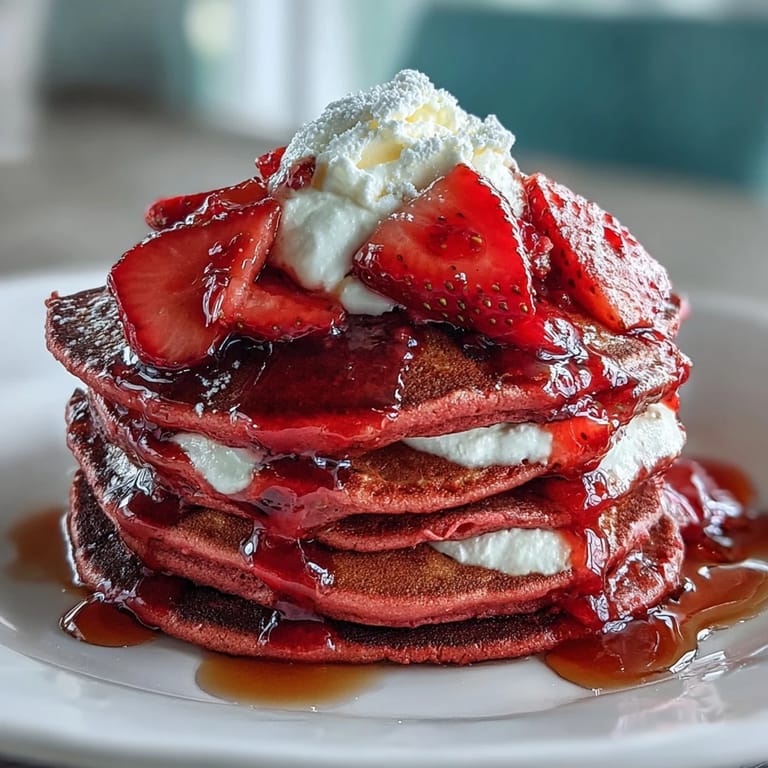
- In another bowl, whisk together milk, yogurt, beetroot purée, eggs, melted butter, and vanilla until the mixture is smooth and uniformly pink. You'll notice the color shift from pale to that gorgeous rose tone that makes you excited to cook.
- Combine wet and dry gently:
- Pour the wet ingredients into the dry ones and mix just until you see no streaks of flour—a few small lumps are actually your friend here because overmixing creates tough pancakes. I learned this the hard way by overthinking it and ending up with dense discs that nobody wanted.
- Heat your skillet and butter it lightly:
- Get your nonstick skillet or griddle to medium heat and add just a small amount of butter, enough to coat but not puddle. You'll know it's ready when a drop of batter sizzles gently on contact.
- Cook each pancake until the bubbles tell you it's ready to flip:
- Pour about 1/4 cup of batter onto the hot skillet and wait about 2 to 3 minutes until you see bubbles forming on the surface and the edges look set and slightly dry. Flip gently and cook another 1 to 2 minutes until the bottom is golden brown and a toothpick inserted comes out clean.
- Stack and serve immediately with all the toppings:
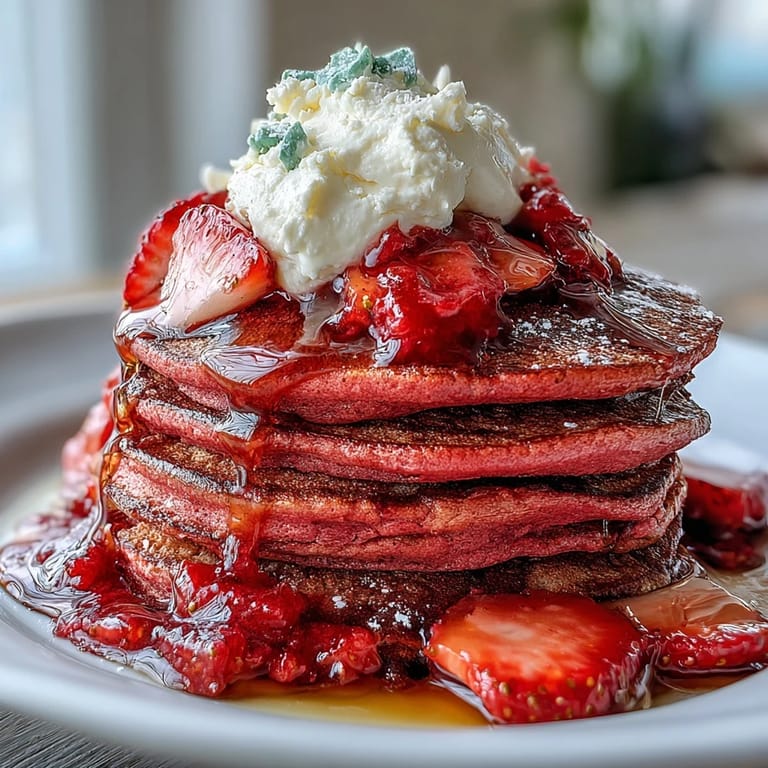
- Arrange warm pancakes on plates and spoon that glossy compote over the top, then add sliced fresh strawberries and a generous dollop of whipped cream or yogurt. A drizzle of maple syrup is optional but honestly feels like the right finishing touch.
 Save
Save There's something about serving these pancakes that shifts the mood of a breakfast from ordinary to special. The color catches people off guard in the best way, and the conversation that follows—about where the pink comes from, how simple the ingredients actually are—reminds me why cooking for others matters.
Making the Compote Perfect
The strawberry compote is where you can really show off because it's foolproof and forgiving. I've made it with everything from fresh summer berries to frozen ones bought on sale in January, and it always turns out glossy and beautiful. The key is low and slow heat—rushing it with high heat can make the berries burst apart before they break down properly, and you'll end up with chunky sauce instead of something smooth and jammy.
Customizing Your Pancakes
These pancakes are flexible enough to work with whatever's in your kitchen, which is one reason I keep making them. If you want them slightly less earthy, reduce the beetroot to 3 tablespoons instead of 1/4 cup, or add a tiny pinch of food-grade pink coloring if you really want that Instagram-perfect color without any veggie taste. For people who need to avoid dairy, swap the milk for oat or almond milk and use dairy-free yogurt, and the pancakes turn out just as tender and delicious.
Timing and Temperature Tips
The thing that separates decent pancakes from the kind people actually want to eat is heat management, which sounds fancy but just means paying attention. Your skillet should be hot enough that a drop of water sizzles on contact, but not so hot that the bottoms burn before the insides cook—medium heat is usually perfect. If you're making these for a crowd, you can keep finished pancakes warm on a baking sheet in a 200°F oven while you cook the rest, and they'll stay fluffy and soft for at least 10 minutes.
- Make the compote while the batter sits—this is your secret to keeping everything on schedule.
- Let the cooked pancakes cool for a minute before stacking so the steam doesn't make them soggy.
- Serve everything warm, because cold compote on warm pancakes is just not the same experience.
 Save
Save These pink pancakes have become my go-to when I want to make someone feel celebrated without fussing for hours. They're proof that the simplest ingredients, treated with a little care, become something memorable.
Recipe Questions
- → What gives the pancakes their pink color?
The pink hue comes from beetroot purée added to the batter, providing natural color without affecting taste significantly.
- → Can I use plant-based milk and yogurt?
Yes, plant-based milk and yogurt work well and keep the pancakes moist while accommodating dietary preferences.
- → How is the strawberry compote made?
Strawberries are cooked gently with sugar and lemon juice until soft. Cornstarch slurry can be added for a thicker texture.
- → What is the best way to cook these pancakes?
Cook pancakes on a lightly buttered nonstick skillet over medium heat until bubbles form and edges set, then flip to finish cooking.
- → Are there vegan adaptations available?
Yes, replace eggs with flax eggs (ground flaxseed mixed with water) and use plant-based milk and yogurt for a vegan version.
- → Can I enhance the pink color further?
For a deeper shade, increase the beetroot purée slightly but taste to maintain the flavor balance.