 Save
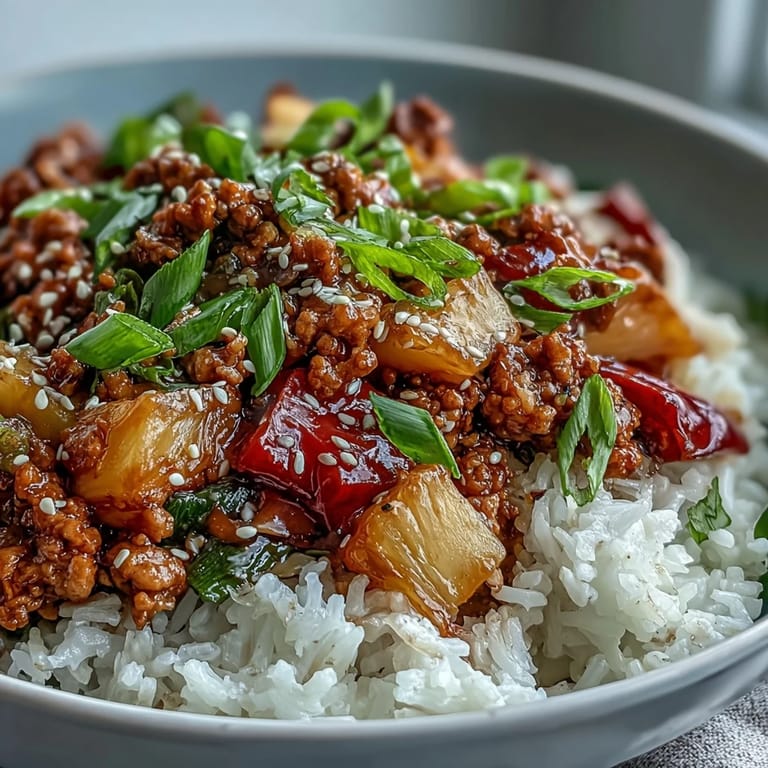
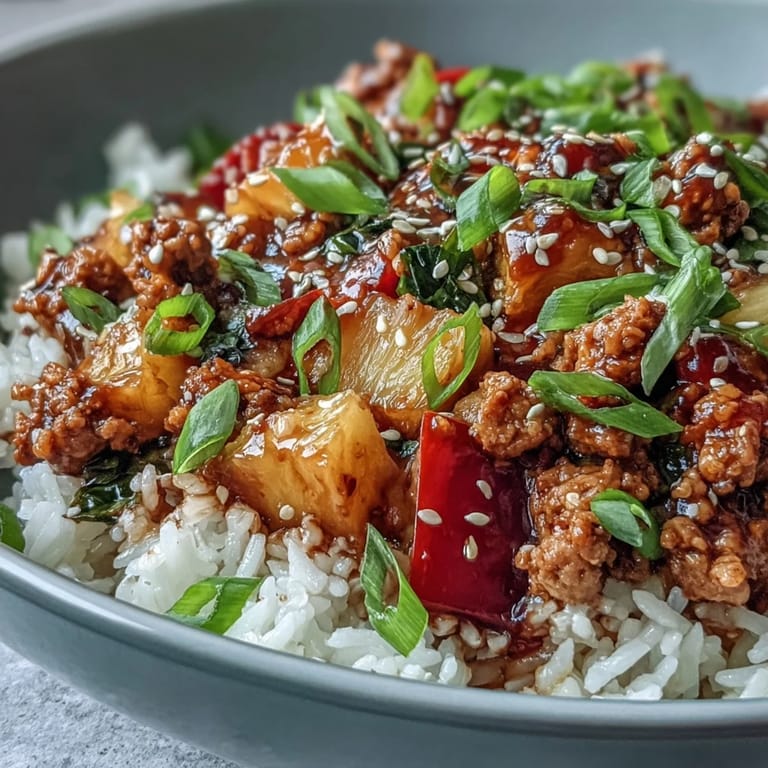
Save My sister called me in a panic one weeknight, asking if I could help her make dinner for her kids who'd suddenly decided they were done with their usual rotation. I rummaged through her fridge and found ground turkey, bell peppers, and a can of pineapple, and something just clicked. Twenty minutes later, the kitchen smelled like toasted sesame and gochujang, and three skeptical faces were asking for seconds. That's when I knew this sweet-and-sour skillet had earned its place in my regular lineup.
I made this for a potluck once and watched someone go back for thirds while their friend kept asking what was in the sauce. There's something about the combination of gochujang and ketchup that nobody sees coming, and that little moment of surprise is honestly why I keep making it. It became the dish people specifically ask me to bring now.
Ingredients
- Ground turkey: The lean protein that takes on all the bright flavors without getting heavy or overshadowing the sweet-and-sour profile.
- Yellow onion: Diced medium so it softens but keeps a bit of texture and sweetness when cooked.
- Red and green bell peppers: Their slight sweetness mirrors the fruit and adds visual pop that makes the dish feel less ordinary.
- Garlic cloves: Minced fine so they distribute evenly and become almost invisible while adding depth you can definitely taste.
- Pineapple chunks: Fresh is brighter, but canned drained pineapple works just as well and honestly saves time.
- Jasmine or long-grain rice: Day-old rice is the real secret here because fresh rice tends to clump when it hits the hot pan and sauce.
- Vegetable oil: High heat tolerance is key, so reach for something neutral like canola or vegetable oil.
- Soy sauce: Low sodium lets you control the saltiness and prevents the whole dish from becoming one-note.
- Gochujang: This Korean chili paste is the hidden magic that gives the sauce its complex heat and umami backbone.
- Rice vinegar: Milder and slightly sweeter than regular vinegar, it balances the richness without being sharp.
- Brown sugar: Adds warmth and depth that plain white sugar wouldn't quite achieve.
- Tomato ketchup: This is the unexpected ingredient that rounds everything out and creates a cohesive sauce.
- Sesame oil: Just a touch at the end brings everything into focus with its toasted, nutty character.
- Green onions and sesame seeds: Fresh garnish adds brightness and a final crunch that keeps the dish from feeling heavy.
Tired of Takeout? 🥡
Get 10 meals you can make faster than delivery arrives. Seriously.
One email. No spam. Unsubscribe anytime.
Instructions
- Heat your pan and brown the turkey:
- Get your skillet hot over medium-high heat, add the oil, then add ground turkey and break it up as it cooks so you get little golden pieces instead of one big clump. You'll know it's ready when there's no pink left and the kitchen starts smelling seriously good.
- Build your vegetable foundation:
- Toss in the diced onion, peppers, and garlic, and let them get tender but not soft. This takes about four to five minutes, and you'll hear them sizzle and smell the garlic becoming fragrant.
- Introduce the pineapple:
- Add the pineapple chunks and let them warm through for just a minute or two so they stay juicy. Don't skip this pause because it matters for the final texture and flavor balance.
- Mix your sauce ingredients:
- While your pan is going, combine soy sauce, gochujang, rice vinegar, brown sugar, ketchup, and sesame oil in a small bowl and whisk until the gochujang is fully dissolved. The sauce should be smooth and glossy without any lumps.
- Bring everything together:
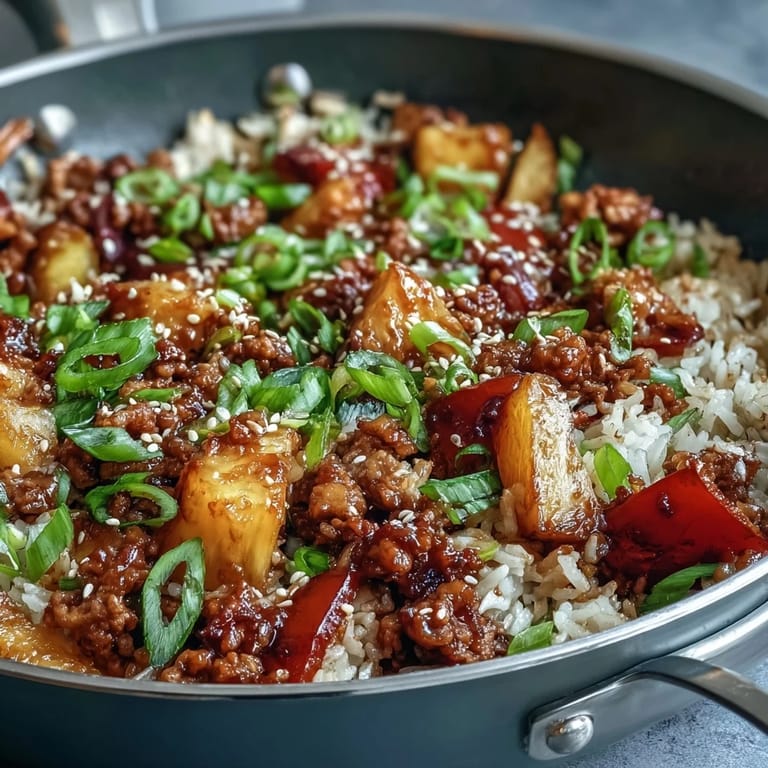
- Pour the sauce over the turkey and vegetables, stir well to coat everything evenly, then fold in your cooked rice and toss for two to three minutes. The rice will soak up the sauce and the heat will make all the flavors meld into one cohesive, delicious dish.
- Taste and adjust:
- Take a bite before plating and decide if you want more heat, more salt, or more tang. This is your moment to make it exactly what you want it to be.
- Plate and garnish:
- Top with sliced green onions and toasted sesame seeds if you have them, then serve immediately while everything is hot and the textures are still distinct.
 Save
Save 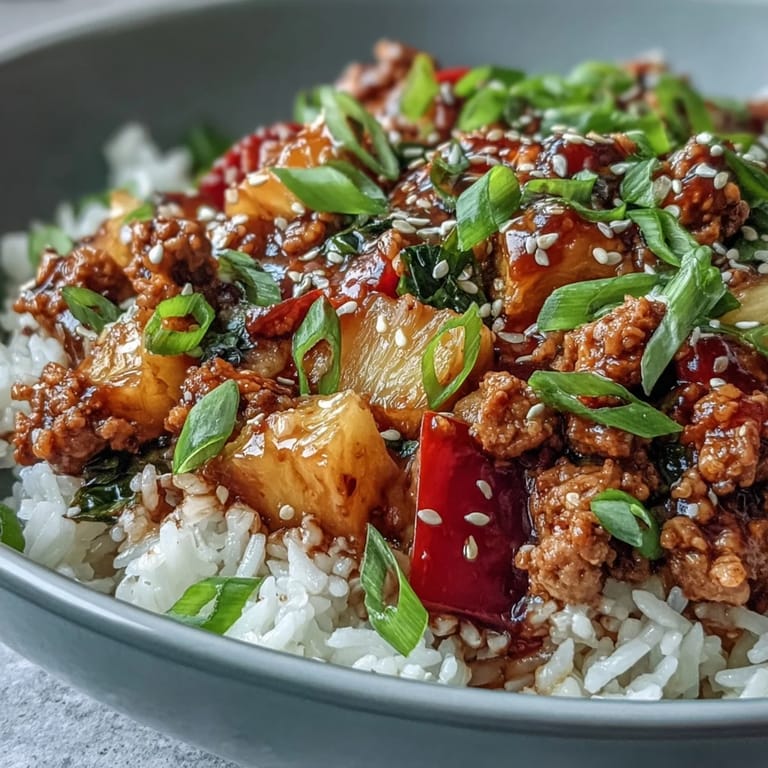 Save
Save There was a quiet moment while everyone ate, no one talking much, just enjoying the food and reaching for more. That's when I realized this dish does something special—it feels fancy enough for company but easy enough that you don't stress making it on a random Tuesday.
The Sweet-and-Sour Balance
The magic in this skillet lives in how the sauce layers different flavors without any single note taking over. The gochujang brings heat and umami, the brown sugar adds sweetness, the vinegar cuts through with brightness, and the ketchup acts as a bridge that makes all those opposing flavors actually want to be friends. It's like tasting four different dishes at once but in the best possible way.
Why Day-Old Rice Changes Everything
Fresh rice has moisture still trapped in every grain, which means when it hits a hot pan with sauce, it wants to steam and stick together rather than stay light and fluffy. Day-old rice, on the other hand, has had time to dry out slightly and separate, so when you toss it in, each grain crisps up a little and actually absorbs the sauce instead of falling apart. I learned this the hard way after making mushy-rice versions more than once, and now I actually plan ahead and cook rice the day before specifically for this dish.
Customize to Your Heat Level and Taste
This dish lives in a sweet spot where it's not too spicy but not bland either, which means it works for different heat tolerances at the same table. You can dial up the gochujang if you like real heat, or add a pinch of red pepper flakes if you want to leave the main sauce mild. Some people even prefer adding a splash of lime juice at the end for extra brightness, or a touch more sesame oil if they want it richer.
- Taste the sauce before folding in the rice because adjustments are easiest at that stage.
- Remember that gochujang packs more heat than it first seems, so start conservative and build up.
- Keep the garnishes separate until right before serving so the green onions stay fresh and the sesame seeds don't get soggy.
 Save
Save 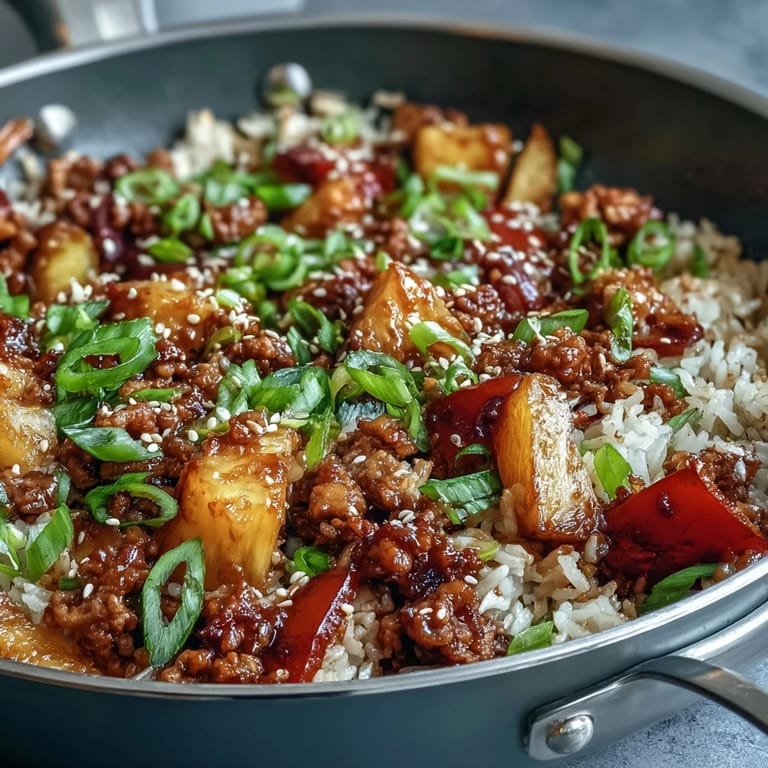 Save
Save This one-pan meal has become my reliable go-to for nights when I want something that feels a little bit special without the stress of complicated cooking. It feeds four generously and tastes even better the next day when the flavors have had time to get to know each other.
Recipe Questions
- → Can I use fresh rice instead of day-old?
While day-old rice gives the best fluffy texture, you can use freshly cooked rice. Spread it on a baking sheet and refrigerate for 30 minutes to dry out slightly before adding to the skillet.
- → What can I substitute for gochujang?
Sriracha or red pepper flakes work as alternatives, though you'll miss the fermented depth. Add a small amount of miso paste to mimic some of gochujang's complex flavor profile.
- → Is this dish spicy?
The gochujang provides mild to moderate heat depending on the brand. You can easily adjust the spice level by adding more or less chili paste, or incorporating red pepper flakes for extra kick.
- → Can I make this ahead of time?
The flavors actually develop beautifully when made ahead. Store in an airtight container in the refrigerator for up to 3 days. Reheat in a skillet with a splash of water to refresh the rice.
- → What other proteins work well?
Ground chicken or pork are excellent substitutes that maintain the quick cooking time. For a vegetarian version, try crumbled tofu or plant-based ground meat alternatives.