 Save
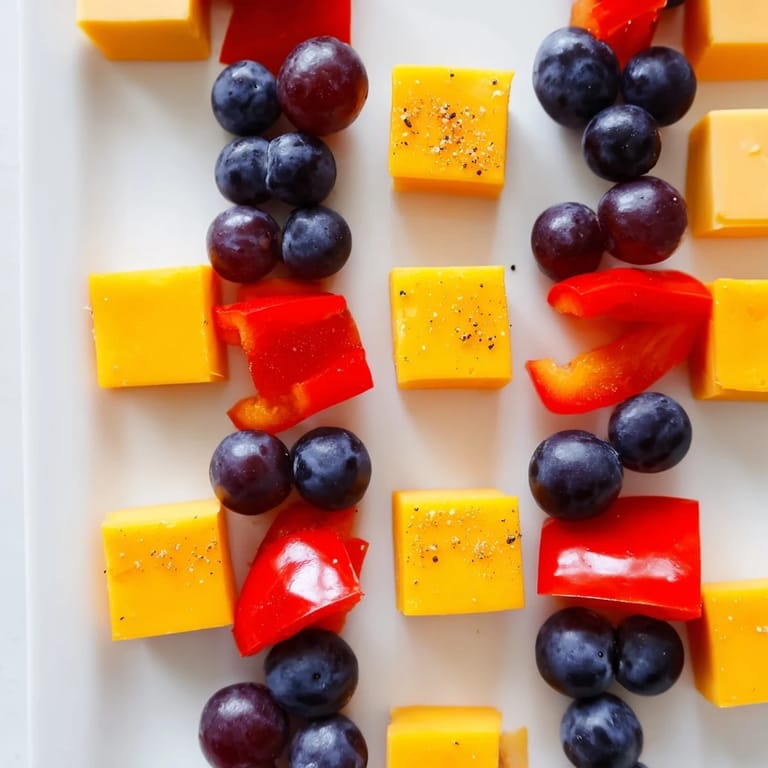
Save I was arranging appetizers for a gallery opening when I realized the food itself could be the art. Standing there with a cutting board full of red peppers, golden cheese, and deep purple grapes, something clicked—why not arrange them like the bold geometric compositions I'd been admiring on the walls? That afternoon, the Bauhaus Block was born, and it became the most photographed thing at the party, even before anyone tasted it.
My sister brought her new partner to dinner, and I wanted something that felt both impressive and approachable. When I set down this grid of colors in the middle of the table, he leaned back and said, "Did you make this or buy it from somewhere fancy?" The fact that he couldn't quite believe it was homemade felt like the highest compliment, and it's been a go-to move ever since for moments when presentation matters.
Ingredients
- Red bell pepper: One large one gives you enough squares for a satisfying arrangement; the natural sweetness of the pepper becomes more noticeable when it's this fresh and raw.
- Yellow cheddar or Gouda: 120 grams cut into blocks; the firmness holds its shape beautifully, and the slight sharpness balances the pepper's sweetness.
- Blue or black seedless grapes: Twenty-four of them create the visual anchor and add a juicy pop of flavor that keeps the whole thing from feeling too austere.
- Extra-virgin olive oil: Optional but worth it; just a light brush brings out the pepper's glossy appeal and adds richness.
- Sea salt and freshly ground black pepper: These finishing touches elevate what could feel casual into something intentional.
Tired of Takeout? 🥡
Get 10 meals you can make faster than delivery arrives. Seriously.
One email. No spam. Unsubscribe anytime.
Instructions
- Prep your vegetables:
- Wash and dry your red bell pepper thoroughly—any moisture will keep it from being that crisp, perfect vehicle for color. Cut it into strips first, then crosswise into 1-inch squares; you'll end up with about 16 pieces, each one a little canvas.
- Block and cut the cheese:
- Slice your cheese into 1-inch rectangular blocks that feel satisfying to hold. The uniformity matters here because it's part of the visual language you're speaking.
- Rinse the grapes:
- Run them under cool water and pat them completely dry; they'll catch the light better and won't slip around on the platter.
- Arrange your composition:
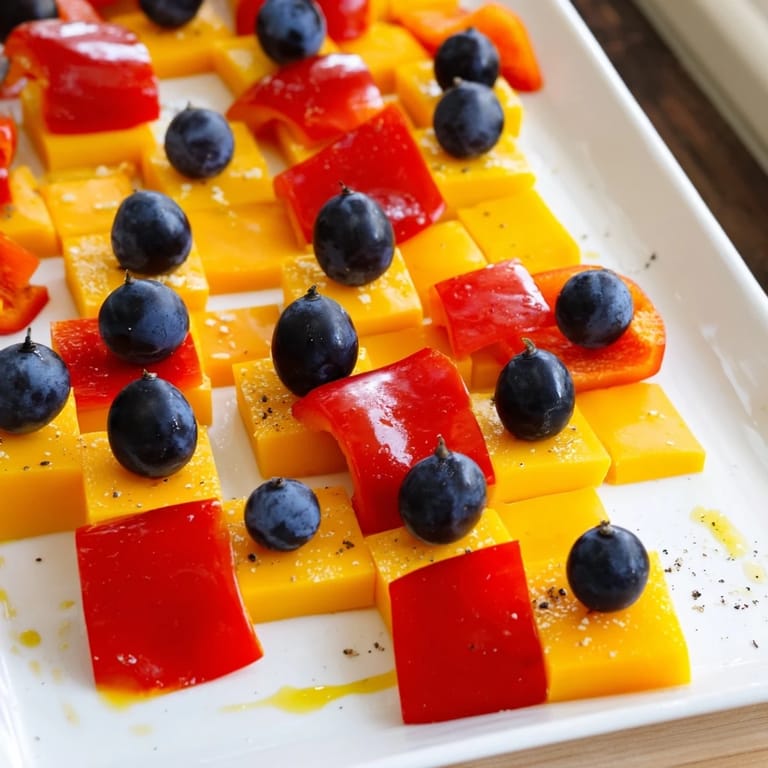
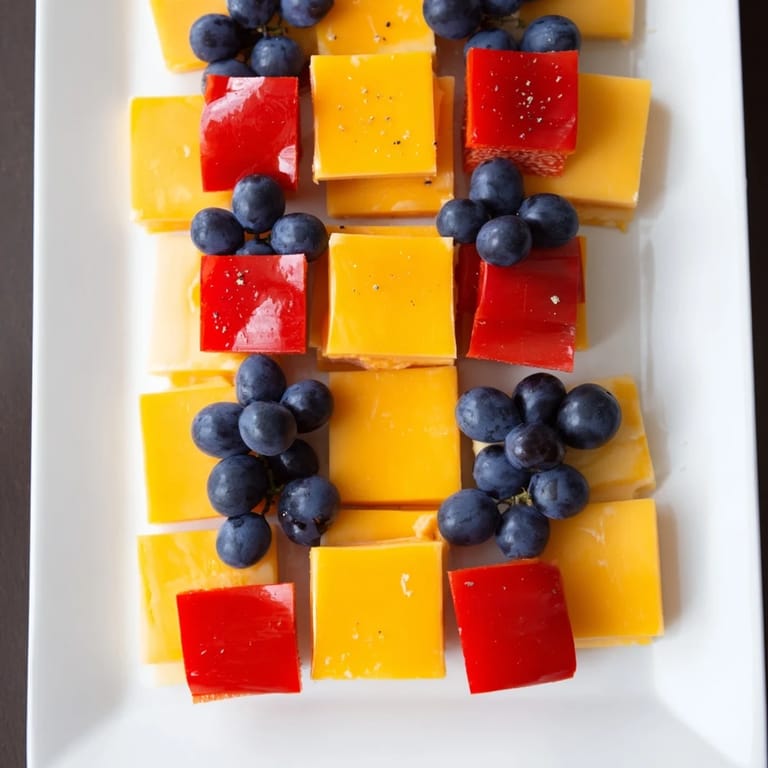
- On a rectangular serving platter, start laying out your pieces in a grid pattern—alternating red pepper, yellow cheese, and purple grapes creates a rhythm that feels intentional. Step back and look at it; trust your eye for balance more than any rule.
- Season and finish:
- If you're using the olive oil, brush it lightly over the pepper pieces and give everything a whisper of salt and pepper. This step transforms it from pretty to delicious.
- Serve or chill:
- You can serve it immediately or refrigerate for up to 30 minutes, which actually firms up the cheese slightly and makes everything taste a bit more composed.
 Save
Save I served this at a casual dinner party, and someone asked if I was trying to make a statement about art and food. I hadn't been, but it made me realize that sometimes the most honest creativity comes from just looking at what's in front of you and asking what it could become. That's what this dish is really about.
The Geometry of Flavor
There's something satisfying about how the flavors work in sequence: the bright pepper, the dense creaminess of cheese, the burst of the grape. It's not a complicated dance, but the order matters. When you eat it the way it's arranged, you get all three elements in conversation with each other, and that's when it stops feeling like a showpiece and starts feeling like intentional food.
Making It Your Own
This recipe is honest and open to interpretation. Some people add a thin spread of whole grain mustard on the cheese before assembling, which adds a subtle sharpness. Others swap in different colored peppers—yellow, orange, even pale green—and suddenly you've got a completely different mood. The Bauhaus philosophy was about taking basic elements and making them sing, and this appetizer follows that thinking exactly.
Serving and Pairings
This works as an opener before a meal, but it's equally at home as a centerpiece on a charcuterie board or grazing table, where it actually competes visually with everything else around it. Pair it with a dry white wine—Sauvignon Blanc if you're being classic, or a crisp Pinot Grigio if you prefer something lighter. If there are crackers or thinly sliced bread nearby, people will build little cheese and pepper combinations, which is fine; let them make it their own.
- For a vegan version, substitute the cheese with plant-based yellow cheese that holds its shape when cut.
- If you're serving a crowd, you can prep all the components the morning of and assemble 30 minutes before guests arrive.
- Remember that this is best eaten within an hour or two of assembly, when everything still has its crispness and the colors haven't started to dull.
 Save
Save The best part about this recipe is that it proves you don't need hours in the kitchen to create something memorable. Sometimes all it takes is a knife, an eye for color, and the willingness to let simple ingredients speak for themselves.
Recipe Questions
- → How should the vegetables and cheese be cut?
Cut red bell pepper into 1-inch squares and slice yellow cheddar or Gouda into uniform 1-inch rectangular blocks for a consistent geometric look.
- → Can I prepare this dish in advance?
Yes, you can arrange it and chill for up to 30 minutes before serving to keep everything fresh and crisp.
- → Is olive oil necessary in the preparation?
Olive oil is optional; brushing the bell pepper adds moisture and enhances flavor but can be omitted for simplicity.
- → What are good pairings for this appetizer?
This dish pairs well with dry white wines like Sauvignon Blanc and can be served alongside crackers or thin bread slices.
- → How to adapt this for vegan preferences?
Substitute yellow cheese with plant-based alternatives to maintain the colorful blocks and keep it vegan-friendly.