 Save
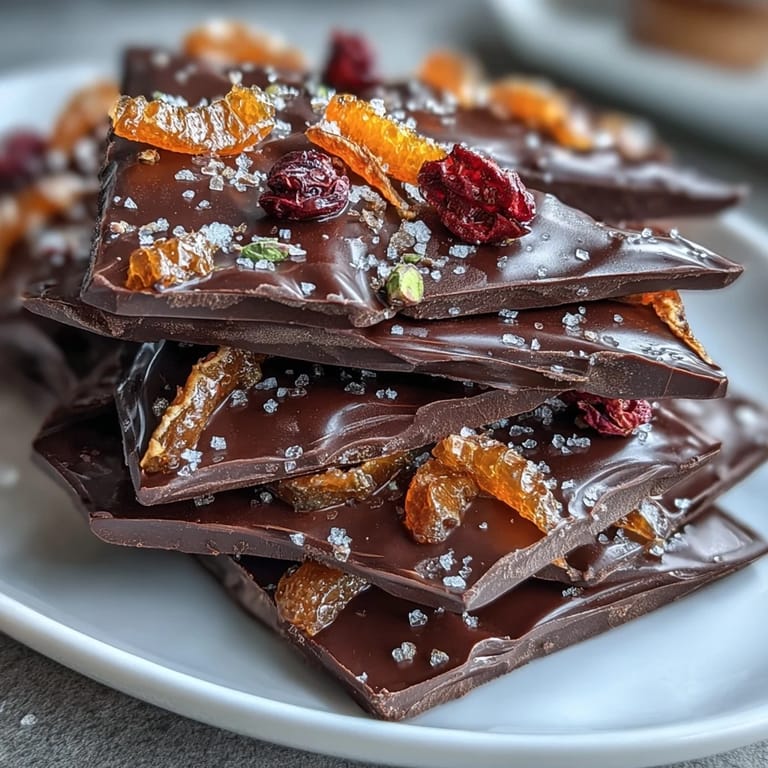
Save My neighbor brought over a tiny box of candied orange peel chocolate bark last winter, and I remember being absolutely stunned by how something so simple could taste so luxurious. The bittersweet chocolate had this deep, almost velvety character, and those bright pops of citrus cut through it in the most unexpected way. I kept turning the box over, convinced there was some elaborate technique involved, but she laughed and told me the whole thing took maybe thirty minutes start to finish. That's when I realized the best treats aren't about complexity—they're about knowing exactly which flavors belong together.
I made this for my best friend's birthday last spring, arranging the pieces on a vintage plate with a few fresh mint leaves tucked between them. She took one bite and immediately asked for the recipe, but more than that, she said it reminded her of a bakery in Barcelona we'd visited years before. Food has this strange power to unlock memories neither of us knew we were carrying. That's when I understood—this wasn't just chocolate bark anymore, it was a tiny edible time machine.
Ingredients
- Dark chocolate (70% cocoa), 300g: This percentage is the sweet spot where bittersweet depth meets just enough sweetness to balance the bright citrus—go darker and the orange gets lost, go lighter and it becomes candy instead of sophisticated.
- Candied orange peel, 80g, finely chopped: If you can find thick-cut peel, chop it yourself rather than buying pre-minced because the pieces hold their texture and burst with flavor instead of dissolving into the chocolate.
- Roasted pistachios, 2 tbsp, chopped (optional): The nuttiness adds a savory whisper that makes the chocolate taste even more complex—toast them yourself if you have time, the difference is noticeable.
- Freeze-dried raspberries, 2 tbsp (optional): These add a tart counterpoint and beautiful flecks of color without introducing moisture that could seize your chocolate.
- Sea salt flakes: Just a whisper—it heightens the chocolate flavor and creates this addictive sweet-salty tension that keeps people coming back for another piece.
Tired of Takeout? 🥡
Get 10 meals you can make faster than delivery arrives. Seriously.
One email. No spam. Unsubscribe anytime.
Instructions
- Prepare your stage:
- Line your baking sheet with parchment or a silicone mat, making sure the paper sits flat so your bark will set level and snap cleanly later.
- Melt the chocolate gently:
- If using a double boiler, keep the water at a bare simmer and let the residual heat do the work—patience here means silky chocolate instead of grainy or broken. If you're using the microwave route, thirty-second bursts with a good stir between keeps you from accidentally overheating it.
- Spread with intention:
- Pour the chocolate onto your prepared sheet and use an offset spatula or the back of a spoon to nudge it into a thin, even rectangle about a quarter inch thick. Work gently so you don't deflate all the air and lose that satisfying snap.
- Layer your toppings:
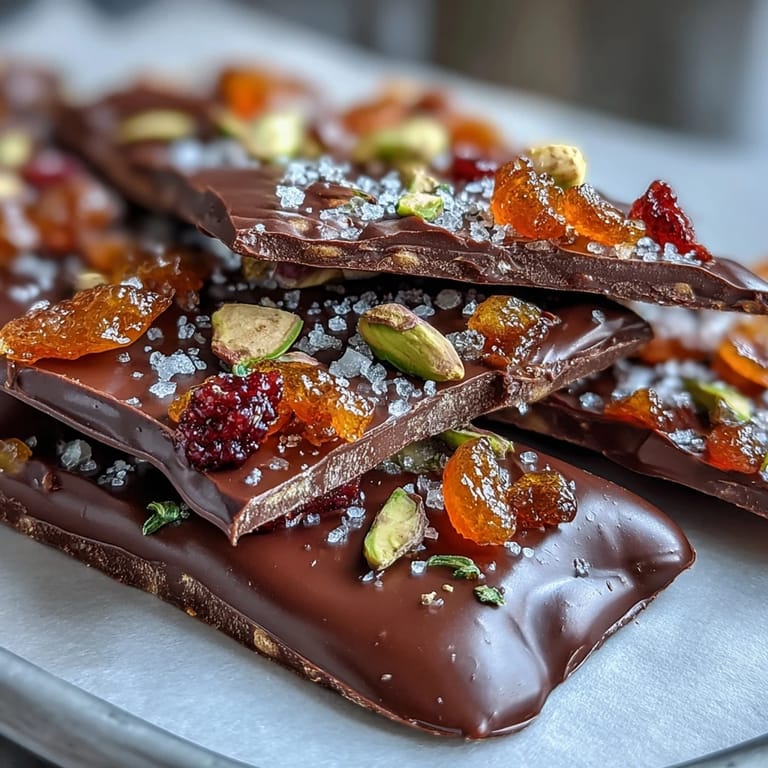
- While the chocolate is still warm and inviting, scatter the candied orange peel first, then add pistachios, raspberries, and a pinch of sea salt in whatever pattern makes you happy. There's no right way here—it's your little edible abstract painting.
- Press to adhere:
- Use your fingertips or the bottom of a measuring cup to gently press the toppings into the chocolate so they stay put when you break it apart later rather than sliding around.
- Let time do the work:
- Room temperature takes about an hour and is actually better because it sets slowly and evenly, creating a glossy finish. If you're in a rush, the fridge cuts it down to twenty or thirty minutes, but avoid the freezer—harsh cold can create a dull, matte surface.
- Break it loose:
- Once completely firm, run a knife under warm water and wipe it dry, then use that warmth to help you cut or break the bark into twelve rough pieces. Store everything in an airtight container at cool room temperature where it'll keep for two weeks, though it never lasts that long around here.
 Save
Save There's something deeply satisfying about handing someone a piece of bark you've made and watching their face light up when they taste it. It's small enough to feel like an intimate gesture but impressive enough that people genuinely think you've spent hours laboring over it.
Why This Works as a Gift
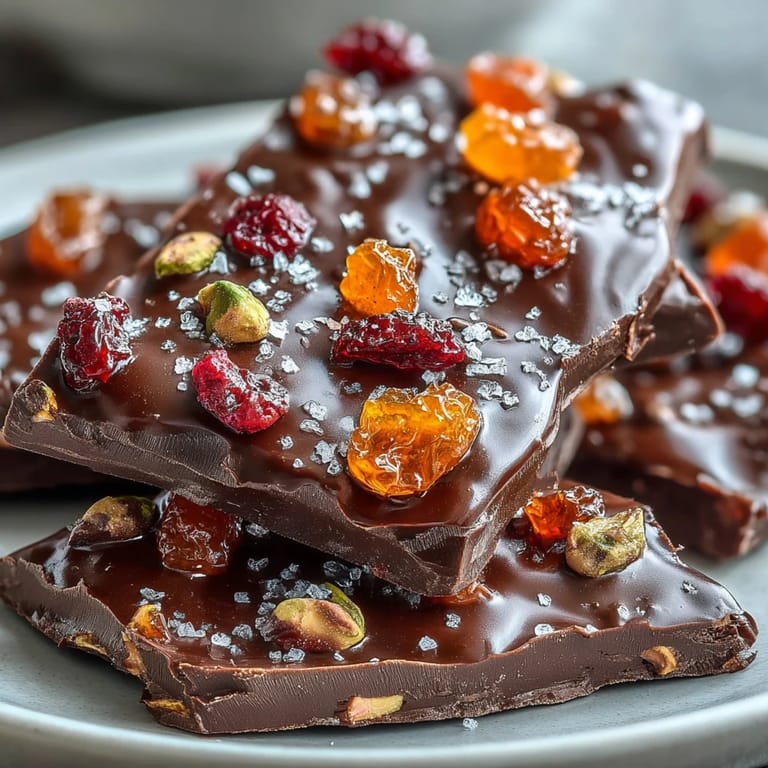
Chocolate bark hits this perfect middle ground—it's clearly handmade and thoughtful, but it doesn't require you to be a pastry chef or have special equipment. I've packaged pieces in tissue paper and slipped them into vintage tins, and people have held onto those containers for months afterward. The fact that you can customize it to someone's specific tastes (skip the nuts for your friend with allergies, add extra citrus for the person who loves brightness) makes it feel personal in a way a store-bought treat never could.
Playing with Flavor Combinations
Once you understand the basic structure, this becomes a playground. I've made versions with candied lemon peel and lavender, dark chocolate with candied ginger and black pepper, even a white chocolate variation with dried strawberries and pistachios that looked almost like a jeweled tile when it set. The rule I follow is balance—always have something sweet, something bitter, something bright, and something with texture. The candied orange peel and dark chocolate are the backbone, but everything else is negotiable.
Storage and Keeping
I keep mine in an airtight container at room temperature, away from direct sunlight and heat sources, and it stays perfect for up to two weeks. The chocolate stays snappy, the candied peel doesn't dry out further, and the flavors actually deepen slightly as they sit together. I've also frozen pieces in a well-sealed container and found they thaw beautifully without any condensation issues—ideal if you're making ahead for a big gathering.
- Keep chocolate away from anything with a strong smell because it's absorbent and will pick up odors from the fridge.
- If you live somewhere warm or humid, refrigerate the finished bark in an airtight container rather than leaving it on the counter.
- Wrapped pieces make excellent emergency gifts because they look intentional and taste like you care, no matter when you actually made them.
 Save
Save This recipe has become my answer to every gift-giving occasion that needs something a little special. It's the kind of small kindness that tastes expensive.
Recipe Questions
- → How do I melt dark chocolate smoothly?
Melt the chocolate using a double boiler or microwave in short bursts, stirring frequently to avoid burning and ensure a silky texture.
- → Can I substitute pistachios with other nuts or seeds?
Yes, you can replace pistachios with sunflower seeds or omit nuts entirely for a nut-free version.
- → How should I store the finished chocolate bark?
Store in an airtight container at a cool room temperature for up to two weeks to maintain freshness and texture.
- → Is this suitable for gluten-free diets?
Yes, all ingredients used are gluten-free, but check product labels to avoid cross-contamination.
- → What helps the toppings stick to the chocolate bark?
Press toppings gently into the warm melted chocolate before it sets to ensure they adhere well.
- → Can I use candied lemon peel instead of orange?
Absolutely, substituting candied lemon peel adds a different citrus note while maintaining the delightful sweetness.