 Save
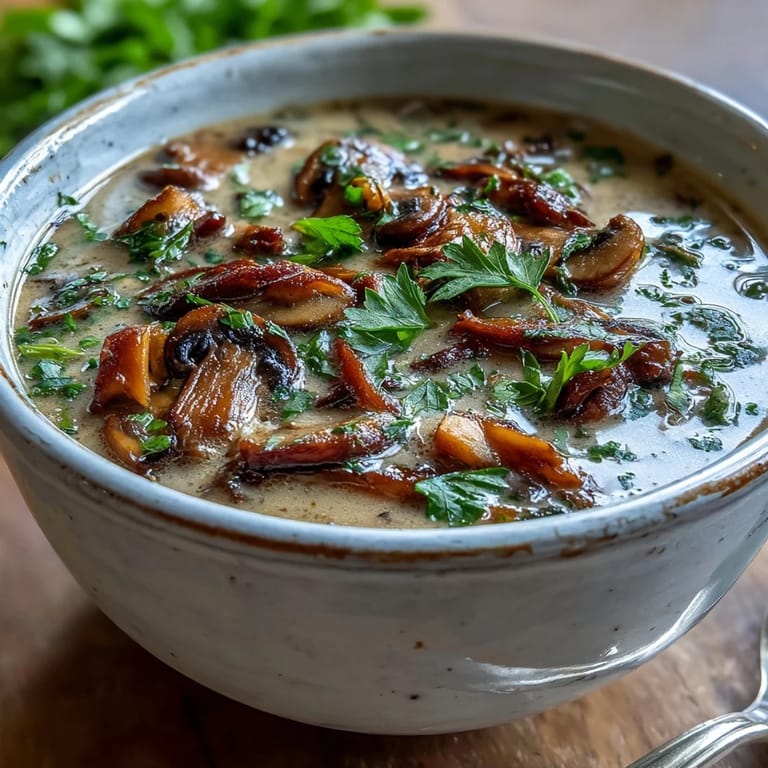
Save My neighbor brought over a bowl of stroganoff soup on a rainy Tuesday, and I spent the next hour pestering her for the recipe while we sat in my kitchen listening to the rain. She laughed and admitted she'd simplified a traditional beef stroganoff by turning it into a vegetarian soup, adding miso for that deep, almost meaty umami I couldn't quite place. That bowl changed how I think about comfort food—sometimes the best dishes emerge from happy accidents and the willingness to break the rules.
I made this for my partner during his first week working from home, when we were both figuring out how to exist in the same space all day. Lunch was awkward silence until he tasted this soup, and suddenly we were talking about flavors and textures instead of the elephant in the room. That bowl did more for our rhythm than any scheduled break ever could.
Ingredients
- Mixed mushrooms (500g): The cremini, shiitake, and button combo gives you different textures and flavors—cremini brings earthiness, shiitake adds that umami punch, and buttons keep things accessible and budget-friendly. Slice them thick enough to maintain some structure as they cook.
- Onion, garlic, carrot, celery: This aromatic base is non-negotiable; the vegetables soften into the broth and create the foundation that makes everything taste intentional.
- Olive oil and butter: The combination matters—butter gives richness while olive oil prevents burning and adds its own subtle flavor.
- Vegetable broth (1L): Use a quality broth you'd actually drink on its own; the better your base, the less seasoning you'll need to make it taste alive.
- White wine (optional but recommended): Two tablespoons lifts the soup off the plate and brightens all those earthy mushroom notes.
- Soy sauce and white miso paste: These are the soul of the dish—they work together to build layers of savory depth that make people wonder what you're hiding.
- Smoked paprika and dried thyme: Paprika adds a whisper of smokiness while thyme keeps things grounded in classic European comfort.
- Sour cream (200ml): The final step that transforms everything into silk; full-fat is essential because it won't curdle as easily and tastes infinitely better.
- All-purpose flour (1 tbsp): This prevents the soup from breaking when you add the sour cream by creating a gentle thickener.
- Fresh parsley: Don't skip the garnish—it's not decoration, it's brightness that cuts through all that richness and reminds you to breathe.
Tired of Takeout? 🥡
Get 10 meals you can make faster than delivery arrives. Seriously.
One email. No spam. Unsubscribe anytime.
Instructions
- Create Your aromatic base:
- Heat the olive oil and butter in a large pot over medium heat until the butter foams and smells nutty. Add your onion, carrot, and celery, stirring occasionally for about five minutes until the vegetables soften and release their sweetness into the fat.
- Introduce the garlic and mushrooms:
- Stir in the minced garlic and let it become fragrant—maybe thirty seconds, no more—before adding all your mushroom slices at once. They'll look like they're too much for the pot, but they'll shrink as they release their moisture and turn golden brown, which is exactly what you want.
- Build your flavor base with flour:
- Sprinkle the flour directly over everything and stir it in until each piece is coated. Let it sit for about a minute so it loses that raw, chalky taste and starts to smell like something your grandma would recognize.
- Deglaze if you're using wine:
- Pour in the white wine and scrape the bottom of the pot with your wooden spoon, loosening all those golden, caramelized bits that taste like flavor itself. The wine will sizzle and smell amazing, and that's exactly right.
- Add the broth and seasonings:
- Pour in your vegetable broth and stir in the soy sauce, paprika, thyme, salt, and pepper. Bring everything to a gentle simmer, cover with a lid, and let it bubble quietly for fifteen minutes—this is when the flavors marry and the soup starts to taste like something special.
- Dissolve the miso paste:
- In a small bowl, whisk the miso with two tablespoons of hot broth from the pot until you have a smooth paste with no lumps. Pour this mixture back into the soup and stir gently to distribute it evenly throughout.
- Add the creamy finish:
- Lower the heat to the absolute lowest setting and stir in the sour cream slowly, making sure it's fully combined before you add more. Never let the soup boil after this point—high heat will cause the sour cream to curdle, turning silky into grainy.
- Taste and adjust:
- Take a spoon and taste it honestly. Does it need more salt, more pepper, more brightness? This moment is yours to make it exactly right.
- Serve with intention:
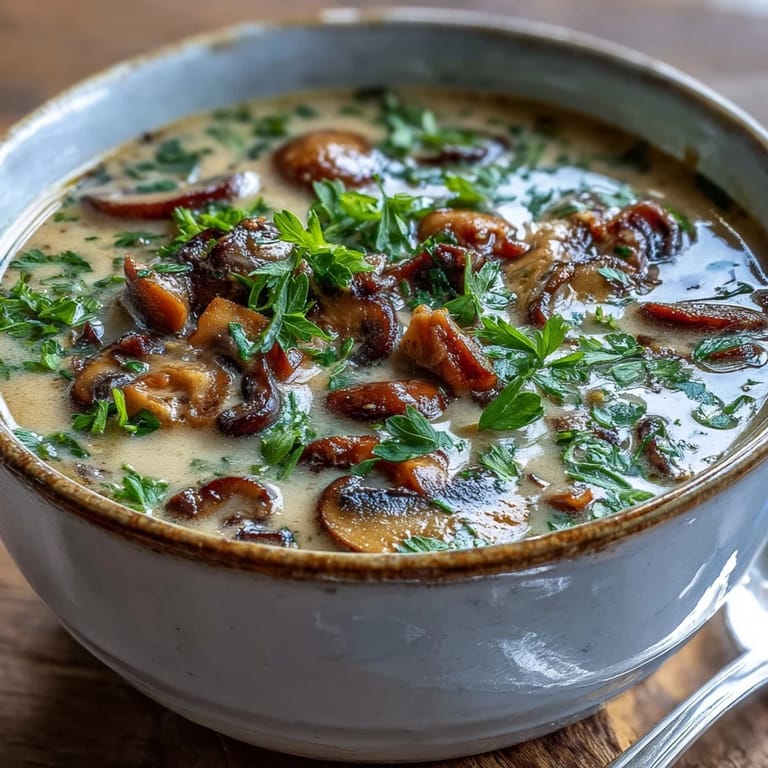
- Ladle the soup into bowls, top with fresh parsley, and add an extra dollop of sour cream if you're feeling generous. Serve it hot alongside crusty bread and watch people's faces change as they taste it.
 Save
Save A friend who usually eats very simply told me this was the first vegetarian soup that felt like real food to her, the kind that sticks with you for hours. That comment meant more to me than any recipe review ever could, because it meant I'd created something that didn't apologize for what it wasn't—it just stood confidently in what it was.
The Magic of Miso in Savory Cooking
Most people think of miso as Asian, and technically it is, but the savory depth it creates works beautifully in European comfort soups. The white miso paste here isn't trying to make the soup taste Japanese—it's adding a quiet umami that makes the mushrooms taste more like themselves. I learned this by accident when I ran out of soy sauce and grabbed miso instead, and suddenly everything tasted rounder, more complete, like someone had turned up the volume on flavors that were already there.
When to Use Sour Cream versus Crème Fraîche
Sour cream is tangier and more forgiving when heat is involved, while crème fraîche is richer and slightly more stable at higher temperatures. I use sour cream for this soup because I like the bright, slightly acidic note it brings against all that earthy mushroom depth. Both work perfectly fine, so choose based on what you have in your fridge and what flavor profile calls to you—there's no wrong answer here, just different moods.
Building Layers of Flavor Without Meat
Vegetarian cooking isn't about replacing meat—it's about understanding how to build satisfying depth through technique and ingredient choice. The combination of mushrooms, miso, soy sauce, paprika, and thyme creates a savory structure that stands on its own without needing to apologize. Every element is doing something specific, and when they work together, the result feels complete and intentional in a way that surprises people.
- Toast your spices in the fat for an extra thirty seconds before adding liquid to deepen their flavor profile.
- Don't be shy with salt and pepper at the end—they're the final amplifiers that make everything taste like more of itself.
- Taste as you go and trust your instincts more than you trust a recipe, because your palate knows what it needs.
 Save
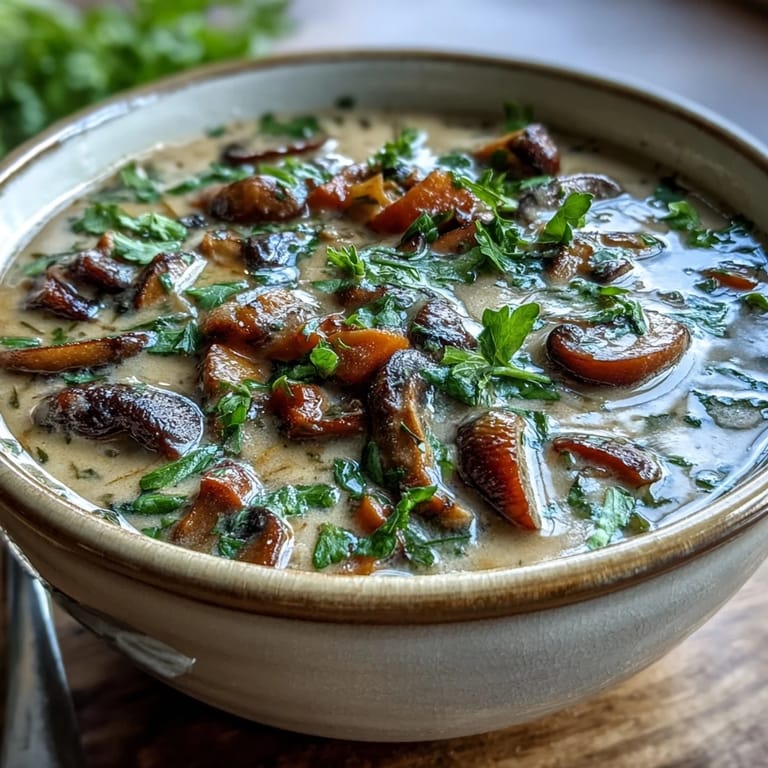
Save This soup has become my answer to almost any difficult day—it's the kind of food that says you care, whether you're caring for yourself or someone else. Make it, serve it, watch how it brings people together around a simple bowl of warmth.
Recipe Questions
- → Can I make this vegan?
Substitute butter with plant-based alternative and replace sour cream with cashew cream or coconut milk. The result remains equally creamy and satisfying.
- → What mushrooms work best?
A mix of cremini, shiitake, and button mushrooms provides depth. Shiitake adds intense umami while cremini offers meaty texture.
- → Why add miso paste?
White miso enhances savory notes and adds subtle fermented complexity that complements mushroom earthiness without overpowering other flavors.
- → Can I freeze leftovers?
The soup freezes well for up to 3 months, though cream may separate slightly. Reheat gently and stir to restore smooth texture.
- → What can I serve alongside?
Crusty bread, roasted potatoes, or a simple green salad balance the richness perfectly. A light-bodied red wine complements the umami notes.
- → Is white wine necessary?
The wine adds brightness but can be omitted. Substitute with extra vegetable broth or a splash of balsamic vinegar for similar acidity.