 Save
Save There's something almost magical about the smell of garlic turning golden in a low oven, and it hit me one Tuesday afternoon when I was trying to salvage a pile of tomatoes before they went soft. I'd bought way too many at the farmer's market, and instead of tossing them, I decided to roast everything—tomatoes, garlic, onions—and see what happened. What emerged from that oven was so unexpectedly velvety and rich that I made it again the next week, and again the week after. This soup became my go-to comfort when the kitchen needed to feel warm and alive.
I remember making this for my neighbor after her moved to the area, and she sat at my kitchen counter with that first spoonful and actually closed her eyes. She asked for the recipe before she'd even finished the bowl, which had never happened to me before. Now whenever she shows up at my door with homemade bread, I know exactly what's happening: we're making soup together.
Ingredients
- Ripe tomatoes, halved (1.5 lbs): Look for tomatoes that smell sweet and feel heavy for their size; the roasting concentrates their natural sugars and turns them jammy.
- One whole garlic bulb: The slow roast mellows garlic into something almost buttery, losing its sharp bite completely.
- Yellow onion, cut into wedges (1 large): Onion becomes the hidden base note that makes you wonder what the secret ingredient is.
- Olive oil (2 tbsp): Don't use your fancy bottle; regular olive oil does the job and lets the vegetables shine.
- Heavy cream (1/2 cup): This is where the soup becomes irresistible, adding silk and depth to every spoonful.
- Vegetable broth (2 cups): Use broth you'd actually want to drink; it matters more than you think.
- Salt and pepper to taste: These are your adjustment tools at the very end, so taste constantly.
- Sugar (1/2 tsp, optional): Keep this nearby if your tomatoes are acidic; a tiny pinch balances everything.
- Smoked paprika (1/4 tsp, optional): Add if you want a whisper of smoke without changing the soup's personality.
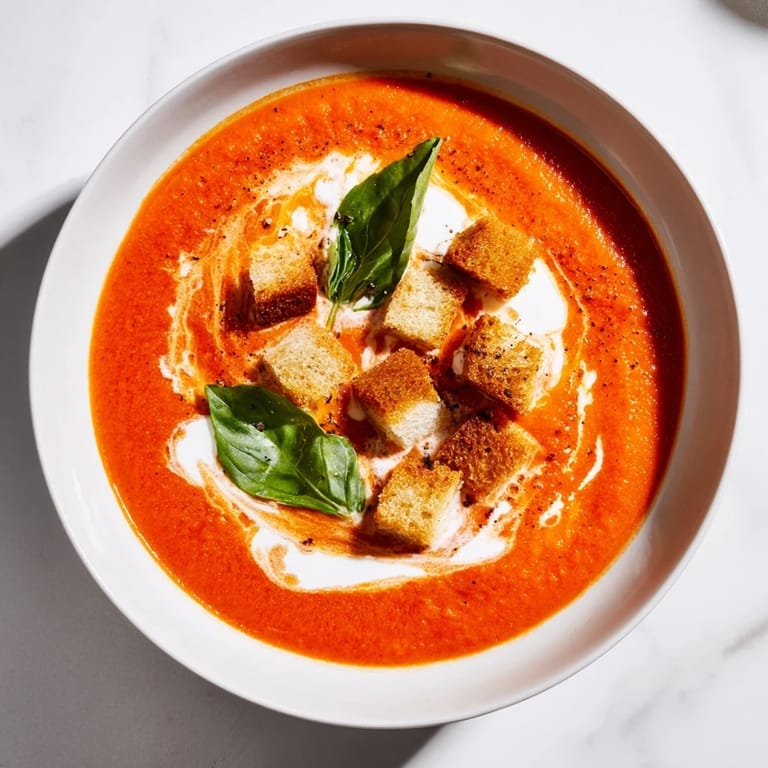
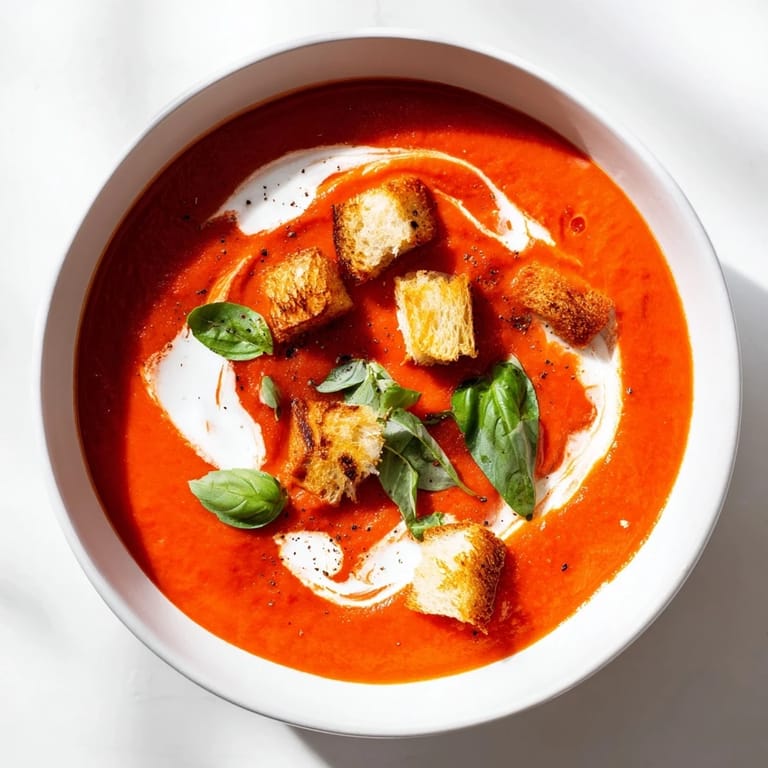
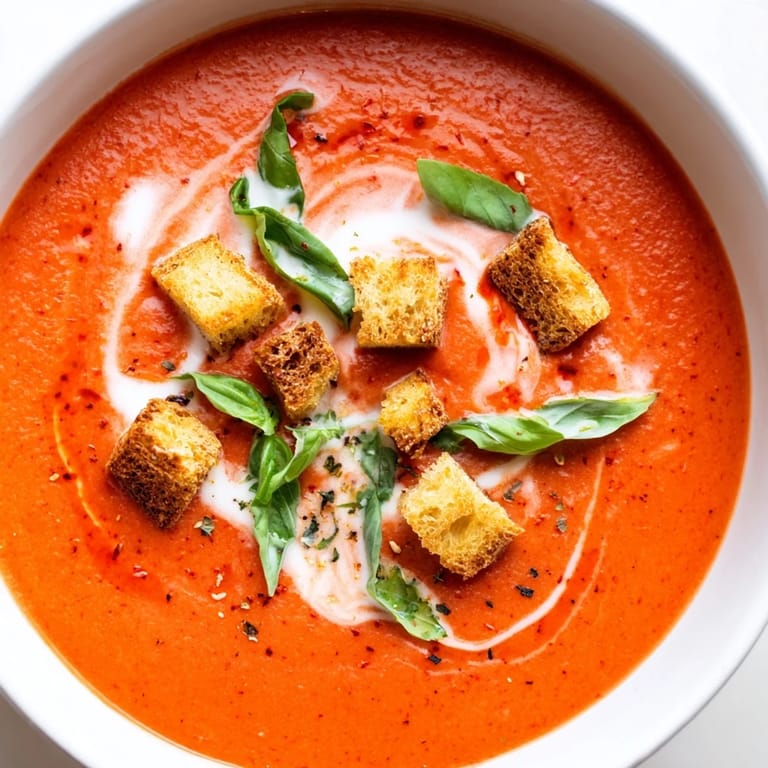
- Fresh basil and croutons for serving: Basil wakes up the finished soup; croutons add that textural contrast that makes people ask for seconds.
Tired of Takeout? 🥡
Get 10 meals you can make faster than delivery arrives. Seriously.
One email. No spam. Unsubscribe anytime.
Instructions
- Get everything roasting:
- Preheat your oven to 400°F and arrange tomato halves cut-side up on a baking sheet along with onion wedges. Slice the top off your garlic bulb, drizzle lightly with olive oil, wrap it loosely in foil, and tuck it among the vegetables.
- Season generously:
- Drizzle the tomatoes and onions with olive oil, then scatter salt and pepper over everything. This is your moment to be a little generous; the vegetables need seasoning to develop flavor.
- Let time do the work:
- Roast for 35 to 40 minutes until the tomatoes are blistered and caramelized at the edges and the garlic feels soft when you squeeze the foil. Your kitchen will smell incredible by minute 20.
- Cool and extract:
- Once the pan is cool enough to handle, squeeze the roasted garlic cloves right out of their skins—they'll slip out like butter. This is oddly satisfying.
- Blend into velvet:
- Transfer all your roasted vegetables and garlic to a blender, add the vegetable broth, and blend until completely smooth. Work in batches if your blender feels crowded; rushing this step means chunkiness.
- Finish with cream:
- Pour the blended mixture into a large pot, stir in the heavy cream and smoked paprika if using, then taste. If your tomatoes were very acidic, stir in a tiny pinch of sugar and taste again.
- Gentle simmer and serve:
- Heat the soup over medium-low for about 10 minutes, stirring occasionally so it doesn't stick. Ladle into bowls, top with basil and croutons, and watch people's faces light up.
 Save
Save This soup became the thing I made when someone needed comfort without it feeling heavy or fussy. Years later, my best friend still texts me in November asking if I'm making a batch, and I always am.
Why Roasting Changes Everything
Raw tomatoes and roasted tomatoes are almost different vegetables. When heat hits a tomato's flesh, something chemical happens—the sugars concentrate, the acidity softens into complexity, and the whole thing becomes deeper and more serious about itself. The garlic doesn't shout; it whispers instead, and the onions turn almost sweet. This is why the soup tastes nothing like tomato juice with cream stirred in.
Adjusting for Your Tomatoes
Tomato quality matters, but it's not as dramatic as people say. If yours are slightly underripe, the roasting will still caramelize them; the sugar helps balance any sharpness. If they're deeply ripe and fragrant, you might not need the optional sugar at all. Taste your finished soup before adding anything—your tomatoes know what they need better than any recipe does.
Serving and Storage
This soup tastes good hot or warm, and it keeps beautifully in the fridge for four or five days. Reheat gently on the stove with a splash of broth or cream if it's thickened. It also freezes well if you're thinking ahead, though the cream can separate slightly when thawed; just stir well and taste again for seasoning.
- Make croutons by tossing cubed bread with oil and herbs, then toasting until golden—homemade ones taste incomparably better than store-bought.
- Fresh basil is worth the extra two dollars; dried basil tastes like paper next to this soup's richness.
- Serve with something crusty on the side to soak up the last spoonful.
 Save
Save This soup has become the thing I make when I need to feed my own soul before I can feed anyone else. It's become permission to slow down.
Recipe Questions
- → What is the best way to roast the garlic?
Trim the garlic bulb’s top to expose the cloves, drizzle with olive oil, wrap in foil, and roast until soft and caramelized for sweet, mellow flavor.
- → Can I use fresh tomatoes instead of canned?
Yes, fresh ripe tomatoes work best when slow-roasted to intensify natural sweetness and depth in the soup.
- → How can I make this soup vegan?
Replace the heavy cream with coconut cream or cashew cream for a rich, plant-based alternative without compromising texture.
- → What herbs pair well with this soup?
Fresh basil leaves are ideal for garnish, adding a bright, herbal note that complements roasted tomatoes and garlic.
- → Is this soup suitable for gluten-free diets?
Yes, the soup itself is gluten-free. Just ensure any bread or croutons used for garnish are certified gluten-free if needed.
- → How do I balance the acidity in the soup?
A small pinch of sugar can be added after blending to round out the acidity from tomatoes, adjusting to taste.