 Save
Save There's something about the moment a board comes together that feels like magic—when you step back and see all those jewel tones catching the light, the deep crimsons of the cured meats playing against the wine-stained cheeses, and you realize you've created something that looks far more complicated than it actually was. My friend Marco brought over a bottle of Malbec one autumn evening, and instead of the usual cheese and crackers situation, I decided to lean into the wine theme completely, building a board that felt like it belonged in a Tuscan villa rather than my kitchen. This is what happened.
I'll never forget serving this to my book club the first time I made it, how everyone went quiet for a second when they saw it, and then suddenly everyone was talking over each other about flavors and pairings. One person said it tasted like "a wine bar decided to become food," which was exactly what I was going for. That's when I knew this board had something special—it wasn't just about feeding people, it was about creating a moment.
Ingredients
- Prosciutto (100g): Buy it sliced but not paper-thin—you want enough structure to fold it elegantly without it tearing.
- Bresaola (100g): This air-dried beef is delicate, so handle it gently and let it come to room temperature to release its full flavor.
- Spicy chorizo (100g): Slice it yourself if possible; pre-sliced can dry out, and you want those oils to shine.
- Smoked beef salami (80g): The smoke adds depth—choose one with visible peppercorns for visual interest and texture.
- Drunken Goat cheese (150g): This red wine-soaked goat cheese is the star; its tangy-sweet complexity makes every bite memorable.
- Red Wine Cheddar (150g): Cube it rather than slice it to catch light differently and give variation to how people grab it.
- Merlot BellaVitano (100g): Aged, nutty, with visible wine-staining—slice thin so you can see the color variation.
- Red grapes (1 small bunch): They provide sweetness and freshness that cuts through the richness of the meats.
- Pomegranate seeds: Remove them a few hours ahead so they dry slightly and pop with flavor rather than being juicy and rolling off the board.
- Red onion jam (1 small jar): The acidity is essential; don't skip it or the board becomes one-note.
- Roasted red peppers (1 cup): Slice them thickly; they should feel substantial, not limp.
- Dried cranberries (1 small handful): Toss them lightly with a touch of orange zest if you have it—a small upgrade that changes everything.
- Baguette (1): Slice it fresh the day of; stale bread ruins the whole experience.
- Red beet crackers (1 box): They add earthiness and visual drama—seek out quality ones with actual beet flavor, not just color.
- Fresh rosemary sprigs: Break them gently as you place them; the oils will scent the entire board.
- Edible rose petals (optional): If using, scatter them just before serving so they don't wilt or get lost.
Tired of Takeout? 🥡
Get 10 meals you can make faster than delivery arrives. Seriously.
One email. No spam. Unsubscribe anytime.
Instructions
- Prepare your canvas:
- Set your triangular board on the counter and take a breath—this is more about vision than technique. Imagine the board divided into sections, each one telling its own story.
- Create the meat landscape:
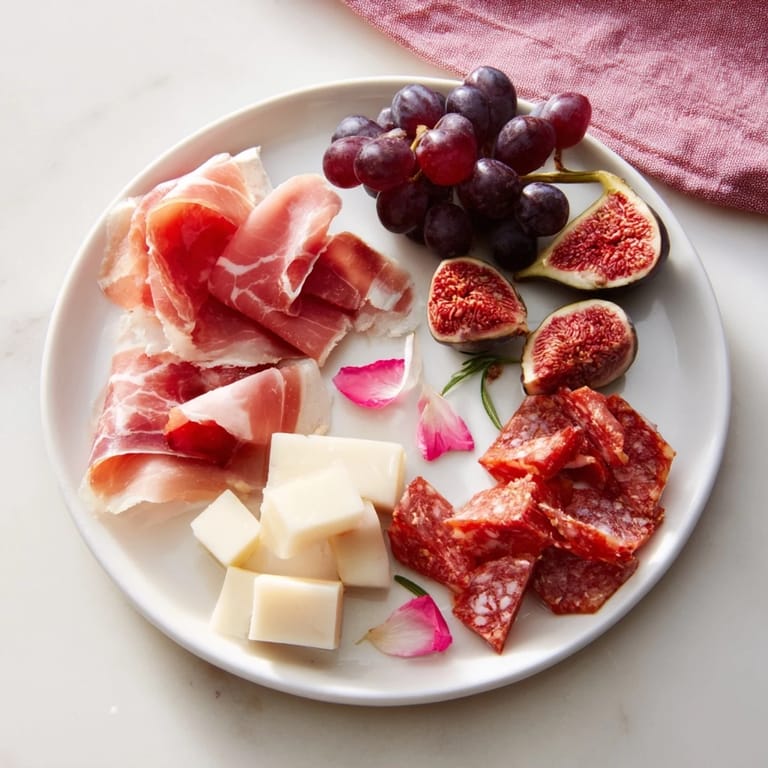
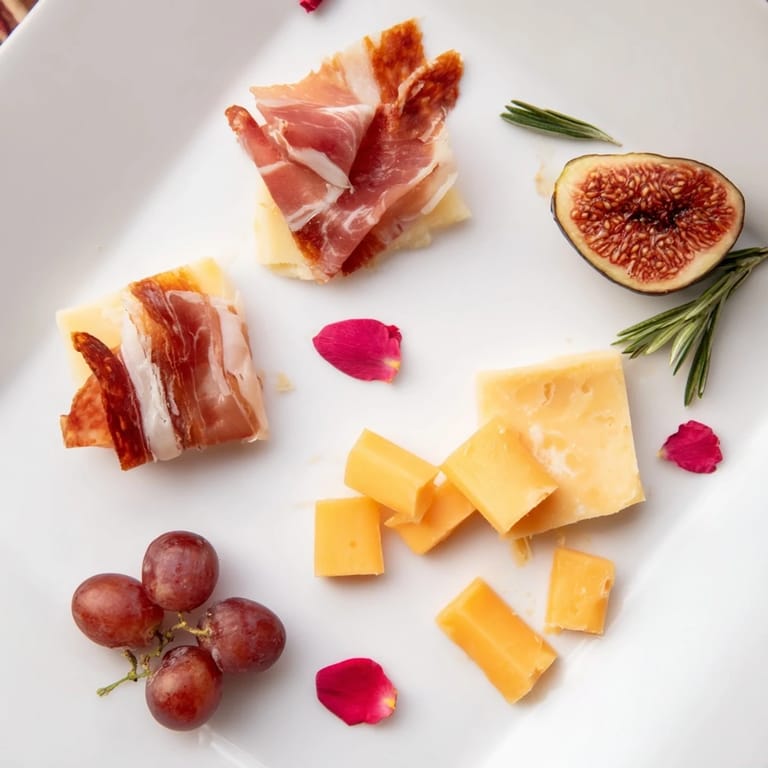
- Fold the prosciutto into loose quarters, letting some edges ruffle naturally. Roll the bresaola gently into cylinders. Fan the chorizo and salami slightly overlapping so the red catches the light. Group similar meats together rather than mixing them—contrast comes from texture and arrangement, not color chaos.
- Position the cheese clusters:
- Fan the Drunken Goat slices in a casual arch. Scatter the Red Wine Cheddar cubes in their own territory so people can grab them easily. Lean the Merlot BellaVitano slices against each other like a little cheese house. Let each cheese type have breathing room.
- Scatter the sweet and acidic elements:
- Arrange grapes in small clusters—they're jewelry for your board. Drop pomegranate seeds artfully between sections, letting some cluster and others sit alone. Create a small "well" in one corner for the red onion jam. Distribute dried cranberries like tiny rubies, filling small gaps.
- Layer in peppers and foundation:
- Roll the roasted red pepper strips and lean them against cheese or meat. Arrange baguette slices in a fan or line, then tuck beet crackers into remaining gaps, alternating colors.
- Finish with fragrance and intention:
- Break fresh rosemary sprigs and tuck them between elements so their needles stick up naturally. If using rose petals, scatter them in the moments before guests arrive—they're your final flourish, not something that sits.
- Serve with purpose:
- Bring everything to room temperature if it's been chilled; cold meats and wine-soaked cheeses are muted. Set out small cheese knives and let people navigate the board like they're exploring a flavor map.
 Save
Save 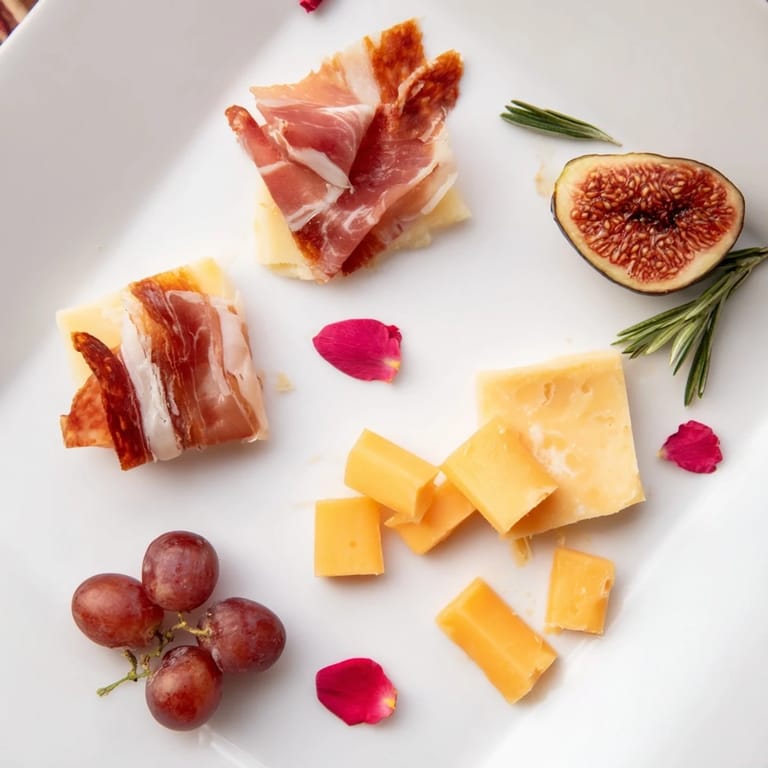 Save
Save I remember my mother-in-law picking up a slice of that Drunken Goat and just closing her eyes for a second, and I realized that charcuterie boards aren't really about hunger—they're about creating permission for people to slow down and taste things intentionally. That moment changed how I think about entertaining.
The Wine Pairing Philosophy
Bold red wines are your only option here, not because it's fancy, but because delicate wines get obliterated by the salt and spice. Cabernet Sauvignon brings structure that stands up to the cured meats, Malbec adds a fruity richness that echoes the wine-soaked cheeses, and Grenache works if you want something slightly more playful. I've found that the best approach is to have two wines open so guests can taste the interplay—how a sip of wine changes the next bite of cheese, and vice versa.
Building Your Own Variations
The magic of this board is that the framework stays the same but the cast of characters can shift based on season or mood. In winter, I add aged Manchego rubbed with smoked paprika and swap grapes for pomegranate for drama. In spring, I've experimented with adding fresh figs and switching to lighter charcuterie like soppressata. The real lesson is that once you understand the balance—salty meats, rich cheeses, acidic accompaniments, something sweet, something crunchy—you can riff endlessly.
- Try red wine-soaked blue cheese for a sharper flavor contrast.
- Add thin slices of quince paste alongside the cheese for unexpected sweetness.
- Swap baguette for crostini rubbed with garlic for more texture.
The Hospitality of Charcuterie
There's something about a charcuterie board that puts people at ease in a way a formal dinner never does. Everyone gets to move at their own pace, make their own combinations, succeed or fail without judgment. I've hosted people at this board who are usually reserved, and suddenly they're debating whether to pair the spicy chorizo with the goat cheese or the cheddar, sharing opinions like old friends.
Pro Tips
- The secret no one talks about is letting the board sit for ten minutes after you finish arranging it—the elements settle and look even more intentional and less fussy.
- Buy the wine-soaked cheeses from a quality cheese counter where they've been stored properly; mail-order versions sometimes arrive dried out.
This board has become my answer to the question "what should I serve?" because it solves so many hosting anxieties at once—it's elegant but not complicated, it feels generous without requiring hours of work, and somehow it always becomes the thing people remember. Make it once and you'll understand why.
Recipe Questions
- → What types of meats are included on the Crimson Crest board?
It features thinly sliced prosciutto, bresaola, spicy chorizo, and smoked beef salami arranged separately for contrasting textures.
- → How are the cheeses prepared for the board?
Cheeses like Drunken Goat and Merlot BellaVitano are soaked in red wine, then sliced or cubed into bite-sized portions to complement the meats.
- → What accompaniments enhance the flavor profile?
Fresh red grapes, pomegranate seeds, dried cranberries, roasted red peppers, and red onion jam provide sweetness and acidity to balance the richness.
- → How should the components be arranged on the board?
Roll or fold the meats in separate sections, fan out cheese clusters nearby, scatter fruit and accompaniments around, then fill gaps with bread and crackers for texture contrast.
- → Are there any recommended garnishes?
Fresh rosemary sprigs add aroma and color, and edible rose petals can be optionally added for an elegant touch.
- → Can I substitute any ingredients for dietary needs?
Gluten-free crackers can be used instead of traditional beet crackers and baguette, and cheeses may be swapped with alternatives soaking methods.