 Save
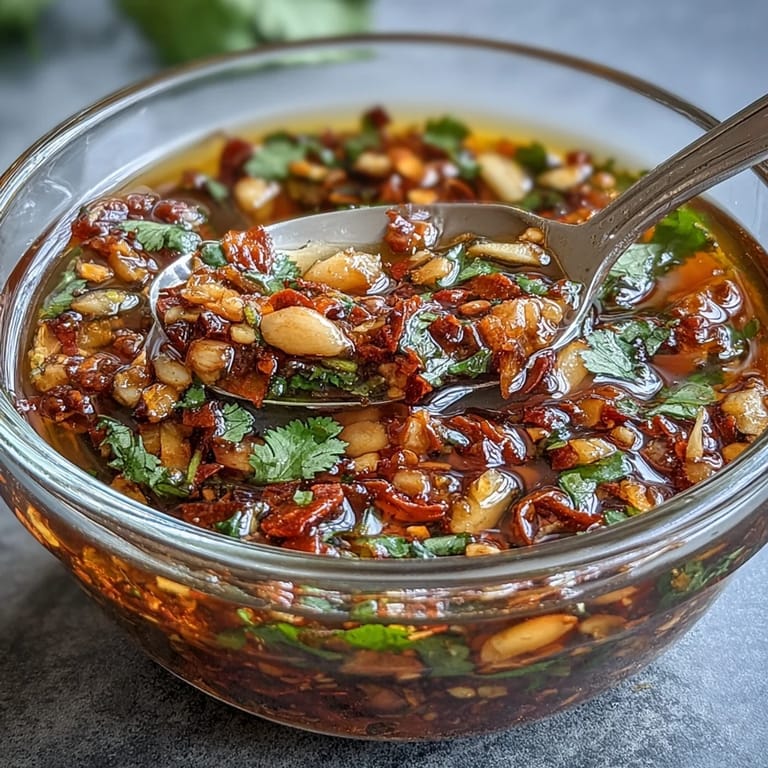
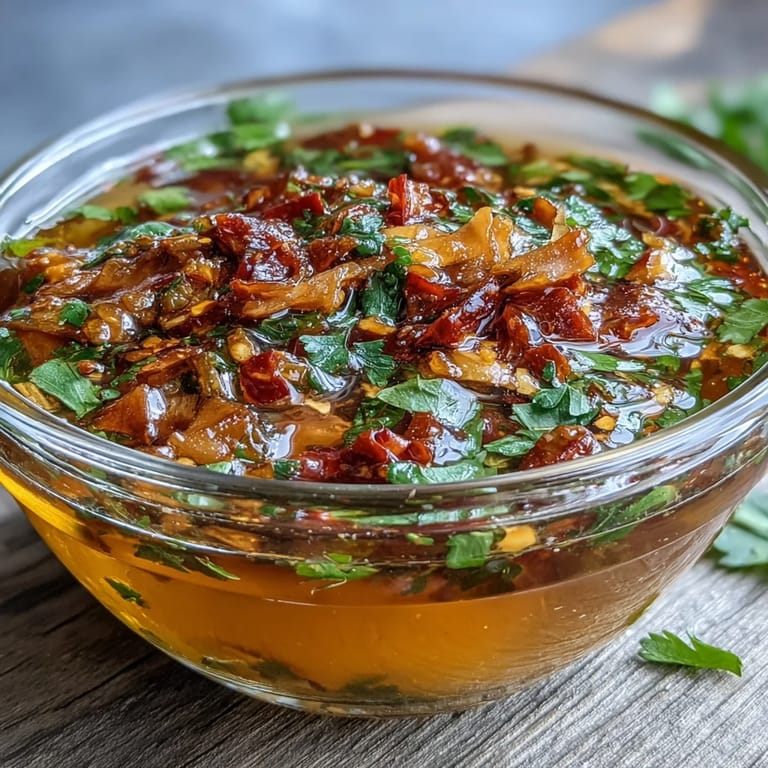
Save My kitchen smelled like a fireworks factory the first time I made this sauce, and honestly, I wasn't sure if that was a good thing. But then I dipped a dumpling into that golden, glistening oil and tasted the way the garlic had turned sweet and mellow while the chili flakes kept everything sharp and alive. It became the condiment I started making for every gathering, the small jar that somehow became the star of the table without trying. This sauce taught me that sometimes the simplest recipes are the ones people remember.
I made a double batch for a game night last winter, and my friend who usually politely declines spicy things found herself dipping everything into it. By the end of the night, she was asking for the jar to take home, and I realized this sauce has a way of sneaking up on people. Now whenever someone visits, I pull out a mason jar of this from my fridge like I'm sharing a secret.
Ingredients
- Garlic, 6 large cloves, finely minced: The foundation of everything here, garlic becomes almost creamy when warmed in oil and mellows into something you'll want to eat by the spoonful.
- Fresh ginger, 2 tablespoons finely grated: This adds a gentle warmth and prevents the sauce from feeling flat or one-dimensional.
- Crushed red chili flakes, 2 tablespoons: Start here and adjust up or down depending on who you're cooking for, but don't skip this entirely—the heat is what makes the sauce memorable.
- Sichuan peppercorns, 1 teaspoon optional: These tiny berries create a tingly, numbing sensation that transforms the experience, so include them if you're feeling adventurous.
- Fresh cilantro, 2 tablespoons finely chopped: Adds a bright, herbaceous note that cuts through the richness of the oil.
- Neutral oil, 1 cup: Use grapeseed, canola, or peanut oil—the oil's job is to carry flavor without adding its own.
- Soy sauce, 1 tablespoon: This is your umami backbone, the thing that makes people ask for more without quite knowing why.
- Rice vinegar, 1 teaspoon: A small acid punch that brightens everything and keeps the sauce from feeling heavy.
- Sesame oil, 1 teaspoon: Just enough to add nutty depth without overpowering the other flavors.
- Sugar, ½ teaspoon and salt, ½ teaspoon: These balance each other and the heat, making every flavor sing instead of clash.
Tired of Takeout? 🥡
Get 10 meals you can make faster than delivery arrives. Seriously.
One email. No spam. Unsubscribe anytime.
Instructions
- Gather your aromatics in a heatproof bowl:
- Combine the minced garlic, grated ginger, chili flakes, Sichuan peppercorns if using, and cilantro in a bowl that can handle heat without protest. This is your flavor foundation, waiting for the oil to wake it all up.
- Heat the oil to the right temperature:
- Pour your neutral oil into a saucepan and set it over medium heat. You're aiming for that shimmer point, around 350°F—to test, drop a tiny piece of garlic in and watch it sizzle immediately without browning aggressively.
- Pour the hot oil over the aromatics:
- This is the moment everything changes—carefully pour the hot oil into your bowl and watch as it bubbles and releases an aroma that makes you understand why this sauce exists. Let it cool for a couple of minutes while the flavors begin their conversation.
- Add the final seasonings:
- Stir in the soy sauce, rice vinegar, sesame oil, sugar, and salt until everything dissolves and combines into one cohesive golden mixture.
- Let it rest and mellow:
- Allow the sauce to cool to room temperature, then transfer it to a clean jar where the flavors will deepen and meld over the next few hours. This waiting period is when magic happens.
- Serve or store:
- Bring it out for dumplings, noodles, grilled meats, or bread, or keep it sealed in the refrigerator for up to two weeks.
 Save
Save There was a moment when my partner tried this sauce for the first time and went quiet, the way people do when something unexpected delights them. He asked if we could just eat it with a spoon, and I laughed until I realized he wasn't entirely joking. That's when I knew I'd made something beyond a condiment—I'd made something that felt like care in a jar.
The Magic of Infused Oils
Infused oils are one of those kitchen skills that sound fancy but are really just patience and good ingredients in conversation with heat. Once you understand that hot oil pulls flavors from whatever you put it near, you start seeing possibilities everywhere. This sauce is the perfect training ground because it teaches you how temperature control changes everything and how time allows flavors to settle into their best selves.
When to Make This Ahead
The most practical thing I learned about this sauce is that it actually improves with age, making it the perfect condiment to batch on a Sunday and forget about until you need a flavor lift during the week. I started keeping a jar at work because bringing lunch felt boring without it, and suddenly everything tasted intentional. The sauce lasts two weeks refrigerated, and I honestly can't remember the last time one made it past the first week in my house.
Customizing for Your Heat Tolerance
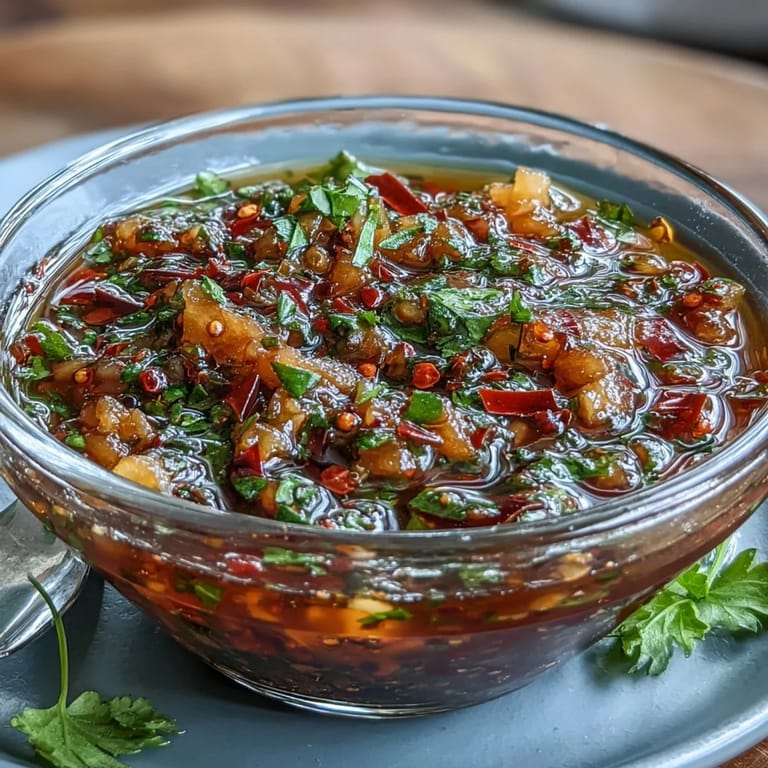
Heat is personal, and this sauce respects that by letting you adjust it to match your courage level. I've made gentle versions for people who watch spice from a distance and aggressive versions for friends who treat chili like a food group. The beauty is that even a mild version tastes complex and intentional because the garlic and ginger are doing so much flavor work underneath.
- Start with the recipe as written and taste before adding anything more—you can always intensify but you can't take heat back out.
- If you skip the Sichuan peppercorns, the sauce becomes softer and more straightforward, which is perfect if you're serving a mixed crowd.
- Fresh Thai chilies chopped fine can replace or supplement the chili flakes if you want a different kind of heat altogether.
 Save
Save This sauce reminds me that sometimes the best kitchen moments come from the simplest things—hot oil meeting aromatics, flavors finding their balance, and the humble jar that becomes everyone's favorite thing to ask for. Make it and watch what it becomes on your table.
Recipe Questions
- → How do you prevent the garlic from burning?
Heat the oil gently until shimmering but not smoking, then pour it over the garlic and aromatics off the heat. This method infuses flavor without burning.
- → Can the chili level be adjusted?
Yes, adjust the amount of crushed red chili flakes or omit Sichuan peppercorns for milder heat, or add cayenne for extra spice.
- → What oils work best for this infusion?
Neutral oils like grapeseed, canola, or peanut oil are ideal to carry the garlic and chili flavors without overpowering them.
- → How long does the sauce keep?
Stored in a sealed jar in the refrigerator, it keeps fresh for up to two weeks with flavors deepening over time.
- → What dishes pair well with this sauce?
It's great with dumplings, noodles, grilled meats, bread, and can also be drizzled on stir-fries or roasted vegetables.