 Save
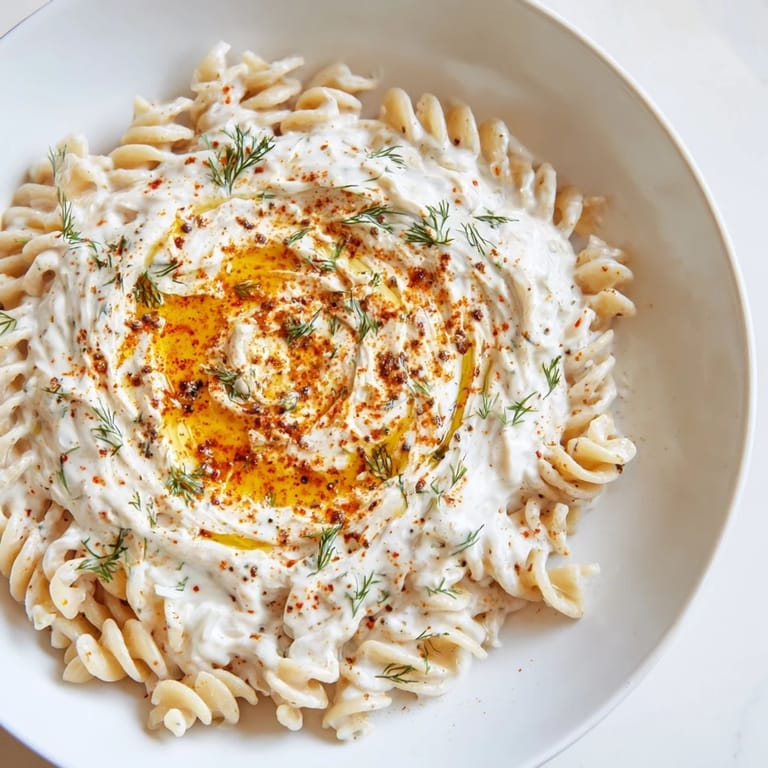
Save There's something about the way a bowl of warm pasta transforms when you pour cool yogurt over it—the steam rising, the creaminess melting into every curve of pasta. I discovered this Turkish yogurt pasta on an unremarkable Tuesday evening when my fridge held little more than a container of thick yogurt and a box of fusilli. What emerged from that simple combination was something so silky and comforting that I've made it countless times since, each time adding that buttery, paprika-tinged finish that makes it sing.
I once made this for a friend who'd been having a rough week, and I watched her face light up at that first bite—how the tangy yogurt cut through the richness of the spiced butter in the most unexpected way. She asked for the recipe before she'd even finished her bowl, which tells you everything you need to know about how satisfying this dish is.
Ingredients
- Dried pasta (fusilli or penne): These shapes hold onto the creamy yogurt sauce beautifully; avoid thin spaghetti, which slides right through.
- Full-fat Turkish or Greek yogurt: The richness matters here—thin, low-fat yogurt will taste sharp and one-dimensional.
- Garlic: Mince it fine so it dissolves into the yogurt rather than sitting in chunks.
- Unsalted butter and olive oil: Together they create a silkier texture than butter alone, and keep the spices from burning.
- Sweet paprika and Aleppo pepper: These are the soul of the dish—paprika brings warmth while Aleppo adds a gentle, fruity heat that regular red pepper flakes can't quite match.
- Dried mint: A whisper of this is optional, but it adds a brightness that feels authentically Turkish.
Tired of Takeout? 🥡
Get 10 meals you can make faster than delivery arrives. Seriously.
One email. No spam. Unsubscribe anytime.
Instructions
- Get your water boiling and pasta cooking:
- Salt your water generously—it should taste like the sea. This is your only chance to season the pasta itself, and don't skip those reserved 2 tablespoons of starchy water; you'll need it to loosen the yogurt.
- Build your yogurt sauce:
- Whisk yogurt with minced garlic and salt until completely smooth. The garlic should practically disappear into the yogurt, becoming part of its creaminess rather than a garnish.
- Bloom your spices in the butter:
- Watch as the paprika and Aleppo pepper wake up in the warm oil, their color deepening and their fragrance filling your kitchen. You'll know it's ready when the butter froths slightly and smells almost floral.
- Bring it all together:
- This is the moment everything changes—toss your hot pasta with cool yogurt, let them find their balance, and the pasta will actually warm the yogurt gently rather than curdling it.
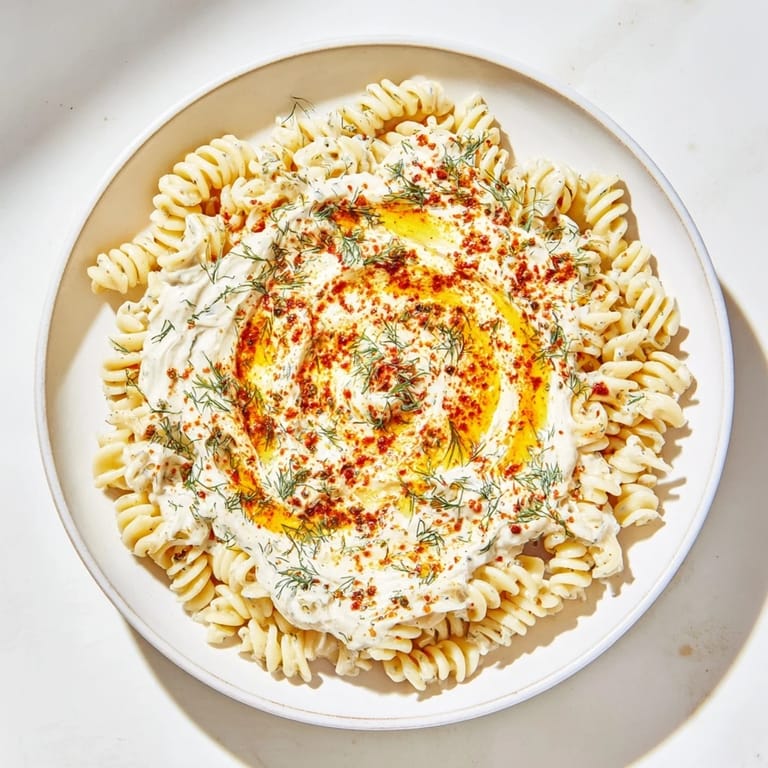
- Crown each bowl with spiced butter:
- Drizzle generously, let it pool in the center, and watch as everyone leans in to smell that butter before they even taste it.
 Save
Save I remember my grandmother watching me make this for the first time, nodding quietly as the butter hit the yogurt-dressed pasta, and simply saying, 'Yes, like this.' Sometimes the simplest dishes carry the most meaning because they remind us that cooking isn't about complexity—it's about respect for each ingredient and knowing when to stop.
The Magic of Yogurt in Warm Dishes
Yogurt can seem delicate, almost fragile, but when you understand its nature—that it's simply milk that's been transformed by cultures—you realize it's actually quite forgiving. The key is patience and temperature awareness; yogurt wants to be treated as an ingredient of equal importance to butter or cream, not as an afterthought. In Turkish and Middle Eastern cooking, yogurt isn't a topping or a side—it's the foundation, the stage upon which other flavors perform.
Why Aleppo Pepper Changes Everything
If you can only add one new ingredient to your spice cabinet this year, make it Aleppo pepper. Unlike cayenne or regular red pepper flakes, which announce themselves with sharp heat, Aleppo pepper is more nuanced—it brings a fruity, almost berry-like warmth that complements yogurt-based sauces in ways that feel almost magical. I started seeking it out after realizing that the dishes I loved most always had this subtle, lingering warmth rather than a front-loaded kick of spice.
Building Flavor Layers in Simple Cooking
This dish teaches you something important about how flavor actually works in the kitchen—that you don't need many ingredients, but the ones you use should each earn their place through how they interact. The cool yogurt, the warm pasta, the spiced butter on top—each element has its own temperature and purpose, and together they create something greater than any single component.
- Toast your dried mint in your hand briefly before adding it to the butter; this releases its oils and prevents it from tasting dusty.
- If your yogurt seems too thick, thin it gradually with reserved pasta water rather than regular water, which will dilute the flavor.
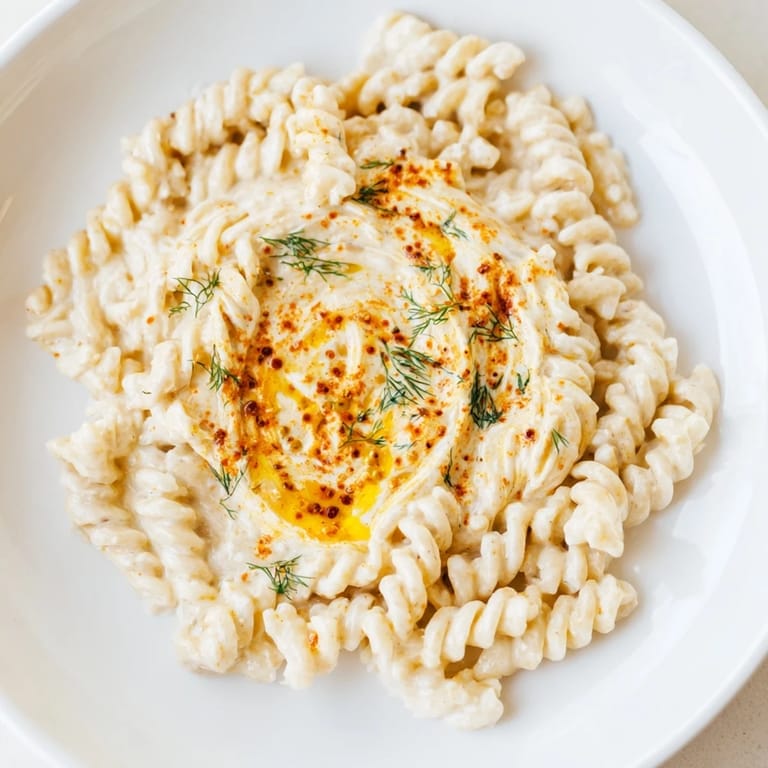
- Serve this immediately after assembling; letting it sit allows the yogurt to cool and the magic to fade.
 Save
Save This is the kind of dish that deserves to be made often, not saved for special occasions, because its joy is in its simplicity and the way it reminds you that some of the best meals happen when you work with what you have rather than against it. Serve it with a sharp salad and torn bread, and watch how quickly it disappears from the table.