 Save
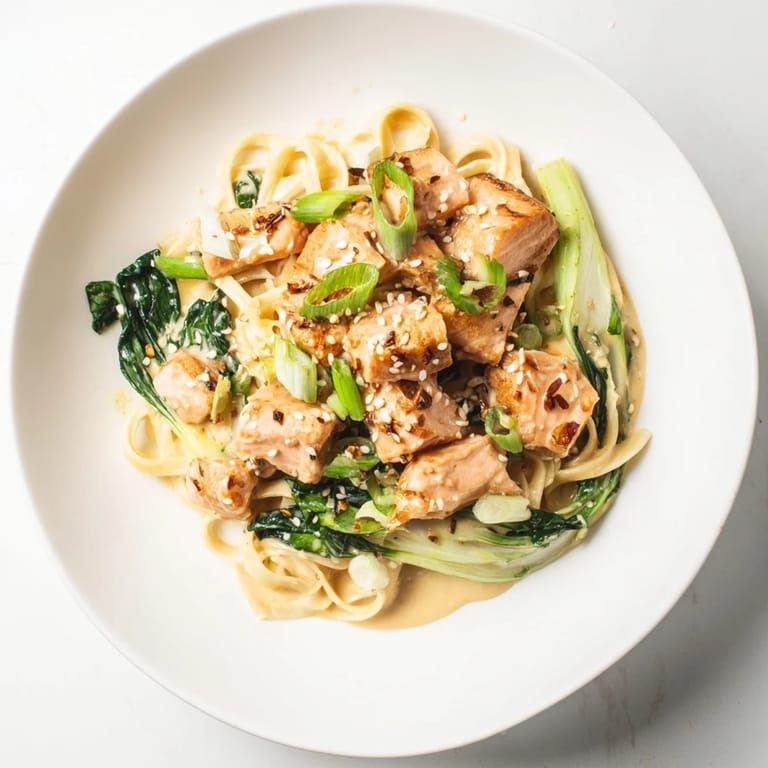
Save There's a moment when umami stops being a word and becomes a feeling—it happened to me halfway through a Tuesday night when I was craving something that didn't exist yet. I had salmon thawing, leftover miso paste catching light in its container, and a sudden vision of what might happen if Japanese flavor met Italian pasta. Twenty minutes later, my kitchen smelled like toasted sesame and butter, and I understood why this combination had been waiting to exist all along.
I made this for friends who were tired of the same rotation of weeknight dinners, and watching them taste it—that pause before the fork went back for another bite—told me everything. One of them asked for the recipe mid-meal, which never happens. It's the kind of dish that feels indulgent without requiring you to actually spend hours cooking, and somehow that made it feel more special, not less.
Ingredients
- Salmon fillets (400g, cut into bite-sized pieces): Look for bright color and a smell like the ocean, not fishy—that's your sign it's fresh enough to sing in the sauce.
- Linguine or spaghetti (300g): The long strands grip the sauce beautifully; short pasta leaves too much sauce clinging to the bottom of the bowl.
- Baby bok choy (2 heads, chopped): The leaves wilt into the sauce while the stems stay just tender enough—don't skip it for something softer like spinach unless you have to.
- Garlic (2 cloves, minced): Fresh, not pre-minced, because the smell as it hits the hot butter is half the experience.
- Scallions (2, sliced): Save these for the end; their sharp green bite balances all that rich cream and umami.
- Unsalted butter (60g): You're building a sauce where butter is a main player, so use something good that tastes like cream and salt.
- White miso paste (2 tbsp): This is your secret weapon—it dissolves into the butter and cream without overpowering, just deepening everything mysteriously.
- Soy sauce (2 tbsp): It adds salt and salty-umami depth; taste as you go since bottles vary in intensity.
- Mirin (2 tbsp): Sweet rice wine that rounds out the miso's earthiness and keeps the sauce from tasting too heavy.
- Heavy cream (100ml): This transforms the sauce from thin to silky; don't substitute lighter cream or it'll break when it hits the hot skillet.
- Sesame oil (1 tsp): A tiny amount goes a long way—it's the aroma that tells your brain something special is happening.
- Black pepper (½ tsp, freshly ground): Fresh pepper matters more here than you'd think; it cuts through the richness like a whisper.
- Toasted sesame seeds and lemon wedges: Both are optional, but the sesame adds crunch and the lemon adds brightness that stops everything from feeling too heavy.
Tired of Takeout? 🥡
Get 10 meals you can make faster than delivery arrives. Seriously.
One email. No spam. Unsubscribe anytime.
Instructions
- Start the pasta:
- Salt your water generously so it tastes like the sea, then let it boil hard before the pasta goes in. While it cooks, reserve ½ cup of starchy water before draining—that liquid is your insurance policy for a silky sauce.
- Sear the garlic and salmon:
- Heat butter and sesame oil together until they're warm enough to smell nutty, then add the garlic and let it perfume the pan for just a minute. Add salmon pieces and cook gently so they don't break apart; the fish will keep cooking in the sauce, so pull it away when it's barely set.
- Build the sauce:
- In the same skillet, melt the remaining butter and whisk in miso paste until it's smooth and no lumps remain. Add soy sauce and mirin, then pour in the cream slowly while stirring, so it incorporates instead of curdling.
- Wilt the bok choy and finish:
- The chopped greens will cook down in 2–3 minutes in the hot sauce; return the salmon gently, then toss in the drained pasta and enough reserved pasta water to make the sauce coat everything without pooling at the bottom.
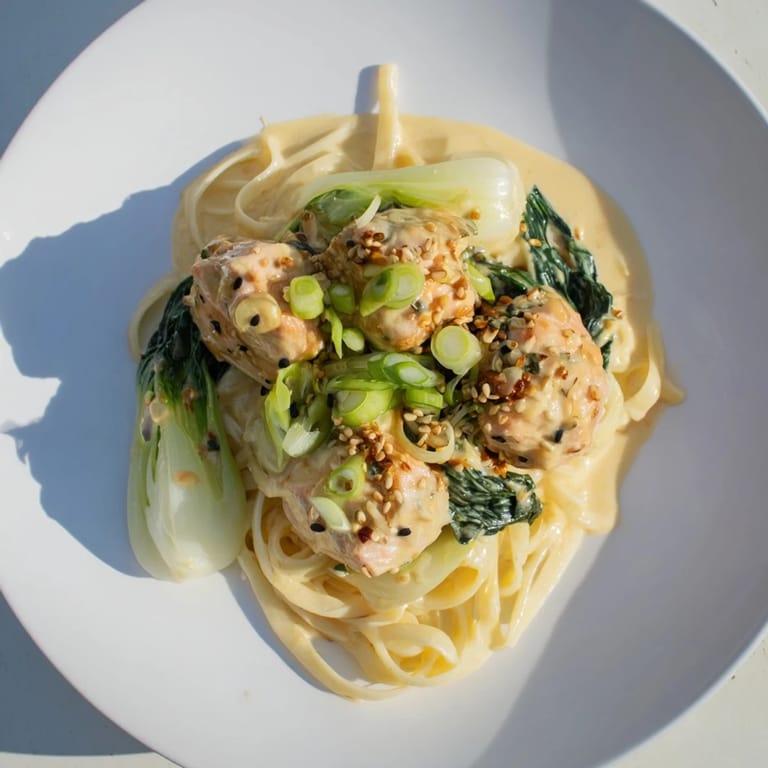 Save
Save There's a moment just before you eat when the steam rises and you can smell everything layering together—the umami, the sesame, the bright lemon if you've got it nearby. That's the moment when a pasta dish becomes more than dinner; it becomes proof that some flavor combinations were meant to find each other.
Why This Fusion Works
Miso and butter have been doing their own thing in their respective cuisines for centuries, but the moment they meet in a warm skillet, something clicks. The miso's deep, fermented earthiness softens the cream's richness while butter carries the miso's flavor further than it could travel alone. Add soy sauce and mirin to the conversation, and suddenly you have a sauce that feels both Japanese and vaguely Italian—not because it's pretending to be either, but because it's found its own language. The salmon doesn't fight this; it sits in the middle and lets the sauce complete it.
Timing and Temperature Matter
The only real risk in this dish is moving too slowly once everything starts. Pasta water boils while you sear salmon; cream curdles if the pan is too hot when you add it; bok choy turns to mush if you look away. It's not complicated, but it does reward attention. Keep everything moving at a gentle pace—medium heat is your friend here—and finish the whole dish in under 40 minutes, which means you can call someone at 5:45 and eat at 6:30 without stress.
Making It Your Own
This recipe is flexible enough to bend without breaking. If heat calls to you, a pinch of chili flakes blooms into the sauce in step 2. If you don't have bok choy, spinach or even sliced mushrooms can take its place, though bok choy's slight bitterness is worth seeking out. Some nights I add a splash of white wine to the sauce, which adds brightness; other times I finish with crispy breadcrumbs instead of sesame seeds for texture. The frame stays the same, but the feeling shifts with what you choose.
- For a lighter version, use half-and-half instead of heavy cream, though the sauce won't be quite as silky.
- If you're cooking for someone with gluten sensitivity, swap in gluten-free pasta and tamari instead of soy sauce, and check your miso label.
- A chilled glass of Sauvignon Blanc alongside—crisp enough to cut through the richness without overpowering the delicate salmon—makes the whole meal feel like an occasion.
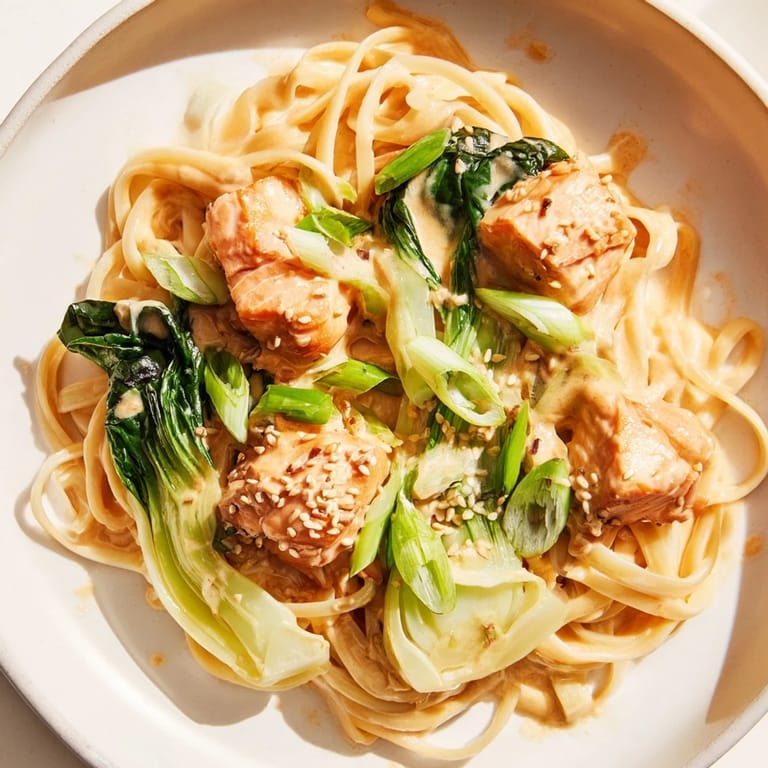 Save
Save This dish taught me that the best recipes aren't the ones that sound most impressive; they're the ones you reach for when you want to feel like you've done something special without exhausting yourself. Make this on a Tuesday or a Friday—it doesn't matter—and you'll understand.
Recipe Questions
- → What type of pasta works best for this dish?
Linguine or spaghetti are ideal as they hold the creamy sauce well while complementing the salmon's texture.
- → Can I substitute bok choy with another vegetable?
Yes, spinach or other leafy greens can be used as alternatives for a slightly different texture and flavor.
- → How can I ensure the salmon stays tender during cooking?
Cook salmon briefly over medium heat until just cooked through, about 2–3 minutes per side, to maintain moisture.
- → What role does miso paste play in the sauce?
Miso paste adds depth and a subtle savory umami note that enriches the creamy butter base.
- → Is this dish suitable for pescatarian diets?
Yes, it contains seafood and dairy but no other meat, fitting well within pescatarian preferences.