 Save
Save There's something about the smell of butter melting into warm bread that pulls me back to a tiny kitchen in Lyon, where I watched a neighbor prepare the simplest appetizer with the kind of care most people reserve for elaborate dishes. She'd mix herbs into softened butter like she was composing music, tasting and adjusting until the balance felt right. That moment taught me that sometimes the most memorable food comes from respecting a few excellent ingredients rather than chasing complexity.
I made this for a dinner party once when a guest mentioned she couldn't eat anything heavy, and afterward she asked if the butter was actually butter or some fancy cultured cream situation. It wasn't—just real butter, fresh herbs from the market, and the kind of attention that comes from listening to what good ingredients want to become. That's when I realized this dish says something about caring without fussing.
Ingredients
- Crusty artisan bread: Sourdough or baguette holds the butter without getting soggy, and the crust gives you that satisfying textural contrast that makes each bite feel intentional.
- Unsalted butter: Use real butter that smells sweet and creamy—it's the foundation, so it matters more than you'd think.
- Fresh parsley: The quiet backbone that keeps things herbaceous without overpowering, milder than you expect.
- Fresh chives: A gentle onion whisper that adds dimension without harshness.
- Fresh thyme: Just a touch—this one has opinions, so don't double it.
- Garlic clove: Minced fine so it disappears into the butter rather than hitting you with raw bite.
- Lemon zest: The brightness that makes people pause and try to guess what they're tasting.
- Flaky sea salt: The finishing touch that makes the whole thing sing.
Tired of Takeout? 🥡
Get 10 meals you can make faster than delivery arrives. Seriously.
One email. No spam. Unsubscribe anytime.
Instructions
- Heat your oven or broiler:
- Get it to 200°C (400°F) so it's ready when you need it—timing matters more than temperature precision here.
- Make the compound butter:
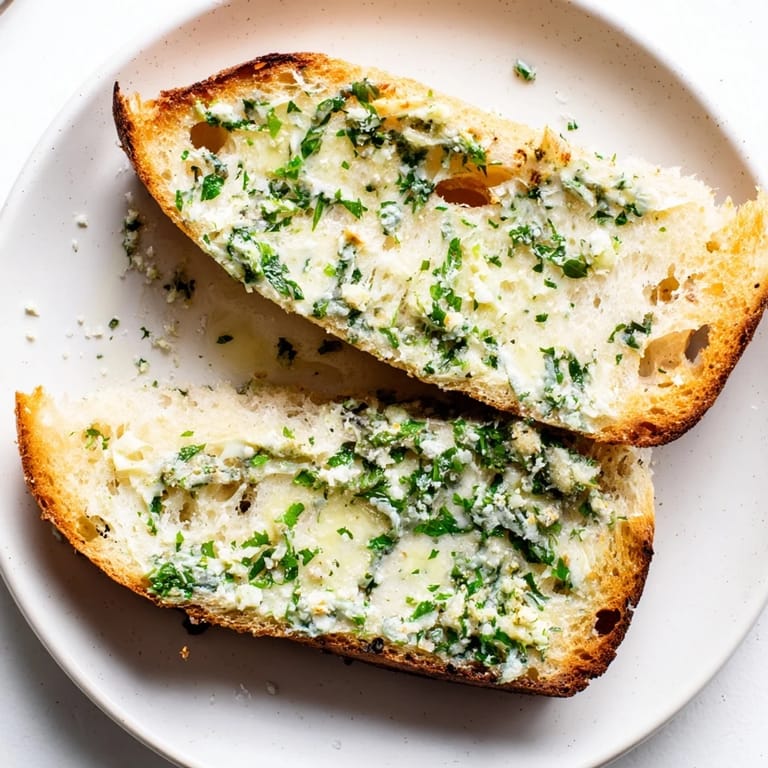
- Combine softened butter with parsley, chives, thyme, minced garlic, lemon zest, pepper, and sea salt in a bowl, stirring until the herbs are evenly distributed and the color shifts to pale green. Taste it—you're looking for herbaceous richness without raw edges.
- Toast the bread:
- Arrange slices on a baking sheet and toast for 2–3 minutes until the surface is crisp and the edges catch light. This step matters because it gives the bread structure to hold the butter without absorbing it into mush.
- Spread the butter:
- Work generously—this isn't a spread, it's a layer, thick enough that butter shows on every bite.
- Return to heat:
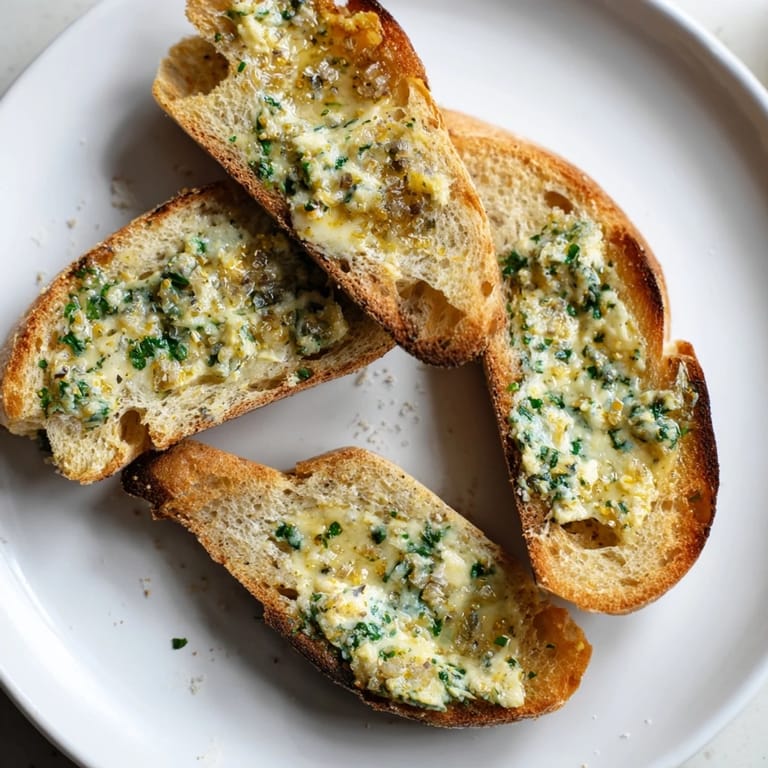
- Toast for another 1–2 minutes, watching for the butter to melt and the crust to deepen to golden. You want the heat to work the butter into the bread, not just sit on top.
- Finish and serve:
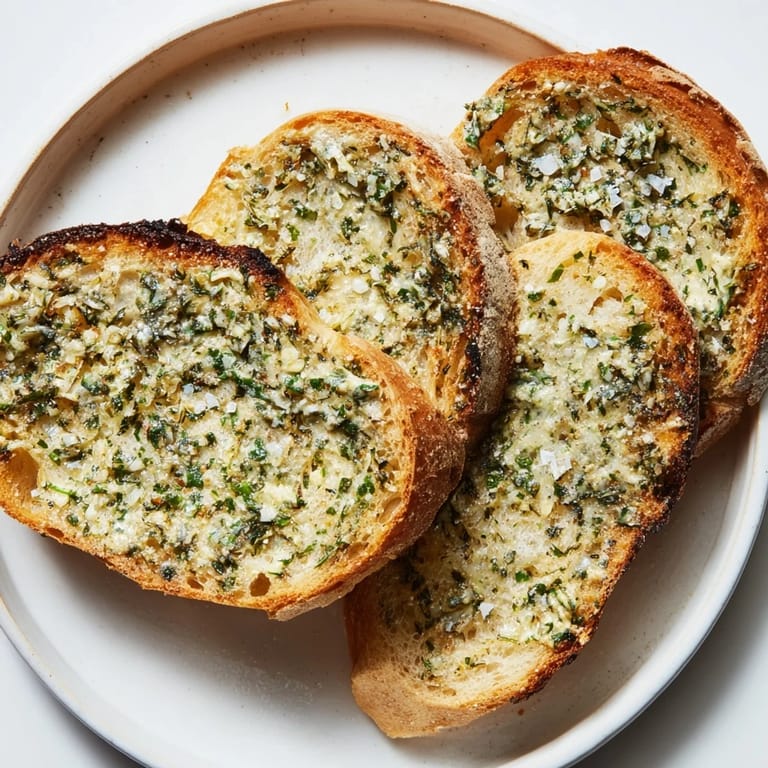
- A scatter of flaky salt across the warm toast brings everything into focus, and serving immediately means you get it while the bread is still crisp underneath and the butter still holds warmth.
 Save
Save A friend once said that this toast somehow made her feel less alone during a quiet morning at home, which stuck with me in a way that surprised me. Good food doesn't have to be complicated to be meaningful.
Variations That Work
I've added chili flakes for heat, swapped thyme for tarragon when I wanted something more delicate, and once threw in finely minced anchovy because I wanted the butter to taste like the sea. Each version felt like a different conversation with the same basic ingredients. The beauty is that you're not locked into one direction—the butter is flexible enough to follow whatever you're feeling.
What Drinks Pair Well
A crisp white wine cuts through the richness without competing, or move toward something lighter like a dry rosé if it's warm outside. I've also served this alongside a smooth soup and watched people dip the edges in, turning it into something more interesting than either component alone.
Serving and Storage
Serve immediately while the bread still has texture and the butter is warm enough to glisten. You can make the compound butter hours ahead and keep it in the fridge, which means assembly is just minutes when guests arrive.
- The compound butter keeps refrigerated for a week and even freezes well for future toasts or vegetables.
- Leftover herb butter can rescue bland grilled chicken or roasted potatoes in moments.
- Toast the bread fresh if possible—reheated bread loses the contrast that makes this dish work.
 Save
Save This is the kind of dish that reminds you that the best cooking isn't about effort or obscure ingredients—it's about paying attention. Make it once and you'll find yourself reaching for it whenever you want something that tastes generous without feeling like work.
Recipe Questions
- → What type of bread works best for this dish?
Crusty artisan breads like sourdough or baguette are ideal because they provide a sturdy base and crisp texture when toasted.
- → Can I use different herbs in the compound butter?
Absolutely. Herbs like dill, tarragon, or basil can be used to customize flavors while maintaining the dish’s aromatic quality.
- → How do I achieve the perfect texture?
Lightly toasting the bread until golden before adding the herb butter ensures a crisp exterior with a melt-in-mouth topping.
- → Is there a way to add a spicy kick?
Adding a pinch of chili flakes to the butter mix introduces gentle heat complementing the herbs and butter richness.
- → What pairs well with herb butter toast?
It pairs nicely with crisp white wine or a light soup, balancing freshness and richness for a complete tasting experience.