 Save
Save My grandmother always said lutefisk wasn't really food until someone you loved was sitting across the table waiting for it. Years later, I understood what she meant—not because of the dish itself, but because of the ritual around it. There's something about spending nearly a week coaxing dried cod back to life, filling your kitchen with the scent of patience and tradition, that makes you want to share it. This is the recipe she passed down, the one that transforms a humble piece of preserved fish into something that tastes like belonging.
I remember the first time I convinced friends to try lutefisk—they arrived skeptical, armed with jokes about fish smells and Scandinavian stoicism. By the time they tasted that flaky, tender fish with the tangy mustard sauce pooling around the potatoes, the skepticism dissolved completely. One friend asked for the recipe that very night, and now it's become their own holiday tradition too.
Ingredients
- Dried cod (1 kg): This is the star—seek out quality lutefisk from a Nordic supplier if you can, as the rehydration process depends on starting with fish that was properly dried. The texture and flavor will make the week-long wait feel worthwhile.
- Cold water: You'll be changing this every single day, which sounds tedious until you realize it's exactly what makes the fish tender and mild instead of aggressively fishy.
- Coarse salt: After soaking, this brief salting step firms up the fish just enough so it holds together beautifully in the oven.
- Unsalted butter: The foundation of your sauce—use real butter, not margarine, because this dish deserves that richness.
- All-purpose flour: Creates the roux that thickens the sauce to exactly the right consistency; gluten-free flour works perfectly if you need it.
- Whole milk: The creamy base that balances the mustard's tang without overwhelming it.
- Dijon and whole-grain mustard: Two mustards together give you both smooth heat and little pockets of grain flavor that keep the sauce interesting.
- Sugar: Just a teaspoon to round out the mustard's sharp edges and add subtle sweetness.
- Boiled potatoes: The quiet companion that lets the fish shine while providing something to soak up the sauce.
- Crispbread or flatbread: Scandinavia's answer to every meal—it's there if you want it, never expected, always appreciated.
Tired of Takeout? 🥡
Get 10 meals you can make faster than delivery arrives. Seriously.
One email. No spam. Unsubscribe anytime.
Instructions
- Begin the transformation:
- Rinse your dried cod under cold water, letting the water run clear. Place it in a large container and submerge it completely, then set it in the refrigerator. Over the next five to six days, change the water daily—this isn't busywork, it's the magic step that turns hard, salty fish into something tender and almost delicate.
- Prepare for baking:
- When the soaking is done, drain the fish and sprinkle it generously with coarse salt. Let it sit at room temperature for 30 minutes—this firms up the fish just enough. Rinse the salt away and pat the fish dry with paper towels. Preheat your oven to 200°C (390°F).
- Bake gently:
- Arrange the fish pieces in a baking dish, cover everything tightly with foil, and slide it into the oven. In 25 to 30 minutes, the fish will turn opaque and flake easily when you press it with a fork—that's your signal it's done. Don't rush this step by raising the heat; gentle warmth is what keeps the texture silky.
- Build the mustard sauce:
- While the fish bakes, melt butter in a saucepan over medium heat until it's foaming and smells almost nutty. Whisk in flour and cook for about one minute, stirring constantly so it doesn't brown—you want a pale, smooth paste. Slowly pour in the milk while whisking steadily to break up any lumps, then let it simmer for three to four minutes until it thickens just enough to coat the back of a spoon.
- Season the sauce:
- Remove the pan from heat and stir in the Dijon mustard, whole-grain mustard, sugar, salt, and white pepper. Taste it and adjust the seasoning—you want the mustard flavor to be present but not aggressive, balanced by the sweetness of the milk and just a hint of sugar. Keep it warm while you finish plating.
- Bring it all together:
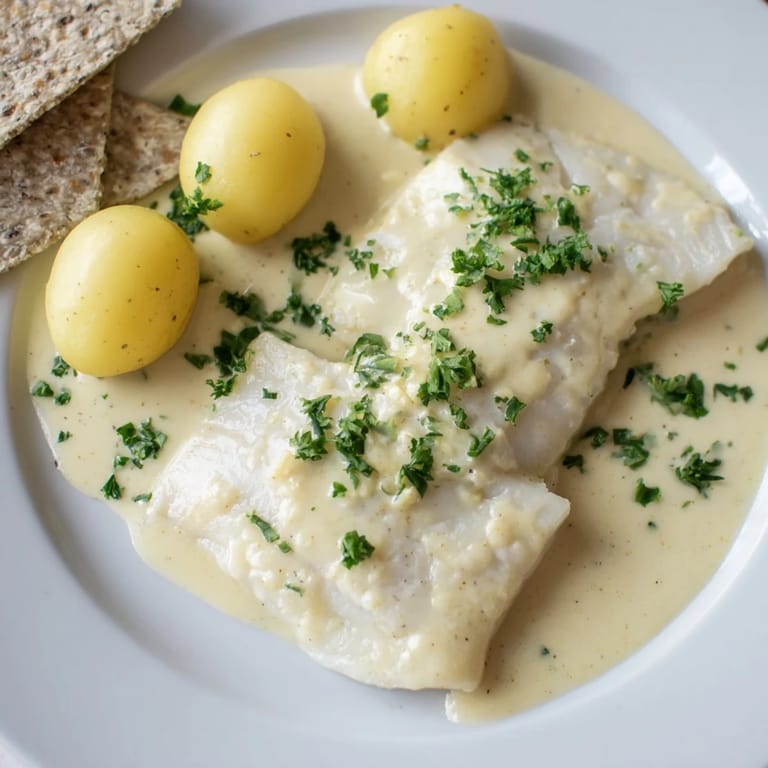
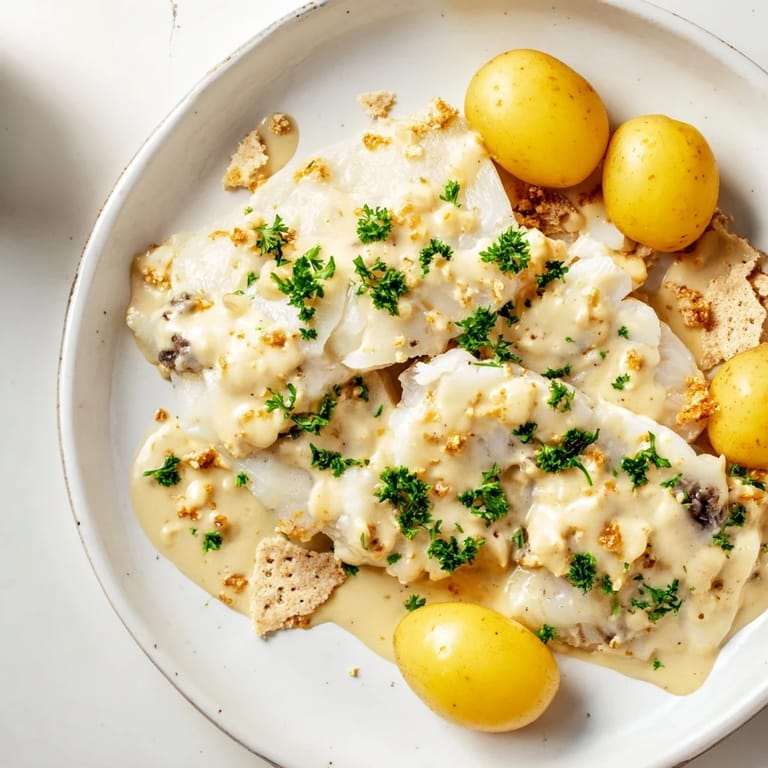
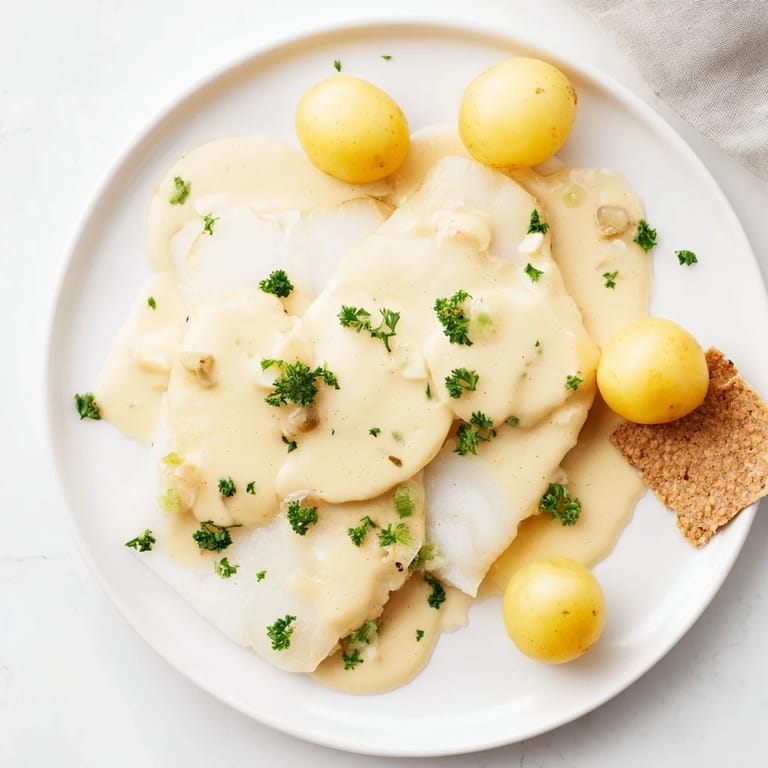
- Transfer the hot fish to plates alongside boiled potatoes and a piece of crispbread. Spoon the warm mustard sauce generously over the fish, letting it pool around the potatoes. Scatter fresh parsley over the top if you like a touch of green, then serve immediately while everything is still hot.
 Save
Save There's a quiet moment when you plate lutefisk that I treasure—when you watch the steam rise from the hot fish and realize you've done something that connects you to centuries of people who sat around tables exactly like yours, eating exactly this meal. It's a small thing, but it lands differently than most other cooking.
The Art of Patience
Lutefisk demands time in a way that modern cooking rarely does, and that's precisely what makes it special. The five to six days of soaking isn't a flaw or an inconvenience—it's the actual recipe. Each water change is telling the fish to become something new, something gentler and more refined than it started. When you finally bake it, you're not salvaging a difficult ingredient; you're completing a conversation that's been unfolding all week.
Serving Like a Tradition
Lutefisk appears on Norwegian tables during winter holidays, but it doesn't have to stay there. I've made it in March when winter felt endless and everyone needed reminding that good food can be simple. I've served it to people who'd never heard of it, and I've made it when it was just me and one other person, quiet in the kitchen on an ordinary Tuesday evening. The dish doesn't require an occasion—it creates one, just by existing on the plate.
Pairing and Variations
The traditional sides of green peas and bacon bits add textural contrast and a savory richness that pairs beautifully with the mild fish. Some people add a knob of butter on top, which is never wrong. The mustard sauce is really the star, and it's forgiving enough that you can adjust it to your taste—more grain, less Dijon, a touch more sugar—without losing what makes it work. This is your kitchen, your memory, your table.
- A chilled glass of aquavit cuts through the richness and feels authentically Scandinavian, but a crisp lager works just as well.
- If gluten-free living is part of your world, swap in gluten-free flour without hesitation—the sauce will be exactly the same.
- This meal feeds four generously, but it scales up easily if you're feeding a crowd who's willing to wait for something worth eating.
 Save
Save Lutefisk is the kind of dish that stays with you long after the plate is cleared. It's worth every single day of soaking.
Recipe Questions
- → How long should lutefisk soak before cooking?
Soaking dried lutefisk for 5 to 6 days in cold water, with daily water changes, rehydrates the fish for optimal texture.
- → What is the best method to cook lutefisk?
After soaking, bake the fish covered with foil at 200°C (390°F) for 25-30 minutes until it flakes easily.
- → How is the mustard sauce prepared?
Butter and flour form a base cooked briefly, then milk is whisked in to thicken. Dijon and whole-grain mustard, sugar, and seasoning finish the creamy sauce.
- → What sides complement this dish well?
Boiled potatoes and crispbread or flatbread balance the soft texture and add a pleasant contrast.
- → Can the mustard sauce be made gluten-free?
Yes, using gluten-free flour in place of all-purpose flour keeps the sauce gluten-free without altering flavor.