 Save
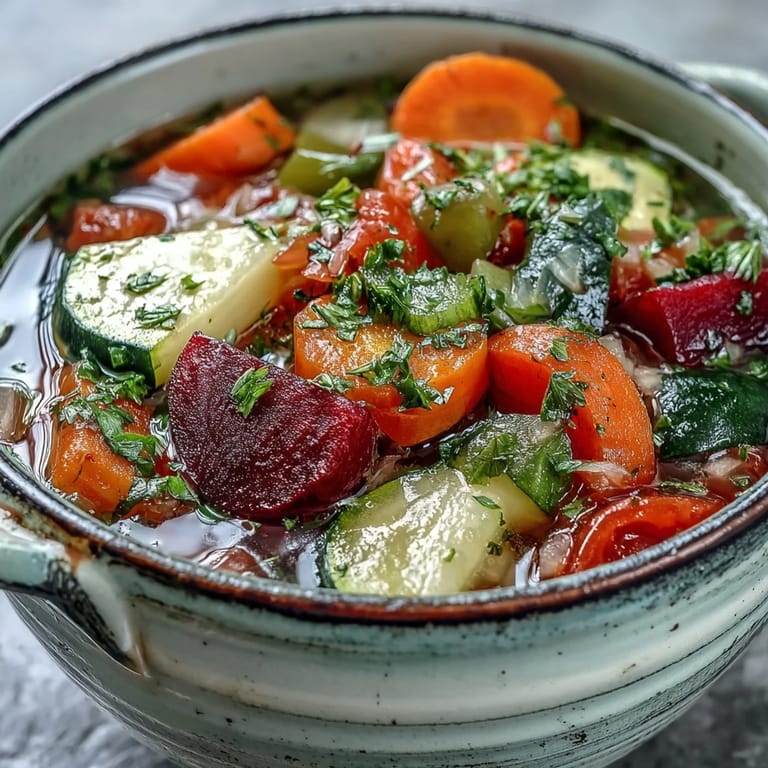
Save I made this soup on a Tuesday when my kitchen felt too quiet and my fridge was overflowing with vegetables that needed rescuing. There's something almost meditative about chopping a rainbow of vegetables, watching the reds and purples and oranges pile up on the board, knowing they'll soon transform into something warm and glowing. My mom called halfway through prepping, and by the time we hung up, the whole pot was simmering and the smell alone made me feel lighter.
My partner has this habit of being skeptical about vegetable soups until he actually tries mine, and then he quietly asks for seconds. There was this one evening when a friend stopped by unexpectedly, and I ladled this into bowls, garnished it with fresh herbs, and watched her expression shift from polite curiosity to genuine surprise at how satisfying it was. That's when I realized this soup had become one of my quiet kitchen victories.
Ingredients
- Beetroot: This is your secret weapon for natural sweetness and that jewel-toned color that makes people lean in closer to their bowl.
- Carrots: They soften into something almost creamy when they cook long enough, adding body to the broth without any cream.
- Courgette: It melts into the background quietly, adding substance while keeping everything light and fresh-feeling.
- Tomatoes: Choose ones that smell like tomatoes, because that's where all the flavor lives.
- Green bell pepper: It adds a subtle crunch even after cooking, a little bit of brightness that keeps the soup from feeling heavy.
- Red onion: The smaller ones are sweeter, and they break down completely, creating a silky base for everything else.
- Garlic: Two cloves is the sweet spot, enough to whisper through the soup without overwhelming it.
- Baby spinach: Optional but worth it, it wilts into almost nothing while adding nutrients and a gentle earthiness.
- Vegetable broth: Use the kind you'd actually want to drink on its own, because that's the foundation everything else sits on.
- Olive oil: One tablespoon is enough to catch all the flavors as they cook, making sure nothing tastes thin or flat.
- Lemon juice: Added at the very end, it's like flipping a light switch on all those buried flavors.
- Cumin: A whisper of warmth that ties everything together without announcing itself.
- Turmeric: This is where a bit of the anti-inflammatory magic happens, plus it deepens the color.
- Smoked paprika: It adds a subtle complexity, like the soup has a quiet story to tell.
- Fresh parsley or coriander: Scattered on top, it's the final note that makes people actually notice what they're eating.
Tired of Takeout? 🥡
Get 10 meals you can make faster than delivery arrives. Seriously.
One email. No spam. Unsubscribe anytime.
Instructions
- Start with warmth and aromatics:
- Heat the olive oil in your pot and let the onion and garlic sizzle for a couple minutes, listening for that gentle sizzle that means everything's waking up. You'll smell it before you see the change, that sharp sweetness of garlic hitting hot oil.
- Build with earth-toned vegetables:
- Add the beetroot, carrots, and pepper now, letting them cook for a few minutes until the edges start to soften slightly. The beetroot will begin staining everything around it with its deep red, which is exactly what you want.
- Layer in the delicate ones:
- Stir in the courgette and tomatoes with all your spices, cooking just long enough for the tomatoes to start breaking down. This is when your kitchen transforms into something that smells like possibility.
- Simmer into tenderness:
- Pour in the broth and bring everything to a gentle boil, then drop the heat and let it simmer uncovered for 20 to 25 minutes. You're not looking for a rolling boil here, just the occasional bubble breaking the surface, like the soup is breathing.
- Finish with green if you're drawn to it:
- Add the spinach in the last two minutes and watch it surrender immediately to the heat, turning a darker, richer green. It takes almost no effort, which is the whole point.
- Brighten and taste:
- Turn off the heat, squeeze in the lemon juice, and taste before you adjust anything else. That squeeze of lemon is what transforms a good soup into one you actually remember.
- Serve with intention:
- Ladle into bowls and top with a scatter of fresh herbs, letting people see all those colors before they take a spoonful. The presentation is half the nourishment.
 Save
Save There was a morning after I'd made this soup when my neighbor mentioned she'd been feeling run-down, and I sent her home with a container. She texted me back later saying she'd heated it up and felt genuinely better, not because of anything magical, but because she'd actually sat down and nourished herself properly for the first time in days. That's when I understood this soup isn't really about being a detox, it's about giving yourself permission to eat something that tastes good and feels good at the same time.
The Color is Everything
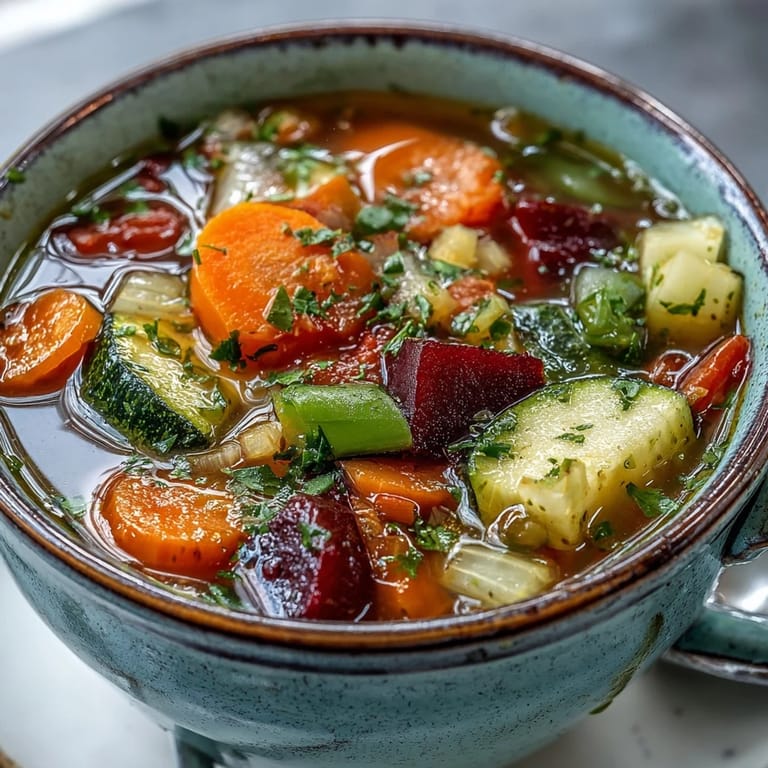
There's a reason I keep coming back to recipes that respect the natural colors of vegetables. When you cut a beetroot and see that deep crimson, when you watch it stain the broth into something almost jewel-like, you're experiencing food in a way that engages more than just taste. The visual feast prepares your body for eating, makes you slow down before the first spoonful even reaches your lips. I've served this to people who are usually rushed and distracted, and something about the color makes them actually pause and pay attention.
Flexibility Without Losing Your Way
One of the best things about this soup is that it doesn't get offended if you improvise. I've made it with sweet potato when carrots were expensive, with kale instead of spinach when that's what I had on hand, even added chickpeas when I wanted something more substantial. The framework is sturdy enough that it holds together even when you swap things around, but the core flavors stay true. What matters is that you're working with fresh vegetables and you're not overthinking the timeline.
Seasons Change, the Soup Adapts
In winter, I sometimes roast the vegetables first before adding them to the broth, deepening all those flavors into something more grounding. In summer, I make it ahead and serve it slightly chilled, which somehow makes it taste even fresher and brighter. The soup has taught me that recipes aren't fixed things, they're conversations between you and your ingredients and the weather outside your window.
- Add chickpeas or white beans if you want it to feel like a complete meal rather than a starter.
- A drizzle of good olive oil on top at the very end adds richness without making it feel heavy.
- If you're serving guests, chop everything the night before so you're just cooking on the day, not racing against the clock.
 Save
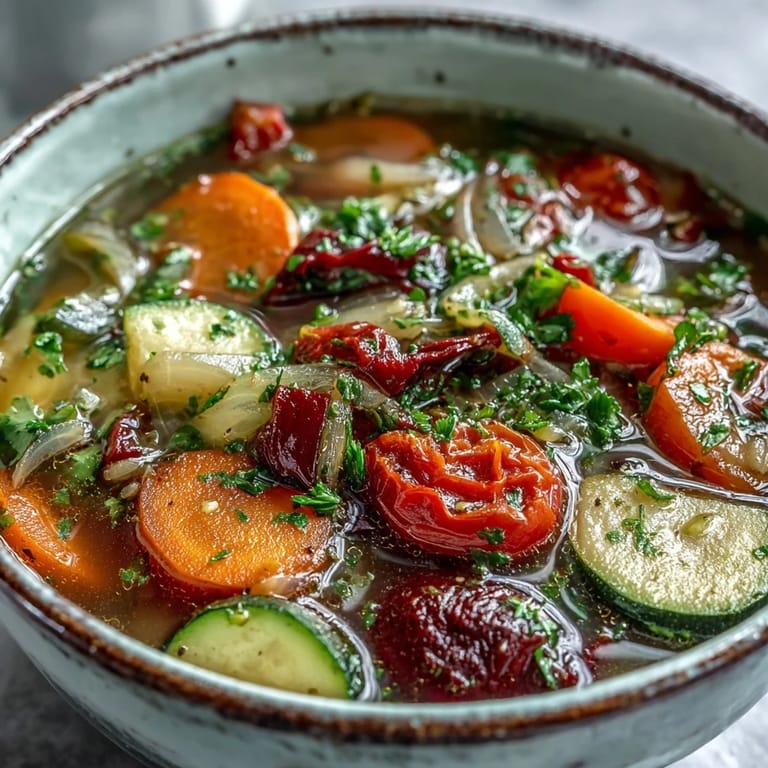
Save This soup reminds me that nourishment doesn't have to be complicated or time-consuming, it just has to be made with attention. Every time I make it, I'm reminded that the simplest recipes are often the ones that stick around.
Recipe Questions
- → Can I make this soup ahead of time?
Yes, this soup actually improves after resting overnight. The flavors meld together beautifully, and it keeps well in the refrigerator for 4-5 days. Reheat gently on the stovetop, adding a splash of water if needed.
- → What vegetables work best for substitutions?
Sweet potatoes, butternut squash, or parsnips can replace carrots. Try swapping courgette for yellow squash or adding seasonal greens like kale or Swiss chard. The key is maintaining a variety of colors for both visual appeal and nutritional diversity.
- → How can I add more protein?
Stir in a drained can of chickpeas, white beans, or lentils during the last 10 minutes of cooking. For a complete protein boost, serve with a dollop of Greek yogurt or sprinkle with nutritional yeast when serving.
- → Can I freeze this soup?
Absolutely. Cool completely before transferring to freezer-safe containers. It freezes well for up to 3 months. Thaw overnight in the refrigerator and reheat on the stovetop. Note that the texture may be slightly thinner after freezing.
- → What makes this detoxifying?
The combination of colorful vegetables provides a spectrum of antioxidants and phytonutrients. Beetroot supports liver function, while garlic and turmeric offer anti-inflammatory properties. The high vegetable content delivers fiber and essential nutrients without heavy fats or processed ingredients.
- → How can I adjust the consistency?
For a thicker soup, blend partially using an immersion blender, leaving some vegetable chunks for texture. To thin, add more vegetable broth or water. The consistency will naturally thicken slightly as it sits due to the vegetables.