 Save
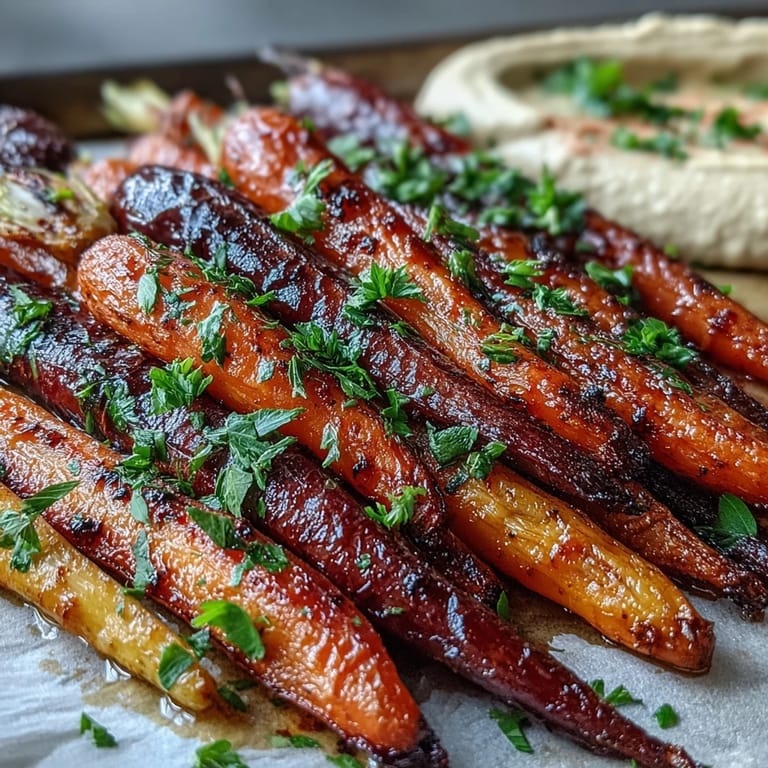
Save My neighbor stopped by one afternoon with a bag of rainbow carrots from the farmer's market, and I was struck by how vibrant they looked—deep purples, burnt oranges, pale yellows—all in one bunch. She mentioned she'd been wanting to roast them but wasn't sure what to pair them with, so I suggested we make hummus together right then. By the time we finished, the whole kitchen smelled like toasted tahini and lemon, and we ended up eating most of it before her family dinner that evening.
I brought this to a potluck last spring where someone had also made hummus, and I'll admit I was nervous about the comparison. But when people started dipping those warm, slightly crispy carrots into my tahini version, something shifted—they came back for more, and not just out of politeness. There's something about serving vegetables warm that makes people treat them as the main event rather than an afterthought.
Ingredients
- Rainbow carrots: The variety matters more for visual impact than flavor, but they genuinely taste different from standard orange ones—earthier, sometimes with a subtle sweetness that varies by color.
- Olive oil: Use good quality for both the roasting and the hummus; it's one of only a few ingredients, so it deserves to be something you'd actually enjoy tasting on its own.
- Tahini: This is the secret to creamy hummus without cream; stir the jar well before measuring because the oil separates if it sits.
- Lemon juice: Fresh is non-negotiable here—bottled tastes flat and misses the bright edge that makes hummus come alive.
- Garlic: One clove is enough; add more only if you want your breath to announce you for the rest of the day.
- Cumin: Ground cumin adds warmth and depth, and a tiny pinch in the carrots ties the whole platter together.
- Sea salt: Kosher works too, but sea salt dissolves more smoothly into the hummus and tastes slightly cleaner.
- Cold water: Keep it nearby and add gradually—hummus can go from perfectly creamy to soup-like in one careless splash.
- Smoked paprika: Optional, but those flecks of rust-red on pale hummus are worth the small addition for color alone.
Tired of Takeout? 🥡
Get 10 meals you can make faster than delivery arrives. Seriously.
One email. No spam. Unsubscribe anytime.
Instructions
- Get your oven ready and prep the carrots:
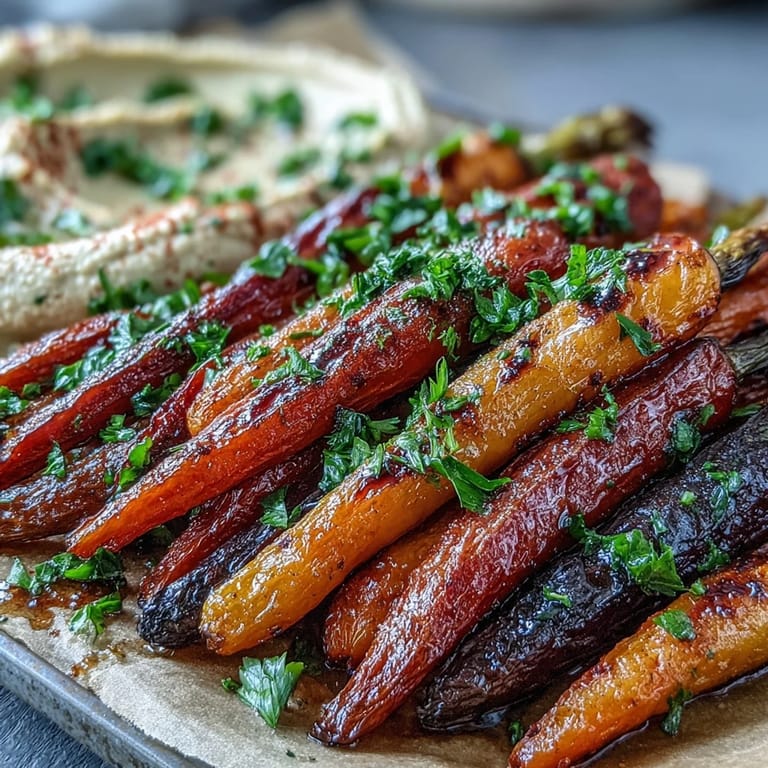
- Heat the oven to 425°F and line a baking sheet with parchment paper so cleanup is easier later. Peel and trim your rainbow carrots, then toss them in a bowl with olive oil, salt, pepper, and cumin if you're using it—the oil should coat them evenly so they roast rather than dry out.
- Roast until they caramelize:
- Spread the carrots in a single layer on the sheet and slide them into the oven. After about fifteen minutes, give the pan a shake or turn the carrots so they brown evenly, then let them finish roasting for another ten to fifteen minutes until the edges are dark and crispy and they're tender enough to pierce with a fork.
- Blend the hummus while carrots cook:
- While the oven does its work, add chickpeas, tahini, olive oil, lemon juice, minced garlic, cumin, and salt to a food processor. Blend until it becomes smooth and creamy, which takes about a minute, then start adding cold water one tablespoon at a time while pulsing until you reach the consistency you want—it should be thick enough to hold a dip but loose enough to spread.
- Taste and adjust:
- This is the step people skip but shouldn't—take a spoonful, see if it needs more salt, lemon, or garlic, and tweak it now before serving. What tastes balanced at room temperature in a food processor sometimes needs a tiny boost once everything cools slightly.
- Finish and plate:
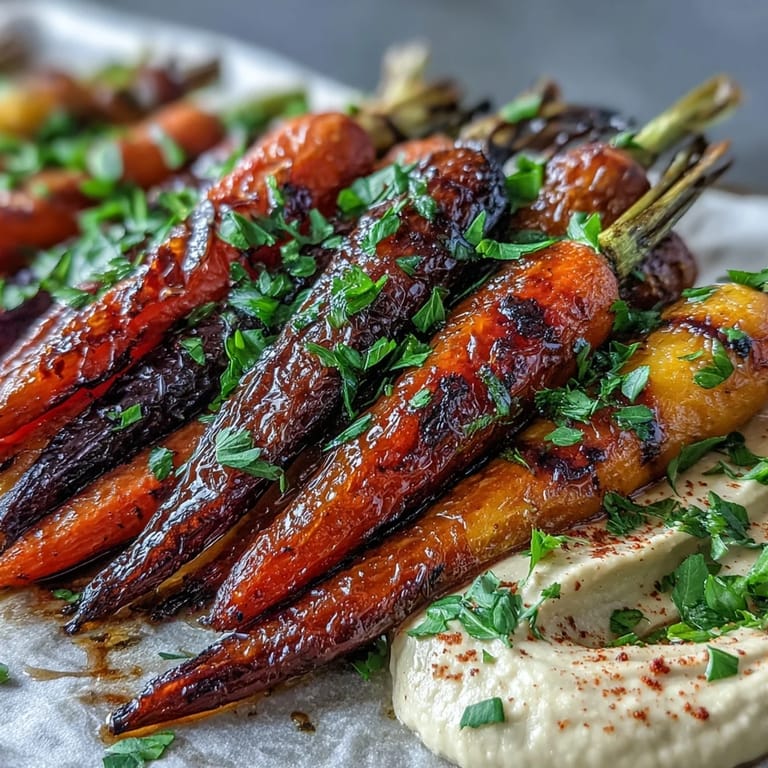
- Spoon the hummus into a shallow bowl, drizzle a little olive oil across the top, and dust with smoked paprika if you have it. Arrange the warm roasted carrots on a platter alongside the bowl, scatter chopped parsley over the carrots for color, and serve everything while the carrots are still warm—that temperature contrast with the cool hummus is part of the magic.
 Save
Save There was a quiet moment at that same potluck when my eight-year-old nephew stood in front of the platter, deliberating between a purple carrot and a yellow one before dipping both into hummus. His mother whispered to me that he usually won't touch vegetables, but something about them being warm and slightly fancy made them feel like a choice rather than an obligation. That's when I realized this dish isn't actually about being healthy—it's about making vegetables feel like food worth eating.
The Magic of Warm Vegetables
Roasting changes everything about a vegetable. The natural sugars in carrots concentrate and caramelize under high heat, transforming them from something crisp and mild into something almost honeyed and complex. When you serve them warm, they're aromatic—that smell rising from the plate makes people want to eat them before they even take a bite. I've noticed that warm vegetables disappear from platters faster than cold ones, not because they taste better necessarily, but because warmth signals comfort and intention.
Homemade Hummus Worth the Effort
There's a moment when homemade hummus stops being grainy and suddenly becomes creamy—usually right around one minute of blending—and it's oddly satisfying to witness. Store-bought versions often have stabilizers and extra oil that make them feel industrial by comparison, whereas homemade hummus tastes like it was made by a human in a kitchen, which is because it was. The flavor is brighter, the texture is silkier, and you can taste the individual ingredients instead of a blurred background.
Serving This Like You Mean It
Presentation matters more than people admit, especially with simple food. A platter of colorful roasted carrots arranged thoughtfully around a bowl of hummus looks intentional and special, whereas the same components scattered on a plate look accidental. The garnishes—parsley on the carrots, paprika on the hummus—aren't just decoration; they signal that this came from somewhere, that care went into it.
- Serve the carrots while they're still warm or at least room temperature, because cold roasted carrots lose their appeal and start to feel a bit sad.
- Make the hummus no more than a few hours ahead if you can help it; it stays fresh for days, but the flavor is brightest on the day it's made.
- If you're bringing this to a gathering, transport the hummus and carrots separately and assemble on-site so the carrots don't steam and lose their crispness by the time people eat them.
 Save
Save This dish has become my go-to when I want to feel like I'm nourishing people without making anyone feel like they're eating virtue. Somehow, warm roasted carrots and creamy hummus manage to be both genuinely good for you and genuinely delicious, which isn't something you can say about every recipe.
Recipe Questions
- → What makes rainbow carrots special?
Rainbow carrots come in purple, orange, yellow, and white varieties, each offering slightly different flavor profiles from sweet to earthy. Their vibrant colors create an eye-catching presentation while providing diverse antioxidants and nutrients.
- → Can I prepare the components ahead?
Both roasted carrots and hummus store beautifully. Roast carrots up to 3 days ahead and reheat gently. Hummus keeps refrigerated for up to a week and actually develops more flavor as ingredients meld together. Serve at room temperature for best texture.
- → What can I serve alongside this platter?
Complete the spread with warm pita bread, fresh cucumber slices, bell pepper strips, or radishes. Olives, pickled vegetables, and crumbly feta cheese also complement the Mediterranean flavors beautifully.
- → How do I achieve the smoothest hummus texture?
Blend tahini and lemon juice first until creamy before adding chickpeas. Use cold water to adjust consistency, and continue blending longer than you think necessary—extra processing time yields that restaurant-quality silkiness.
- → Can I use regular orange carrots?
Absolutely. While rainbow carrots offer visual variety, standard orange carrots work perfectly. Look for bunches with greens attached for freshness, or choose baby carrots for quicker prep and uniform roasting.
- → What temperature should I roast the carrots?
Roast at 425°F (220°C) for 25–30 minutes. This high heat encourages caramelization, developing natural sweetness and creating tender interiors with slight crispness on the edges.