 Save
Save I discovered this dish at a gallery opening in the city, where a catering team had arranged these stunning black-and-white striped platters that looked almost too perfect to eat. The colors caught everyone's eye first, but it was the combination of silky cheese against warm, savory meat that made me realize how much elegance comes from simplicity and contrast. I went home that night sketching how I'd recreate it in my own kitchen, imagining the balsamic reduction glossing over everything like a finishing touch on a painting. That's when Safari Stripes became my go-to when I wanted to impress without spending hours in the kitchen.
My neighbor came over on a Tuesday evening, and I threw this together almost on impulse using what I had on hand. When she saw those perfect rows of white cheese and dark glazed meat, her face lit up in a way that made the simple arrangement feel like real cooking. We stood in my kitchen talking for two hours with that platter between us, and I realized that sometimes the best meals aren't the most complicated ones, they're just the ones that look like you cared enough to make something beautiful.
Ingredients
- Fresh mozzarella: Buy it the same day you're making this if you can; it should be creamy and delicate, not rubbery or cold from sitting too long in the fridge.
- Feta cheese: The tanginess cuts through the richness of the meat, so don't skip it or substitute with something milder.
- Beef tenderloin: Ask your butcher to slice it or do it yourself when the meat is cold; it's much easier and safer than you'd think.
- Chicken breast: Pound it lightly to an even thickness so it cooks at the same rate as the beef and doesn't dry out unevenly.
- Balsamic vinegar: Use something decent here because it becomes the star of the show; cheap vinegar tastes thin and sour.
- Honey: Just a tablespoon balances the vinegar's sharpness and adds a subtle sweetness that makes people wonder what you did differently.
Tired of Takeout? 🥡
Get 10 meals you can make faster than delivery arrives. Seriously.
One email. No spam. Unsubscribe anytime.
Instructions
- Make the balsamic magic:
- Pour the vinegar and honey into a small saucepan and watch it come to a gentle simmer; you'll smell the vinegar sweetening as it reduces, which is how you know it's working. After 8 to 10 minutes, it should coat the back of a spoon and look almost glossy when you tilt it.
- Season and sear:
- Pat the meat dry with paper towels before seasoning, because moisture is the enemy of a good sear. Get your skillet screaming hot, oil shimmering, then lay the beef in for just a minute or two per side so it stays tender and rare inside; chicken needs slightly longer until there's no pink, but don't let it turn gray.
- Build your stripes:
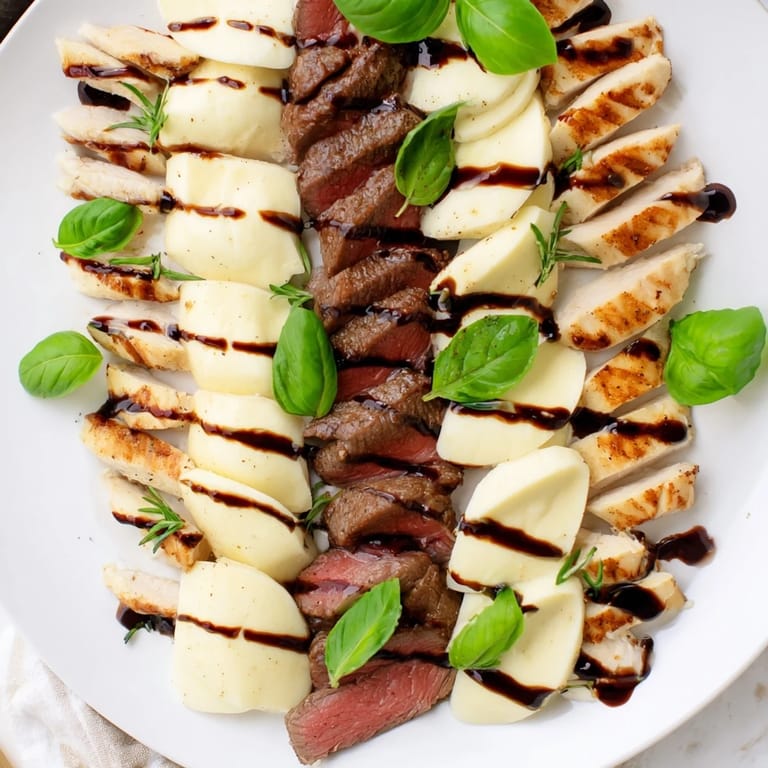
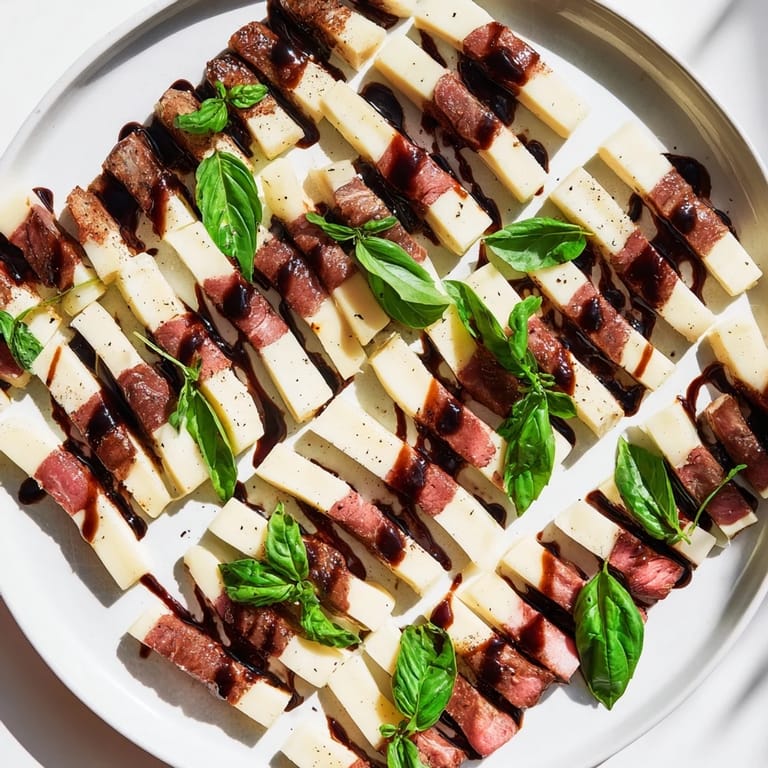
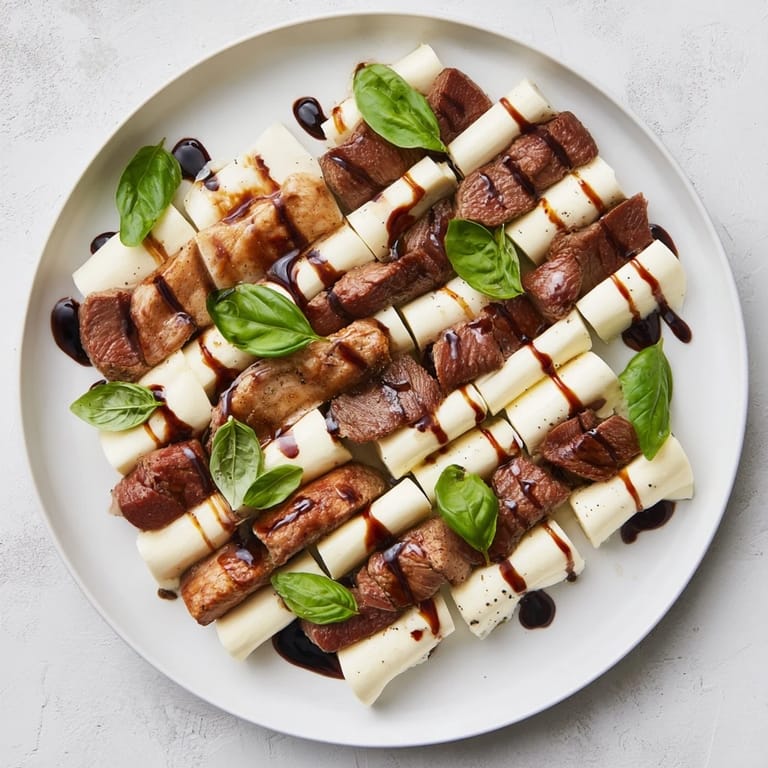
- Once the meat cools enough to handle, start laying down a strip of mozzarella, then beef, then feta, then chicken, repeating until your platter is filled with this perfect striped pattern. The visual rhythm of it is half the reason people love this dish.
- Glaze and garnish:
- Drizzle that balsamic reduction over the meat rows, letting it pool slightly where the rows meet. A scatter of fresh basil and a generous crack of black pepper finishes it off and makes it look intentional and thoughtful.
 Save
Save I made this for a dinner party once where everything else fell apart, and somehow these stripes became the unexpected star. My main dish was delayed, the wine arrived late, but people gathered around this platter for 45 minutes just talking and tasting, and I understood then that sometimes simple, elegant food brings people together in ways complicated dishes never can.
The Art of the Stripe
The stripe pattern isn't just decoration; it's actually a practical way to make sure each bite has a balance of everything. When you're grabbing from a platter, you're not thinking about ratios, so the visual arrangement does that work for you. I used to toss things randomly on a board until I realized that taking two minutes to arrange them deliberately made the whole experience feel more intentional, like I'd been thinking about my guests' enjoyment before they even walked through the door.
Timing and Temperature
The challenge with this recipe isn't the cooking, it's the coordination of temperatures. The cheese needs to stay cool and soft, the meat needs to be just barely warm, and the balsamic needs to be pourable but already thickened into that glossy syrup. I learned this by trial, once plating everything too early and watching the mozzarella start to sweat and pool, which looked less elegant and tasted less bright.
Variations and Personal Touches
The genius of this recipe is how flexible it is once you understand the concept. I've made it with prosciutto on nights when I wanted something more delicate, and with grilled vegetables when vegetarian friends were coming over. The pattern stays beautiful, the principle of contrasting colors and textures holds, and somehow it always feels both refined and approachable.
- Try smoked turkey for a lighter, more subtle flavor that still stands up to the balsamic.
- Layer in roasted red pepper strips for color variation and a touch of sweetness.
- Keep the components separate until the last moment so everything is at its best when served.
 Save
Save This platter has become my secret weapon for looking like a more confident cook than I sometimes feel. It's proof that presentation and good ingredients matter more than hours spent cooking, and that sometimes the most sophisticated thing you can do is know when to stop fussing and let beautiful food speak for itself.
Recipe Questions
- → How is the balsamic glaze prepared?
The glaze is made by simmering balsamic vinegar with honey until it thickens into a syrupy consistency, enhancing the meat with a sweet tang.
- → Can the meats be substituted or omitted?
Yes, prosciutto or smoked turkey can replace the beef and chicken. For a vegetarian variation, grilled eggplant or portobello mushrooms work well.
- → What cheeses are used in the dish?
Fresh mozzarella and feta cheese are sliced into strips to provide creamy, tangy layers between the meat strips.
- → How should the meat strips be cooked?
Seasoned beef and chicken strips are quickly seared in olive oil until just cooked through to keep them tender and juicy.
- → What garnishes complement the dish?
Fresh basil leaves and cracked black pepper add aromatic freshness and subtle spiciness to the platter.