 Save
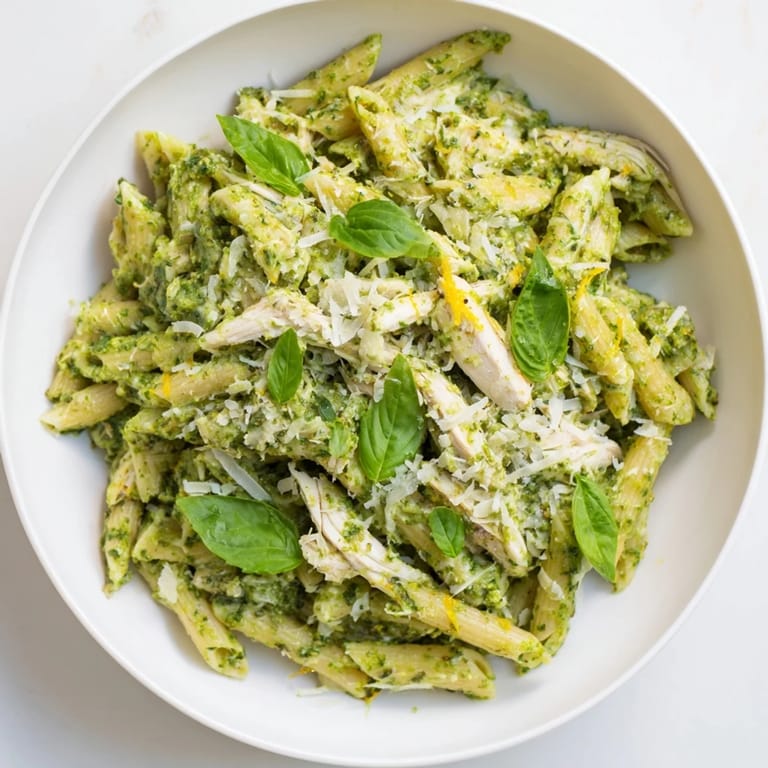
Save There's a particular magic to weeknight dinners that taste like you spent hours in the kitchen when you actually didn't. I discovered this pesto pasta on one of those days when the clock was ticking, hunger was real, and my usual bag of tricks felt too ambitious. Grabbing a container of store-bought pesto and some rotisserie chicken from the market, I threw together what became my go-to 10-minute dinner—and somehow it tasted fresher and more alive than dishes that demanded triple the time.
I made this for friends who showed up unannounced one evening, and I remember the relief washing over me when they took their first bites—no one asked if I'd ordered out. One friend kept asking what restaurant it was from, which I chose to take as a tremendous compliment, even though I was standing right there with a wooden spoon in hand.
Ingredients
- Dried short pasta (penne, fusilli, or farfalle): 340 g or 12 oz—the shape matters less than using something sturdy enough to grip the pesto without breaking apart.
- Salt: For the pasta water, and plenty of it; this is your only real seasoning vehicle for the noodles themselves.
- Rotisserie chicken: 2 cups (about 250 g), shredded or chopped—buy it warm from the deli counter if you can, it tastes better and you're already saving time.
- High-quality store-bought pesto: 120 g or 1/2 cup—this is where you don't compromise; a brighter, fresher pesto makes the entire dish sing.
- Extra-virgin olive oil: 2 tbsp to create the glossy coating that brings everything together.
- Grated Parmesan cheese: 40 g or 1/4 cup, plus more for serving—the aged, real stuff grates better and tastes sharper.
- Freshly ground black pepper: To taste, added at the end when you can actually adjust it.
- Fresh basil leaves: 1/2 cup or about 12 g, torn by hand—optional but changes the entire mood if you have it.
- Lemon zest: From 1 lemon, optional but it's the whisper of brightness that makes people ask what's in this.
Tired of Takeout? 🥡
Get 10 meals you can make faster than delivery arrives. Seriously.
One email. No spam. Unsubscribe anytime.
Instructions
- Get your water boiling:
- Fill a large pot with water, salt it generously until it tastes like the sea, and crank the heat. You want a rolling, aggressive boil before the pasta even touches the water.
- Cook the pasta:
- Follow the package instructions and pull it out just before it's completely soft—al dente means it still has a tiny bit of resistance when you bite it. Before draining, scoop out about 1/2 cup of that starchy water into a mug and set it aside; this is your secret weapon for making the sauce creamy.
- Prepare the chicken:
- While pasta bubbles away, shred or chop your rotisserie chicken into bite-sized pieces, removing any large pieces of skin if you want it neat, or leaving it if you don't.
- Bring it together:
- Return the hot, drained pasta to the pot over low heat. Pour in the olive oil and pesto, then add a splash of that reserved pasta water—start with 2 to 3 tablespoons and stir everything together, watching as the starchy water emulsifies with the oil and pesto, creating something creamy and glossy.
- Warm through and finish:
- Toss in the chicken and Parmesan, stirring constantly until the chicken is heated through and the whole mixture feels slick and cohesive. If it looks dry, add more pasta water a tablespoon at a time until it looks right.
- Final taste and serve:
- Crack black pepper over everything, taste it, and add more salt or pepper if it needs it. Stir in fresh basil and lemon zest if you're using them, then serve immediately while it's hot and at its most vibrant.
 Save
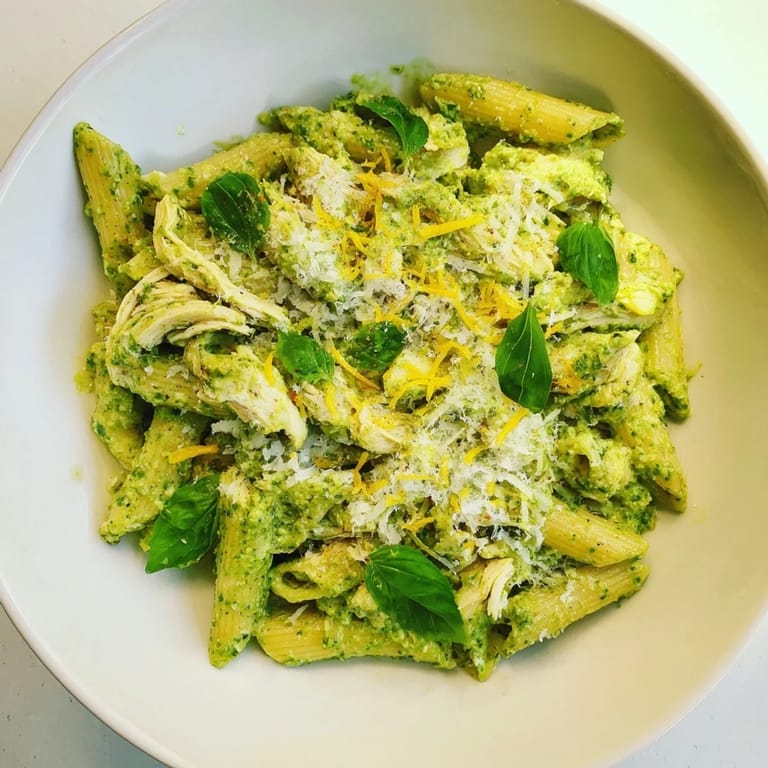
Save The first time someone watched me make this and genuinely seemed amazed that it took 10 minutes, I realized the gap between how long something takes and how impressive it tastes is where the real joy lives. Dinner doesn't have to be complicated to be memorable.
Why Pesto Works Here
Pesto carries its own complete flavor profile—garlic, basil, pine nuts, cheese, oil—which means you're not building from scratch or layering multiple sauces. This is actually a cheat code for the weeknight cook. The rotisserie chicken, which already has its own depth from being slow-cooked, pairs perfectly with something that doesn't need to be coaxed or developed. Together they create the impression of effort without demanding any.
Room to Play
The beauty of this dish is that it's a framework, not a formula. I've made it with sun-dried tomato pesto when I didn't have regular pesto in the fridge, and it tasted entirely different but equally good. Throwing in a handful of cherry tomatoes while the pasta heats through adds brightness and texture. Some nights I'll toss in fresh spinach at the very end—it wilts into nothing and adds nutrition without making the dish feel heavy.
Serving and Pairing
Serve this the moment it's done, in bowls rather than plates if you can, so the creamy sauce doesn't slide everywhere. A crisp white wine like Pinot Grigio cuts through the richness beautifully, or even just a squeeze of lemon and chilled water feels right. The optional fresh basil and lemon zest at the end aren't really optional if you want people to feel like they're eating something special on an ordinary Tuesday.
- Toast a handful of pine nuts in a dry pan and scatter them on top for crunch and richness.
- Keep extra Parmesan at the table—people always want more, and that's the sign of a good dish.
- If you're cooking for vegetarians, simply leave out the chicken and you have a complete meal that feels just as satisfying.
 Save
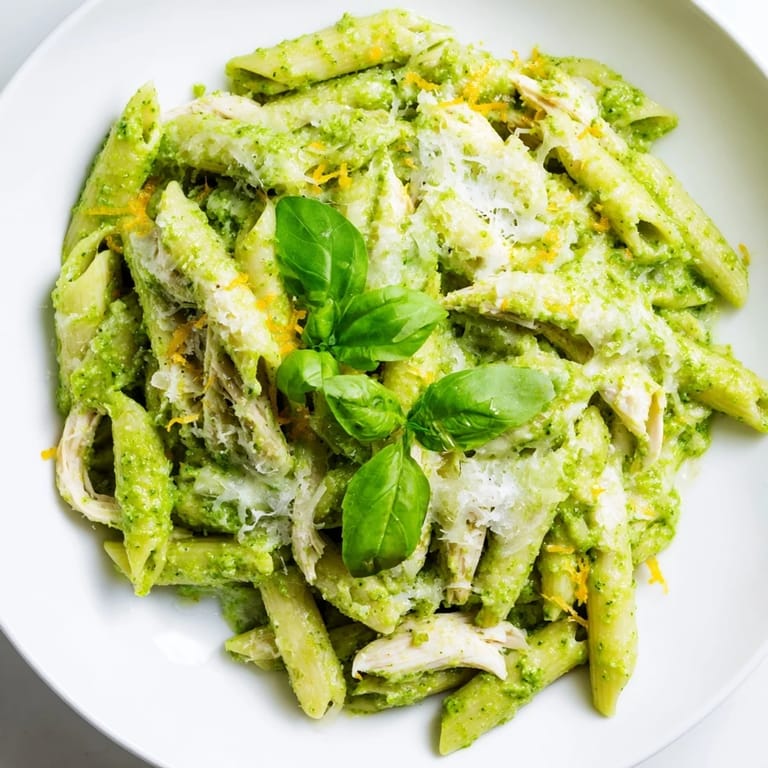
Save Good food doesn't require complicated technique or endless time—sometimes it just requires the right ingredients brought together with care. This dish has become my answer to the question nobody asks but everyone silently hopes for on busy nights: can this be both easy and delicious?
Recipe Questions
- → What type of pasta works best for this dish?
Short pasta shapes like penne, fusilli, or farfalle hold the sauce well and complement the shredded chicken texture.
- → Can I use homemade pesto instead of store-bought?
Yes, homemade pesto adds freshness and can be tailored to your taste, enhancing the overall flavor.
- → How can I make this dish vegetarian?
Simply omit the chicken and add sautéed vegetables such as zucchini or cherry tomatoes for added texture and flavor.
- → Is it necessary to reserve pasta water?
Yes, reserved pasta water helps adjust the sauce consistency, making it creamy and easier to coat the pasta.
- → What garnishes enhance this pasta?
Fresh basil leaves and lemon zest add bright, aromatic notes, while extra Parmesan provides a savory finish.