Save
Save I was arranging white chocolate shards on a plate one winter evening when my friend leaned against the counter and asked what I was making. The moment I held up a piece to the light, it caught the glow like a frozen windowpane, and something clicked. That night became about capturing that feeling—a dessert that looks like you've plated actual snowdrifts, but with the richness of good chocolate and the surprising umami punch of parmesan. It's become my favorite kind of cooking challenge: making something look almost architectural while tasting unexpectedly delicious.
I made this for a dinner party where someone had requested something that felt both fancy and fun, and the room went quiet the moment I set the board down. People actually hesitated before eating it because it looked too beautiful, which rarely happens. By the end, everyone was cracking pieces apart like they were discovering something forbidden, and that's when I knew this dish had the right balance of drama and genuine flavor.
Ingredients
- High-quality white chocolate, 250 g: This is non-negotiable—cheap white chocolate tastes waxy and thin, while real chocolate with cocoa butter actually melts on your tongue and carries flavor the way it should.
- Coconut oil, 1 tsp (optional): A tiny bit helps the chocolate flow silkier and sets with a subtle sheen that catches light beautifully on the plate.
- Parmigiano-Reggiano block, 60 g: You need a proper block; pre-grated turns into dust, but shards from a block stay crisp and hold their shape like tiny flavor bombs.
- Flaky sea salt, to taste: The finishing touch that wakes everything up—don't skip it, and don't use table salt, which tastes harsh and muddy by comparison.
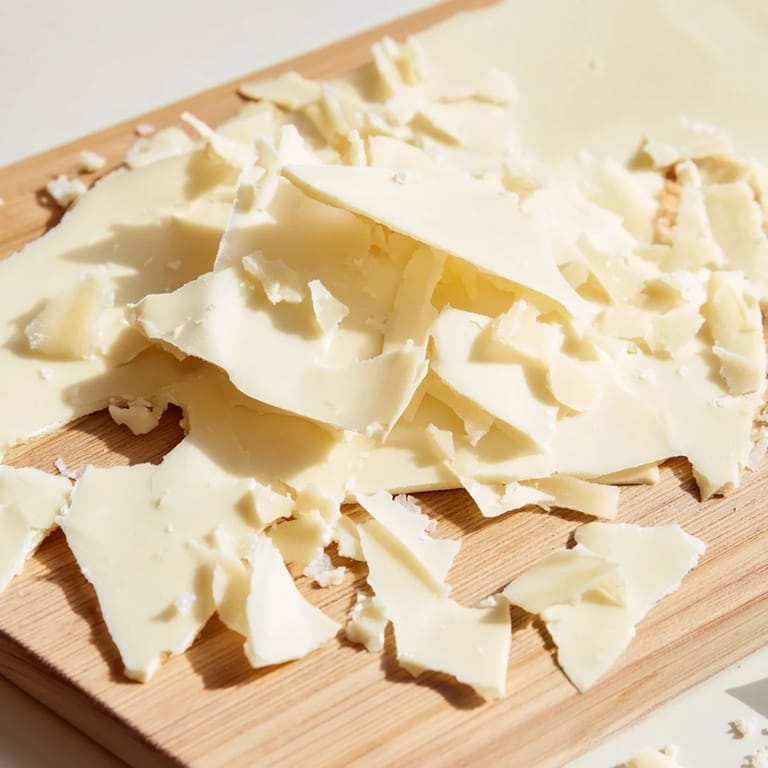
- Light wood serving board: The presentation matters as much as the taste here; wood grounds the minimalist look and keeps the eye moving across the plate.
Tired of Takeout? 🥡
Get 10 meals you can make faster than delivery arrives. Seriously.
One email. No spam. Unsubscribe anytime.
Instructions
- Melt the chocolate gently:
- Set a bowl over simmering water or use short microwave bursts (white chocolate scorches easily), stirring until it's perfectly smooth and flows like silk. If using coconut oil, add it at the very end so it incorporates without separating.
- Spread into ice sheets:
- Pour onto parchment and use an offset spatula to create a thin, even layer about 2 mm thick—uneven thickness is fine and actually looks more natural. The thinness is what gives you those satisfying shatter pieces.
- Chill until set:
- Twenty minutes in the fridge gets it firm enough to break cleanly without cracking into powder. You'll hear that snapping sound when it's ready.
- Shave the parmesan:
- Pull a vegetable peeler or sharp knife across the block at a shallow angle to get thin, curling shards that catch light like glass. Thicker shards taste better than fine gratings.
- Break chocolate into shards:
- Once fully set, carefully lift the parchment and break the chocolate into large, irregular pieces by hand—uneven shapes look more dramatic and taste better because you get varied thickness in each bite.
- Arrange and finish:
- Layer white chocolate and parmesan shards on a chilled board, letting them lean at different angles. A final light scatter of flaky sea salt brings all the flavors into focus.
 Save
Save This dish stopped being about technique the night I served it to my partner after a long week. They ate in silence for a moment, then said something like, 'This tastes like winter but feels warm,' which is exactly what I was reaching for. That's when I realized the parmesan wasn't just clever—it was a way of saying that savory and sweet don't have to be enemies.
Temperature Matters
Chilling the serving board before plating changes everything—the cold keeps the chocolate from softening and the parmesan from releasing moisture. I learned this the hard way after a summer service when my beautiful shards started sticking together. Now I throw the board in the freezer for 10 minutes before plating, and it's the difference between something that looks fresh and something that looks like it's been sitting out.
The Art of Breaking
The way the chocolate breaks matters more than you'd think. If it's too warm, it bends instead of shattering; too cold and it becomes brittle and uncontrollable. Let it sit at room temperature for two or three minutes after coming out of the fridge, then listen for the snap as it breaks—that's your cue you're hitting the sweet spot. The irregular pieces actually look more interesting than perfect shards anyway, like you've captured frozen water mid-crash.
Flavor Pairings and Variations
This dessert lives in that narrow space between sweet and savory, which makes it the perfect closer to a dinner with subtle, complex flavors throughout. Dark chocolate creates a moodier version if white feels too delicate, while edible flowers or microgreens add visual layers without changing what's already working. I've served this with a dry sparkling wine and watched people's faces shift as they realized dessert and wine could actually enhance each other instead of fighting.
- Try shaving manchego instead of parmesan for a slightly sweeter, nuttier finish that still keeps that umami edge.
- A whisper of fresh citrus zest scattered over the top adds brightness without overpowering the delicate chocolate.
- Serve on a warmer board if you want the chocolate to soften slightly and develop a creamier texture as people eat.
 Save
Save This dish works because it respects both its ingredients and whoever's eating it, asking them to slow down and notice something small and strange and beautiful. Make it when you want people to remember the moment.
Recipe Questions
- → How do you create the crisp white chocolate sheets?
Melt white chocolate gently, optionally with coconut oil for shine, then spread thinly on parchment and chill until firm to form crisp sheets.
- → What is the best way to make parmesan shards?
Use a vegetable peeler or sharp knife to shave thin, irregular shards from a block of Parmigiano-Reggiano.
- → How should the dessert be served for best effect?
Arrange the white chocolate sheets and parmesan shards on a chilled light wood board, finishing with flaky sea salt for texture and flavor.
- → Can dark chocolate be used instead?
Yes, dark chocolate can substitute white chocolate to add a more intense and contrasting flavor profile.
- → What tools are essential for preparation?
A double boiler or microwave-safe bowl, offset spatula, vegetable peeler or sharp knife, baking sheet, and parchment paper are needed.