 Save
Save One Tuesday evening, my neighbor stopped by with a bag of fresh ginger and scallions from her garden, insisting I do something interesting with them. I'd been eating the same rotation of pasta for weeks, so I dug through my pantry and found some noodles, and suddenly this dish came together in my kitchen like it had been waiting all along. The moment that hot oil hit the ginger and scallions, the smell was so sharp and alive that I knew I'd stumbled onto something special. What started as an improvised dinner became the thing I now make whenever I need to feel like I'm traveling without leaving home.
I made this for my sister's potluck on a rainy Sunday, nervous because I was bringing something unfamiliar to a crowd who mostly expected casseroles. Someone asked for seconds before the first batch was even finished, and by the end of the night, two people were asking if I could write down what went into that sauce. It became the dish that changed how my family thinks about weeknight dinners, and honestly, it's become shorthand between us for 'let's make something that actually tastes good.'
Ingredients
- 350 g wheat noodles: lo mein, udon, or ramen all work beautifully, though I prefer lo mein for its silky texture; rice noodles work perfectly if you're avoiding gluten, and they actually absorb the sauce differently in a way I've grown to love.
- 4 scallions: slice them thin so they soften slightly when the hot oil hits, and save some white parts for garnish because they give you a gentle bite at the end.
- 2 tablespoons fresh ginger: this is where the soul of the dish lives, so don't skimp; mince it finely so it distributes through every bite.
- 3 garlic cloves: mince them until they're almost paste-like, which helps them meld into the sauce smoothly.
- 1/4 cup neutral oil: it needs to be hot enough to sizzle when it hits the ginger mixture, which blooms all those aromatic oils in a way that can't be rushed.
- 2 tablespoons soy sauce: use tamari if you need gluten-free, and the depth of flavor matters here more than you'd think.
- 1 tablespoon rice vinegar: this brightens everything and keeps the sauce from feeling heavy or one-note.
- 1 teaspoon toasted sesame oil: the toasted version has a deeper, nuttier flavor that changes the entire character of the sauce.
- 1 teaspoon sugar: it balances the vinegar and adds a subtle roundness without making anything sweet.
- 1/2 teaspoon white pepper: optional but it adds a warmth that black pepper can't quite match.
- 200 g baby bok choy: it wilts quickly and stays tender, though spinach, kale, or chard all work depending on what you have or what you're in the mood for.
- 100 g snap peas or snow peas: these stay crisp even after cooking, adding texture and a clean vegetable sweetness.
- 1 tablespoon oil for greens: same neutral oil as before.
- 1/2 teaspoon salt: for the greens, but taste and adjust because it makes a real difference in how everything comes together.
- Sesame seeds for garnish: toasted versions have more flavor and they add a subtle crunch.
- Fresh chili: completely optional, but a few slices add heat without overwhelming the other flavors.
Tired of Takeout? 🥡
Get 10 meals you can make faster than delivery arrives. Seriously.
One email. No spam. Unsubscribe anytime.
Instructions
- Get the noodles ready:
- Fill a large pot with water and bring it to a rolling boil, then add the noodles and cook according to the package directions until they're tender but not mushy. Drain them in a strainer, then rinse with cold water to stop the cooking and prevent them from sticking together.
- Build your sauce base:
- In a heatproof bowl, combine the sliced scallions, minced ginger, and minced garlic, mixing them so they're evenly distributed. This is your aromatic foundation, and it should smell incredible even before the oil touches it.
- Bloom the aromatics with heat:
- Heat the neutral oil in a small saucepan over medium-high heat until it shimmers slightly and you can feel the warmth radiating above it. Pour the hot oil carefully and slowly over the scallion-ginger mixture, listening for that satisfying sizzle that means the aromatics are waking up and releasing all their flavor.
- Complete the sauce:
- Once the sizzling quiets down, stir in the soy sauce, rice vinegar, sesame oil, sugar, and white pepper if you're using it, mixing everything together until the sugar dissolves and the sauce looks glossy and unified. Taste it and adjust anything that needs balancing, then set it aside.
- Sauté the greens:
- Heat the tablespoon of oil in a large skillet or wok over medium-high heat until it's hot, then add your chopped bok choy and snap peas along with the salt. Sauté for 2 to 3 minutes, stirring occasionally, until the greens are tender but still bright and crisp, then remove from heat.
- Bring it all together:
- Add the drained noodles to the bowl with the ginger-scallion sauce and toss everything together until the noodles are evenly coated and glistening. You want every strand to catch some of that aromatic sauce.
- Build your bowls:
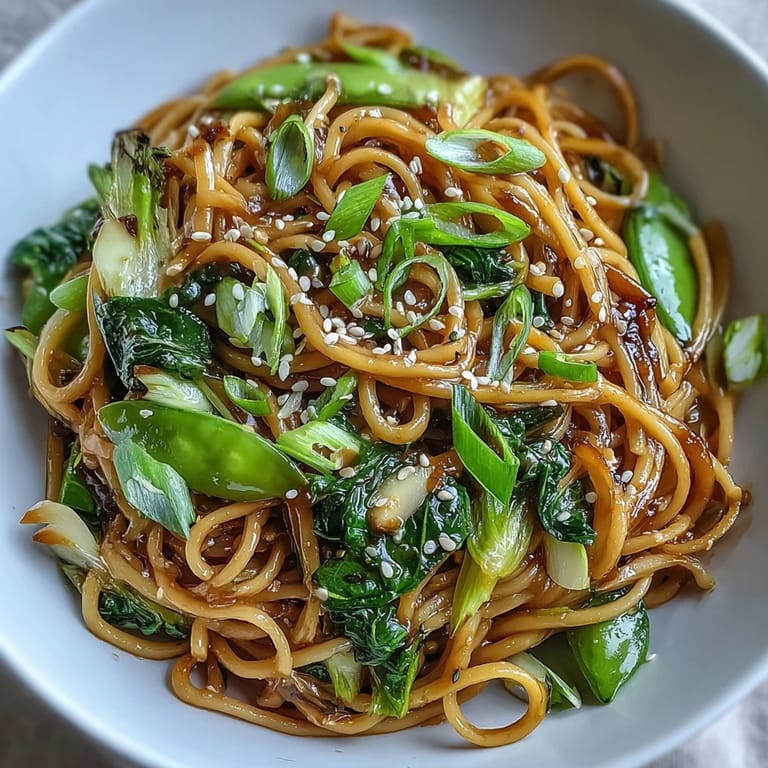
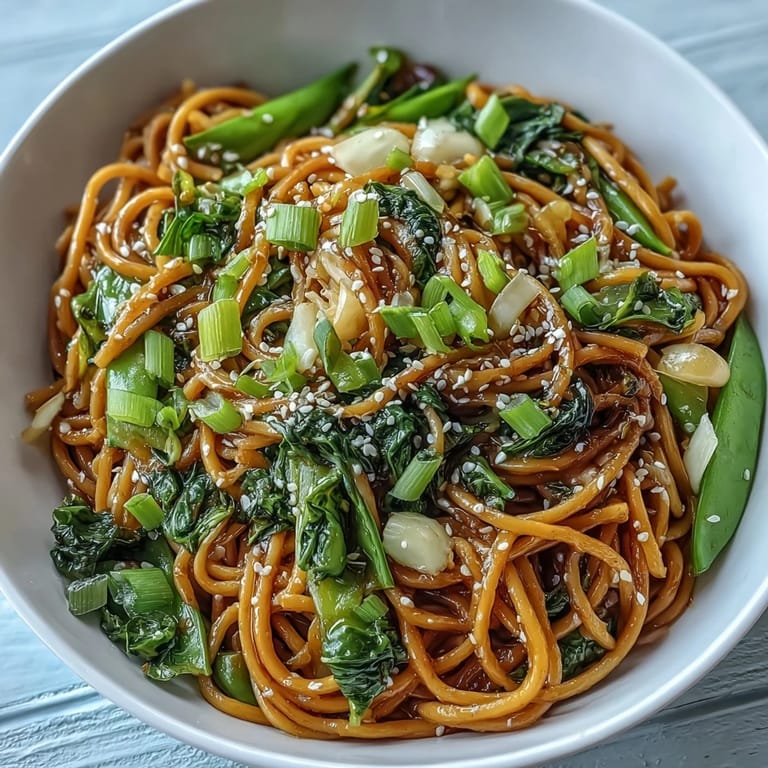
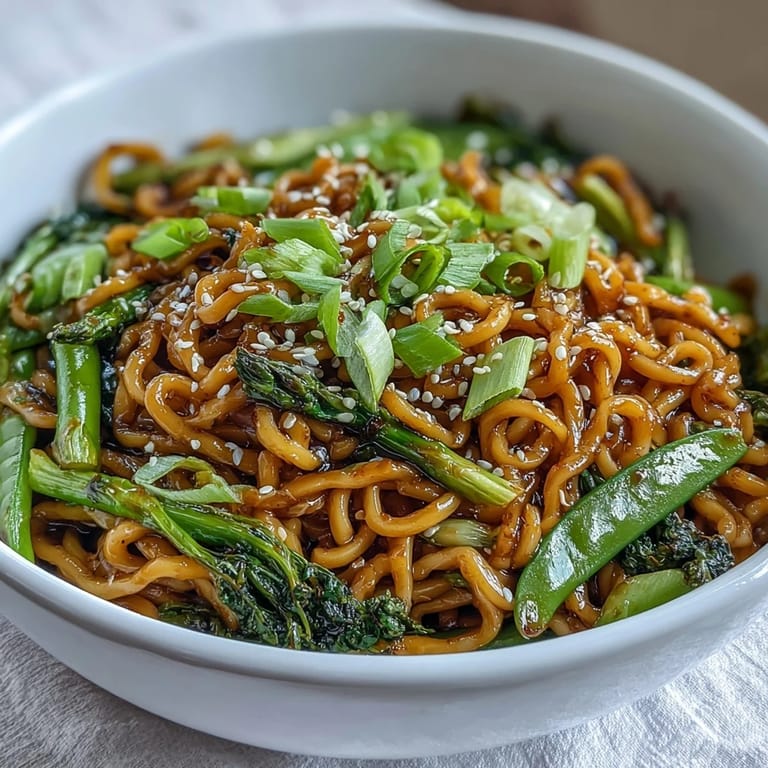
- Divide the sauced noodles among serving bowls, then top each one with the sautéed greens, keeping them somewhat separate so you get the contrast of tender noodles and crisp vegetables in each bite.
- Garnish and serve:
- Scatter toasted sesame seeds, extra sliced scallions, and chili slices if you want the heat over the top of each bowl, then serve immediately while everything is still warm and the greens retain their brightness.
 Save
Save My mom tried this dish one night when she was stressed about work, and afterward she told me it was the first time in weeks she'd actually tasted what she was eating instead of just eating to eat. That stuck with me because food can be that, can be a small anchor point when everything feels chaotic. This noodle dish has become something I make when I'm cooking for people I want to feed well, not just fill up.
Why The Sauce Is Everything
The ginger-scallion sauce is the whole reason this dish works, and I've learned that by experimenting with what happens when you change the order or technique. If you try to make this sauce cold, it tastes flat and harsh, but when that hot oil blooms the ginger and scallions, something chemical happens that turns sharp ingredients into something round and inviting. The rice vinegar and sesame oil are the unsung heroes here, bringing balance and depth that keeps the sauce from tasting one-dimensional or heavy. Once you understand how this sauce works, you'll start using it on roasted vegetables, grilled fish, steamed dumplings, and anything else that needs an aromatic lift.
Customizing Your Greens
The beautiful part of this dish is that whatever greens you choose will work, as long as you respect the cooking time. Bok choy is my default because it wilts quickly and stays tender, but I've made this with everything from kale to mustard greens depending on the season and what's available. Tender spinach needs barely any time, maybe 90 seconds in the hot pan, while heartier greens like kale can handle a full 3 to 4 minutes and still come out crisp. The snap peas or snow peas are there to add texture and sweetness, but if you can't find them, shredded carrots or thinly sliced bell peppers work beautifully too.
Building Flavor Layers
What I've discovered over time is that this dish works best when you layer flavors instead of trying to get everything perfect in one step. The ginger brings heat and sharpness, the garlic adds depth, the scallions contribute a mild onion sweetness, and then the vinegar and sesame oil come in to round everything out and make it feel complete. The sugar isn't there to make anything sweet, it's there to smooth the edges and make the other flavors blend instead of fight. If you want to add more complexity, chili oil stirred into the sauce brings a different kind of heat, toasted sesame seeds add crunch and nuttiness, and fresh chili brings brightness and a sharp bite that makes you pay attention.
- Taste your sauce before you toss it with the noodles and adjust anything that feels off.
- Remember that salt is already in the soy sauce, so be careful not to oversalt the greens.
- Fresh chili is optional, but even a tiny amount changes how you experience the other flavors.
 Save
Save This dish has become my answer to so many different cooking situations, from weeknight scrambles to impromptu dinners when someone unexpected stops by. There's something deeply satisfying about how quickly it comes together and how alive it tastes on the plate.
Recipe Questions
- → What type of noodles work best for this dish?
Wheat noodles such as lo mein, udon, or ramen provide a perfect chewy texture, but rice noodles can be used for a gluten-free version.
- → How do you prepare the ginger-scallion sauce?
Finely slice scallions and mince fresh ginger and garlic. Hot neutral oil is poured over to release flavors, then combined with soy sauce, rice vinegar, toasted sesame oil, sugar, and optional white pepper.
- → Which greens are recommended for sautéing?
Baby bok choy and snap peas are typical choices, but spinach, kale, or Swiss chard are excellent alternatives for vibrant, tender greens.
- → Can this dish be made gluten-free?
Yes, swap wheat noodles for rice noodles and use tamari or gluten-free soy sauce to accommodate gluten sensitivities.
- → How can I add extra protein?
Including tofu, tempeh, or shredded chicken complements the flavor and adds nutritional balance to the dish.
- → Is it possible to add more heat?
For those who enjoy spice, mixing chili oil into the sauce or garnishing with fresh sliced chili adds warmth without overwhelming the flavors.