 Save
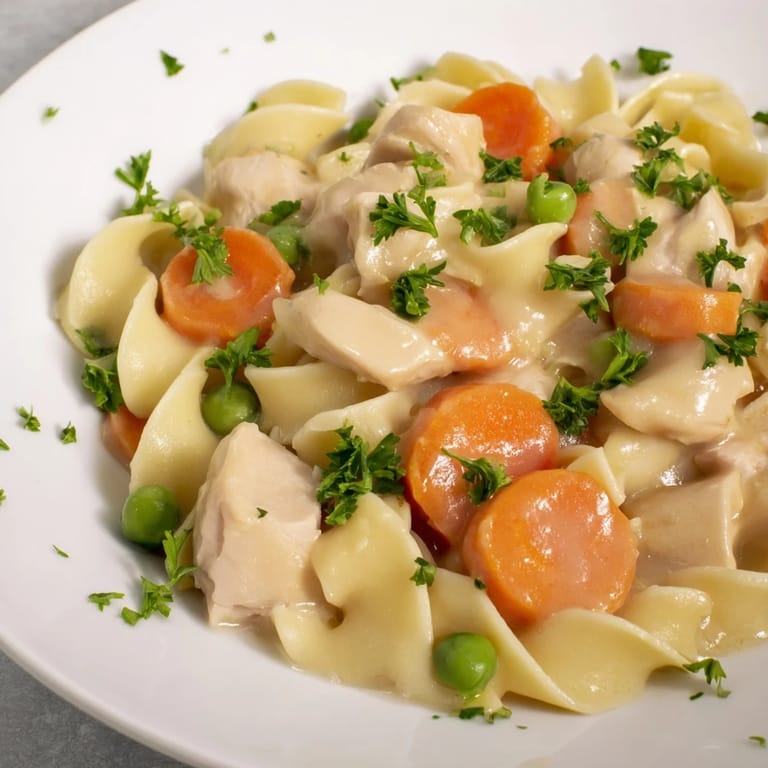
Save There's something about a bowl of creamy chicken and egg noodles that stops a rushed Tuesday evening in its tracks. My kitchen smelled like butter and thyme the first time I made this, and suddenly my partner wandered in asking what I was cooking before I'd even finished the sauce. That's when I knew this dish had something special—the kind of food that draws people in without trying too hard, warm and honest and exactly what you need when the day has been long.
I made this for my friend Sarah after she'd had a rough week at work, and watching her face light up when she took that first bite reminded me why comfort food matters so much. She didn't say anything fancy—just closed her eyes and smiled—and I realized this dish doesn't need to be complicated to be exactly right.
Ingredients
- Boneless, skinless chicken breasts or thighs (500 g / 1.1 lbs): Cut into bite-sized pieces so they cook quickly and stay tender; thighs are more forgiving if you're worried about dryness.
- Unsalted butter and olive oil (2 tbsp + 1 tbsp): Together they create a better crust on the chicken than butter alone, with more smoke resistance.
- Yellow onion, garlic, carrots, and celery (1 medium onion, 2 cloves garlic, 2 carrots, 2 stalks celery): These form the aromatic base that makes the whole dish taste homemade rather than rushed.
- All-purpose flour (2 tbsp): This thickens the sauce into that velvety coating you're after, so don't skip the roux step.
- Chicken broth, whole milk, and heavy cream (480 ml broth + 240 ml milk + 120 ml cream): The ratio here is balanced—using all cream makes it heavy, but using only milk leaves it too thin and institutional tasting.
- Dijon mustard, dried thyme, parsley, and paprika (1 tsp mustard, 1 tsp thyme, 1/2 tsp parsley, 1/2 tsp paprika): These seasonings are quiet but essential; they prevent the dish from tasting one-note.
- Wide egg noodles (250 g / 8 oz): Their surface area soaks up sauce better than thin noodles, which I learned after trying this with spaghetti and immediately regretting it.
- Frozen peas (60 g / 1/2 cup): They add sweetness and texture without requiring any prep, and they stay bright when you simmer them gently.
- Fresh parsley (2 tbsp, chopped): A handful of this at the end lifts everything and makes it feel intentional rather than lazy.
- Salt and black pepper: Taste as you go; the sauce needs more seasoning than you'd think once all those liquids combine.
Tired of Takeout? 🥡
Get 10 meals you can make faster than delivery arrives. Seriously.
One email. No spam. Unsubscribe anytime.
Instructions
- Season and brown the chicken:
- Pat your chicken dry before it hits the pan so it gets a proper golden crust instead of steaming itself. Cook it over medium-high heat until the edges turn opaque, about five to six minutes, then move it to a clean plate.
- Build your vegetable base:
- In that same pot with all the lovely brown bits stuck to the bottom, add your onion, carrots, and celery and let them soften for four to five minutes while you breathe in how good this smells. Add the garlic at the end so it doesn't burn and turn bitter.
- Create the roux:
- Stir in the flour and cook it for a minute or two until it smells toasty and turns golden at the edges. This paste is what's going to thicken your sauce into something silky instead of watery.
- Whisk in your liquids:
- Pour in the chicken broth slowly while whisking so you don't end up with flour lumps floating around. Once that's smooth, add the milk and cream, whisking until everything is combined and creamy looking.
- Season and simmer:
- Stir in the mustard, thyme, parsley, and paprika, then let it bubble gently for about five minutes, stirring often, until it thickens enough to coat the back of a spoon. Taste it here and adjust salt and pepper because this is your moment to get it right.
- Cook your noodles separately:
- While the sauce is doing its thing, boil a pot of salted water and cook your egg noodles according to the package, then drain them well so they don't water down your sauce when you add them.
- Bring everything together:
- Return the chicken to the pot along with the frozen peas and let them warm through for a couple minutes, then toss in those drained noodles and stir until every strand is coated in that creamy sauce.
- Finish and serve:
- Shower it with fresh parsley right before serving so the brightness doesn't cook away. Eat it while it's warm and the noodles still have some give to them.
 Save
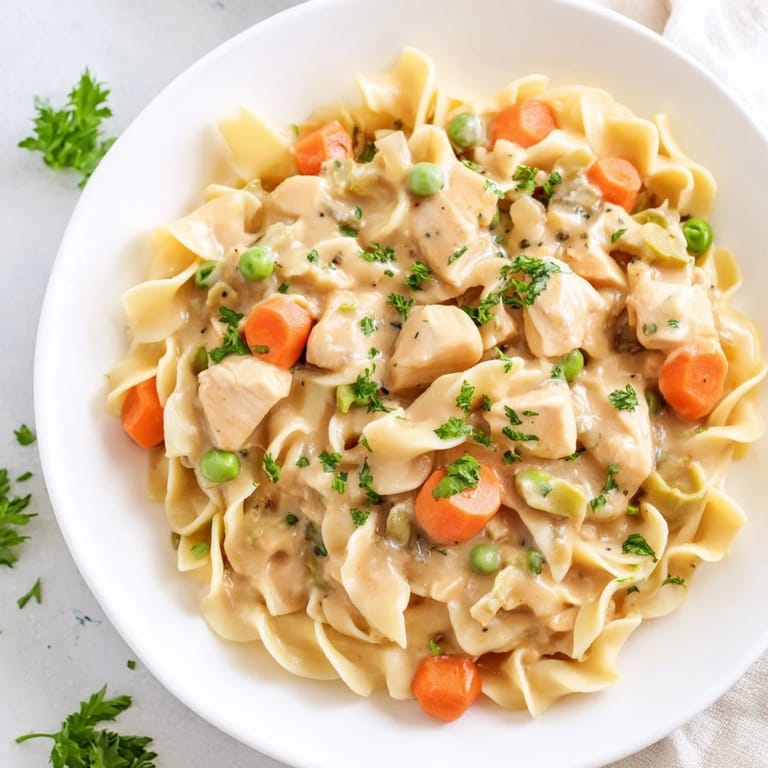
Save The moment that stuck with me most was my daughter asking for seconds without being asked, and then asking for the recipe so she could make it in her apartment. That's when I understood this wasn't just dinner—it was something worth passing on.
Why the Cream Sauce Matters
The sauce is the whole reason you're making this instead of just tossing chicken and noodles together. It's what transforms simple ingredients into something that feels special and tastes like someone cared about the cooking. The trick is not being afraid of the cream and butter; they're what make it taste like home cooking instead of diet food.
Variations That Actually Work
I've made this with mushrooms sautéed alongside the onions and carrots, and the earthiness changed everything in the best way. A small splash of white wine when you're cooking the vegetables adds a subtle depth that people taste but can never quite name. If you're in a real hurry, rotisserie chicken shreds beautifully into this sauce and saves you the browning step entirely.
Serving and Storage Ideas
This dish is best eaten the night you make it when the noodles still have texture and the sauce coats everything evenly. Leftovers keep in the refrigerator for three days and reheat gently on the stove with a splash of milk to loosen them back up.
- A crisp green salad alongside cuts through the richness and feels like a complete meal.
- Serve with crusty bread to soak up every last bit of sauce you don't want to waste.
- If you've got fresh herbs like chives or dill, a pinch of those on top adds brightness right before eating.
 Save
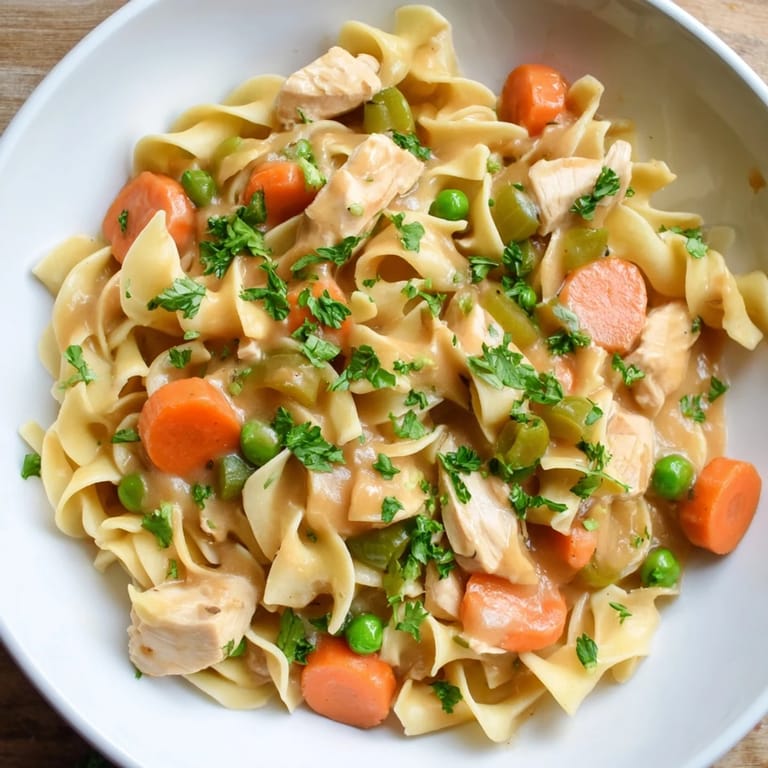
Save This is the kind of cooking that doesn't ask for much but gives back everything—warmth, comfort, and the simple joy of feeding people you care about. Make it when you need it most.
Recipe Questions
- → What type of chicken works best?
Boneless, skinless chicken breasts or thighs are ideal for tender, evenly cooked pieces that absorb the sauce well.
- → Can I use other noodles?
Wide egg noodles are recommended for their texture, but other pasta types like fettuccine or pappardelle can work as a substitute.
- → How do I thicken the sauce properly?
Creating a roux by cooking flour with butter before adding liquids ensures a smooth, thickened sauce without lumps.
- → What herbs complement this dish?
Dried thyme, parsley, and a touch of paprika bring aromatic and savory notes, enhancing the creamy sauce’s flavor.
- → Can I prepare this ahead of time?
Yes, cooking the chicken and sauce in advance allows flavors to meld; simply reheat gently before serving with fresh noodles.