 Save
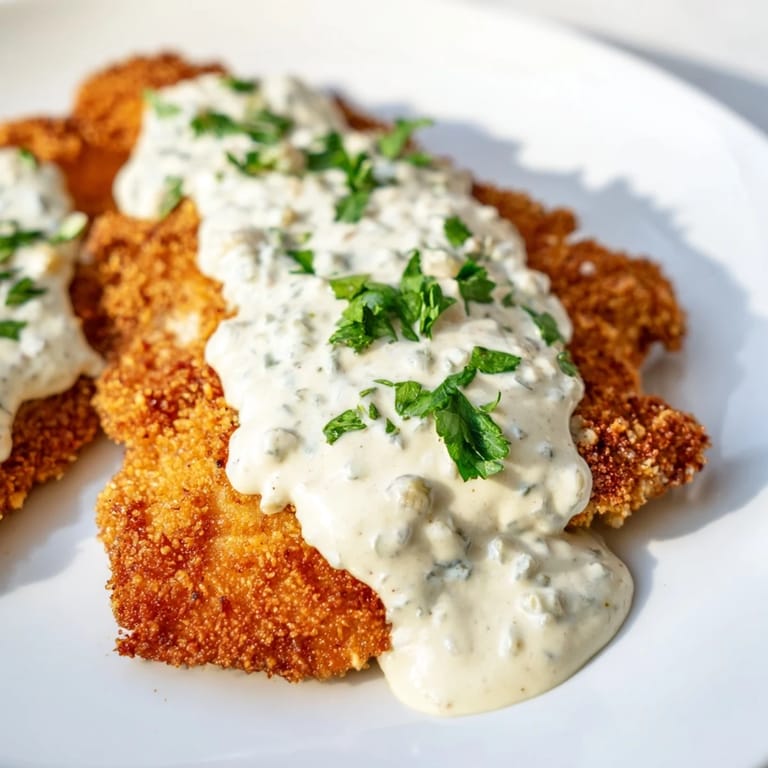
Save There's something about the sound of chicken hitting hot oil that signals dinner is actually happening. I was scrambling through a weeknight, three things on my mind and nothing thawed except these chicken breasts, when I remembered my neighbor mentioning how she'd cracked the code on restaurant-quality chicken at home. A good pound, a proper breading, and this golden-brown exterior that sounds crispy when you cut into it. The garlic cream sauce came later—honestly, I was trying to use up heavy cream that was about to expire—but that's when the whole thing clicked into place.
I made this for my partner's friends one Saturday, worried the whole time that something would go wrong. Instead, someone asked for the recipe before dessert even arrived, and another person went back for thirds while pretending they weren't. It became the thing I'd make when I wanted to feel confident in the kitchen, which is funny because it's so straightforward once you understand the rhythm of it.
Ingredients
- Boneless, skinless chicken breasts: Four pieces, about 6 to 8 ounces each—they're the blank canvas here, so choose ones that are roughly the same thickness or you'll have some overcooked while others are still cooking.
- Salt and black pepper: Season generously before breading; this is your only chance to season the meat itself.
- All-purpose flour: This first dredge helps the egg stick and creates structure for the breadcrumb layer.
- Eggs: Two large ones, beaten with a splash of water if you want the coating to be extra crispy and adhere better.
- Panko breadcrumbs: Use panko, not regular breadcrumbs—the texture is what gives you that signature crunch.
- Grated Parmesan cheese: Half a cup mixed into the panko adds flavor and helps brown the coating beautifully.
- Olive oil: A quarter cup for pan-frying; you want enough to shimmer but not swim.
- Unsalted butter: Three tablespoons for the sauce—it carries the garlic flavor without overpowering it.
- Garlic cloves: Six minced cloves, and don't skip mincing them fresh; garlic powder tastes completely different here.
- Heavy cream: One cup; this is the backbone of the sauce and keeps everything silky.
- Chicken broth: A half cup balances the richness of the cream and prevents the sauce from becoming one-dimensional.
- Fresh parsley: Two tablespoons chopped and another pinch for garnish adds a fresh note that cuts through the richness.
Tired of Takeout? 🥡
Get 10 meals you can make faster than delivery arrives. Seriously.
One email. No spam. Unsubscribe anytime.
Instructions
- Pound and season the chicken:
- Place each breast between two pieces of plastic wrap and pound with the flat side of a meat mallet until it's an even half-inch thick. You'll feel the resistance, then suddenly it gives way—that's when you know you're done. Season both sides generously with salt and pepper.
- Build your breading station:
- Set up three shallow bowls in a row: flour in the first, beaten eggs in the second, and panko mixed with Parmesan in the third. This setup keeps your hands cleaner and makes the whole process faster.
- Bread the chicken:
- Dredge each breast in flour, shaking off excess, then dip in egg to coat completely, and finally press firmly into the panko-Parmesan mixture so it really adheres. Don't be shy with the pressure; the coating should stick like it means it.
- Fry until golden:
- Heat olive oil in a large skillet over medium-high heat until it shimmers and moves easily around the pan. Add chicken and listen for that satisfying sizzle—that's your signal it's cooking properly. Cook 4 to 5 minutes per side until the coating is deep golden and the meat feels firm when pressed gently. Transfer to a plate and tent with foil to keep it warm.
- Build the garlic cream sauce:
- In the same skillet (don't wash it—those browned bits are flavor), lower heat to medium and melt butter. Add minced garlic and sauté just until fragrant, about a minute, stirring constantly so it doesn't brown.
- Create the silky sauce:
- Pour in heavy cream and chicken broth, using a wooden spoon to scrape up all those golden bits stuck to the bottom. The sauce will seem thin at first, but as it simmers for 3 to 4 minutes, it'll thicken slightly and smell incredible.
- Season and finish:
- Stir in salt, pepper, Parmesan, and fresh parsley, then let it simmer for another 1 to 2 minutes until the sauce coats the back of a spoon with a light, creamy sheen.
- Bring it all together:
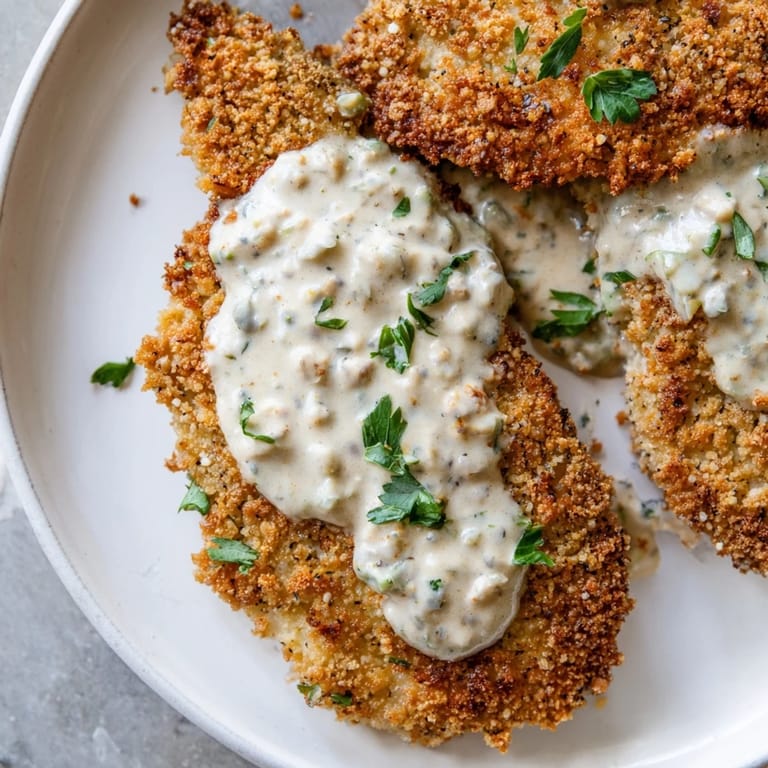
- Return the chicken to the skillet and spoon sauce over each piece, making sure it's heated through, about 1 to 2 minutes. Garnish with extra parsley and serve immediately while everything is still warm.
 Save
Save The first time everything aligned—the chicken golden and crispy, the sauce coating it perfectly, everyone at the table actually looking up from their plates to eat—I realized this wasn't just a recipe I'd followed. It became the meal I made when I wanted to prove something to myself, that I could feed people well on an ordinary Tuesday.
What Makes This Different
Most pan-fried chicken ends up either dry or tough, which is why so many people overcomplicate it with marinades or brining. The secret here is simpler: pound it thin so it cooks fast, season it before breading so the flavor goes into the meat itself, and use that cream sauce not as an afterthought but as an essential part of keeping everything moist. The Parmesan in the panko adds complexity the second your teeth hit it, and the sauce picks up all those browned bits from the pan, turning them into the best part of dinner.
Serving and Pairing
Buttered mashed potatoes are the obvious choice, and honestly, they're obvious for a reason—they catch the sauce and become part of the dish. Pasta is equally good; the sauce clings to it and you end up with something that feels more like a restaurant dish than something you made on a Wednesday. Steamed green beans add brightness and cut through the richness if you're looking for something lighter, and a simple green salad with lemon vinaigrette works beautifully too.
Making It Your Own
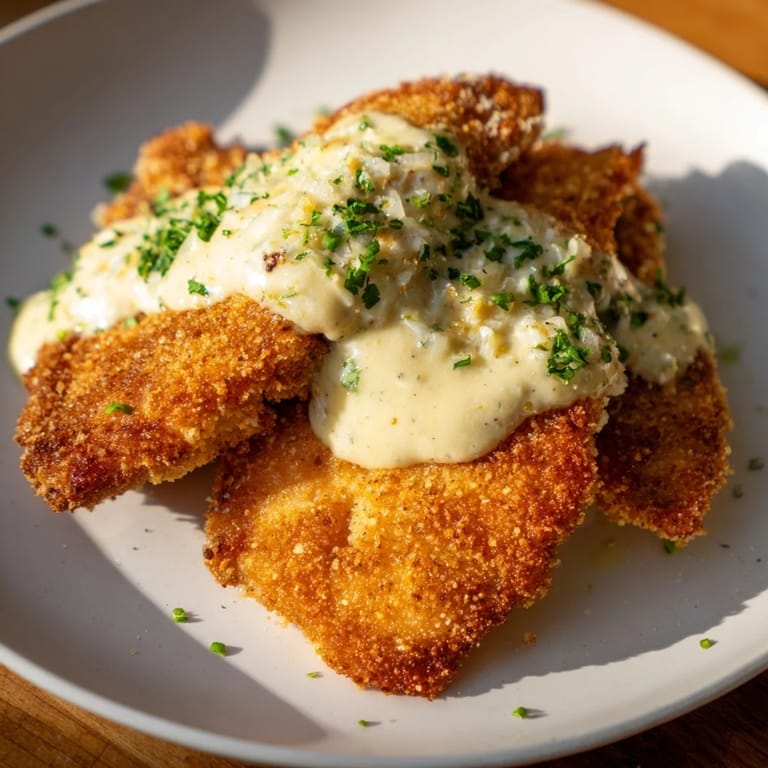
This recipe is forgiving in ways that matter. If you want extra crunch, double-coat the chicken by running it through the egg and panko again before frying. A squeeze of fresh lemon juice stirred into the sauce at the very end adds brightness without changing the fundamental character of the dish. Some nights I add a tablespoon of Dijon mustard to the sauce for a subtle tang, and other times I'll use half-and-half instead of heavy cream if I want something a touch lighter.
- The sauce can be made ahead and gently reheated; it actually develops better flavor if it sits for a few hours.
- Leftover chicken and sauce reheat beautifully over low heat if you have any left, though honestly that rarely happens.
- This recipe scales up easily if you're feeding a crowd—just don't crowd the skillet when frying or the chicken will steam instead of crisp.
 Save
Save This is the meal that made me stop thinking of cooking as something that required fancy techniques or intimidating recipes. It's just a piece of chicken, a golden crust, and a sauce that tastes like you knew what you were doing all along.
Recipe Questions
- → How do I get the chicken extra crispy?
Double-coat the chicken by repeating the egg and panko-Parmesan breading steps before frying for added crunch.
- → Can I substitute heavy cream in the sauce?
Yes, using half-and-half lightens the sauce while still maintaining creaminess.
- → What sides pair well with this dish?
Mashed potatoes, pasta, or steamed green beans complement the garlicky cream chicken nicely.
- → How do I prevent the coating from falling off during cooking?
Press the panko-Parmesan mixture firmly onto the chicken and avoid overcrowding the pan to maintain the crust.
- → Can I add brightness to the cream sauce?
A squeeze of fresh lemon juice added at the end enhances the sauce with a subtle tang.