 Save
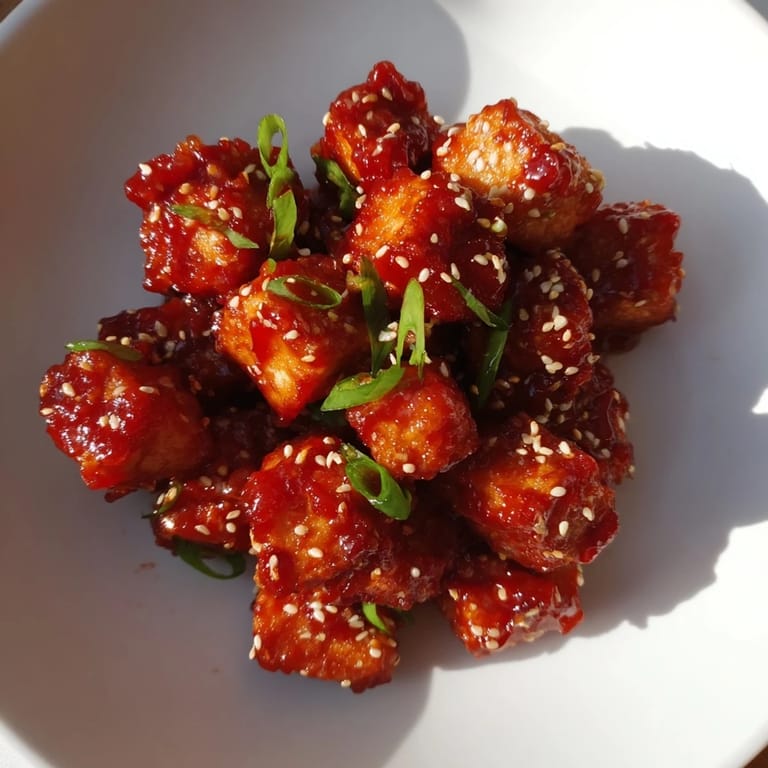
Save I discovered this dish on a Tuesday night when I had nothing but a block of tofu and a jar of gochujang in my pantry. The apartment smelled like sesame oil within minutes, and by the time those golden cubes hit the pan, I knew I'd stumbled onto something special. There's something about the way the sweet honey plays against that spicy paste that just clicks, and now I find myself making it whenever I need something that feels both comforting and bold.
I made this for my roommate once when she came home looking completely defeated by her day, and watching her face light up at the first bite was honestly better than any compliment I've ever received. She kept going back for more, asking if there was some secret ingredient I wasn't telling her, which made me laugh because the real secret was just knowing when to let the sauce simmer and thicken.
Ingredients
- Firm tofu, pressed and cubed: Pressing removes the water that would make it soggy, and 2 cm cubes give you enough surface area for serious crispiness without falling apart.
- Cornstarch: This is your crispy-factor insurance; it creates that golden, textured exterior that makes the dish actually exciting to eat.
- Gochujang: The soul of this sauce, bringing both heat and a depth that regular chili paste just can't match.
- Honey: Balances the spice and creates that glossy, clinging sauce you'll want to pour over everything.
- Sesame oil: A little goes a long way here; it adds nuttiness that elevates the whole thing.
- Soy sauce and rice vinegar: Together they brighten the sauce and keep it from becoming one-note.
- Garlic and ginger: Fresh versions matter here because they add spark instead of muddiness.
- Toasted sesame seeds and green onions: These garnishes aren't just decoration; they add texture and freshness that cuts through the richness.
Tired of Takeout? 🥡
Get 10 meals you can make faster than delivery arrives. Seriously.
One email. No spam. Unsubscribe anytime.
Instructions
- Press your tofu seriously:
- Wrap it in paper towels, place it on a plate, and weigh it down for at least 10 minutes. This step feels tedious but changes everything about the final texture.
- Coat and let it sit a moment:
- Toss your cubes with cornstarch and salt, then give them a few minutes on the counter so the coating sets.
- Get the pan screaming hot:
- Medium-high heat with your oil shimmering is key; you want that immediate sizzle when the tofu hits the pan.
- Let each side get golden:
- Resist the urge to move things around constantly; give each side 2-3 minutes to develop that caramelized crust, then turn once.
- Make your sauce while tofu cooks:
- Whisk everything together in a small bowl so the ginger and garlic can start breaking down and releasing their flavor.
- Bring the sauce to a simmer:
- Let it bubble gently for 2-3 minutes, and you'll watch it thicken into something that actually clings to the tofu instead of pooling underneath.
- Toss and coat in one final minute:
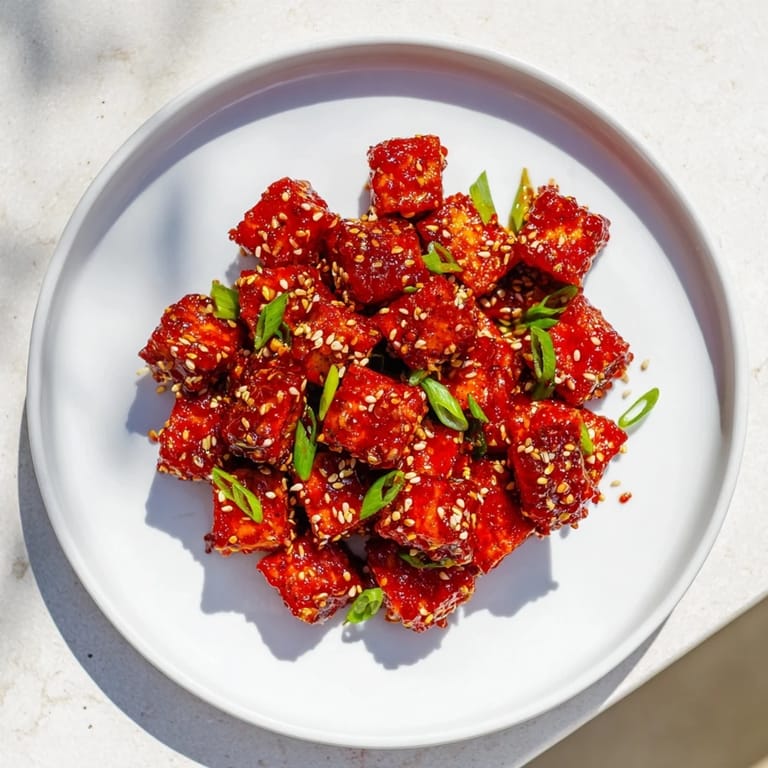
- Return the tofu to the pan, toss gently so each piece gets coated, and let everything get sticky and glossy together.
 Save
Save I remember my friend asking if she could take the leftovers home, and I realized in that moment that this dish had become something I made not just for myself but for the people I wanted to feed. There's power in a recipe that simple and that satisfying.
Why This Sauce Works
The magic happens when you understand what each ingredient does. The gochujang brings heat and umami, honey adds body and balance, soy sauce deepens everything with salt and complexity, and rice vinegar cuts through with brightness. When they simmer together, they don't just combine; they transform into something cohesive that feels intentional rather than thrown together.
Crispy Tofu Secrets
The cornstarch coating is what separates this from sad, soft tofu. It creates a crust that shatters slightly when you bite into it, which sounds small until you experience it. I've learned to coat the tofu, let it sit for a minute or two, and then add it to a really hot pan; that combination is what gets you golden instead of pale or burnt.
Serving and Flexibility
This works beautifully over rice, nestled in lettuce cups, or honestly just on a plate by itself if you're in a mood to eat straight from the pan. I've added steamed broccoli, roasted carrots, and sautéed mushrooms depending on what was in the fridge, and the sauce embraces whatever you pair it with.
- Maple syrup works just as well as honey if that's what you have, bringing a slightly deeper sweetness.
- Make the sauce spicier by adding more gochujang, or dial it back if you're cooking for someone heat-averse.
- Prep the tofu and sauce the night before, then it's just a 15-minute pan session when you're hungry.
 Save
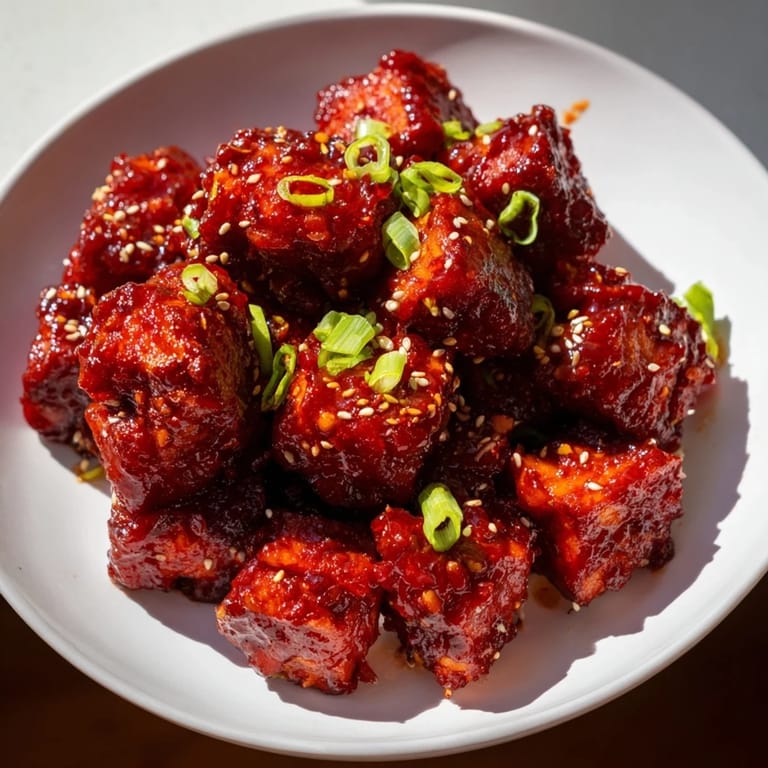
Save This recipe lives in that sweet spot where it feels restaurant-quality but requires zero fancy technique, just presence and attention. Make it once and you'll understand why I keep coming back to it.
Recipe Questions
- → How can I make the tofu extra crispy?
Press the tofu well to remove excess moisture and coat it evenly with cornstarch before frying. Use medium-high heat and avoid overcrowding the pan for best results.
- → Can the honey be substituted for a vegan alternative?
Yes, maple syrup or agave nectar work well as vegan-friendly sweeteners without altering the glaze’s texture.
- → What level of spice does gochujang add?
Gochujang offers a mild to moderate heat with a rich, fermented flavor; adjust the amount to suit your spice preference.
- → Is this dish suitable for a vegetarian diet?
Absolutely, it’s vegetarian and can easily be made fully vegan by replacing honey with plant-based sweeteners.
- → What sides pair well with this dish?
Steamed rice, quinoa, or crisp lettuce wraps complement the tofu nicely, along with steamed or sautéed vegetables.