 Save
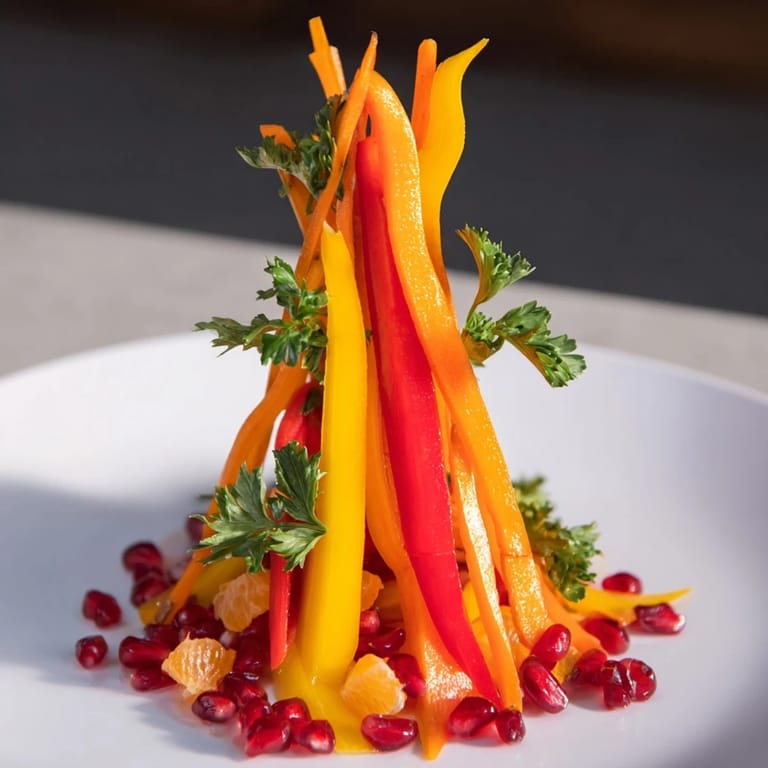
Save I'll never forget the first time I arranged vegetables on a plate like they were flames dancing in the dark. It was at a dinner party where someone challenged me to make something "Instagram-worthy but actually edible," and I found myself in the kitchen thinking about bonfires—those magical nights when everyone gathers around the warmth. That's when I realized: what if I could capture that same glow on a plate? The bright oranges and reds of fresh produce arranged vertically like a miniature fire, without a single flame. It became my favorite way to welcome people to the table.
I remember my friend Sarah's face when she walked in and saw this sitting in the middle of the table at a winter gathering. She actually gasped and said it looked too pretty to eat—but then she couldn't resist grabbing a mandarin segment, and suddenly everyone was doing the same. Within minutes, this careful arrangement had transformed into an interactive appetizer, and that's when I knew I'd created something special. The act of reaching in, deconstructing the bonfire, and sharing it together made the meal feel more intimate somehow.
Ingredients
- Carrots (2 large, peeled and cut into thin sticks): These form your core flames and should be cut as long and thin as possible—the thinner they are, the more authentic the flickering effect. I learned to use a vegetable peeler or mandoline for uniform sticks that lean together beautifully.
- Yellow bell pepper (1, seeded and sliced into strips): This is your inner flame, the hottest part of the fire. Cut into long strips that follow the natural ridges of the pepper for easier arrangement.
- Red bell pepper (1, seeded and sliced into strips): The outer, most dramatic flames. Red peppers are naturally sweeter than yellow, so they'll be the first thing people want to grab.
- Mandarins (3, peeled and segmented): These jewel-like segments are your embers glowing at the base and throughout. Their natural sweetness and bright color are irreplaceable—don't substitute with oranges, as their thicker skin makes them harder to peel ahead of time.
- Fresh parsley or mint sprigs (fresh handful): These scattered around the base represent ash and greenery around a real fire. Fresh herbs add both visual texture and an unexpected aromatic element that makes people pause and notice the details.
- Pomegranate seeds (small handful, optional): If you add these, they become little sparks of light and add a pop of tart flavor. I only use them when I want maximum visual impact.
- Hummus or yogurt-based dip (1/2 cup, optional): This becomes your edible foundation and flavor anchor. I prefer hummus because it echoes the earthiness of the vegetables, but any creamy dip works.
Tired of Takeout? 🥡
Get 10 meals you can make faster than delivery arrives. Seriously.
One email. No spam. Unsubscribe anytime.
Instructions
- Prep all your produce:
- Before you arrange anything, have all your vegetables ready and laid out in front of you. Cut those carrots into long, thin sticks—think matchsticks or thin pencils. Slice your peppers into long strips, keeping them similar in length. Peel your mandarins gently and separate the segments. This is the meditative part, and there's no rush. Having everything prepped and visible actually helps you visualize the final arrangement.
- Create your base flame:
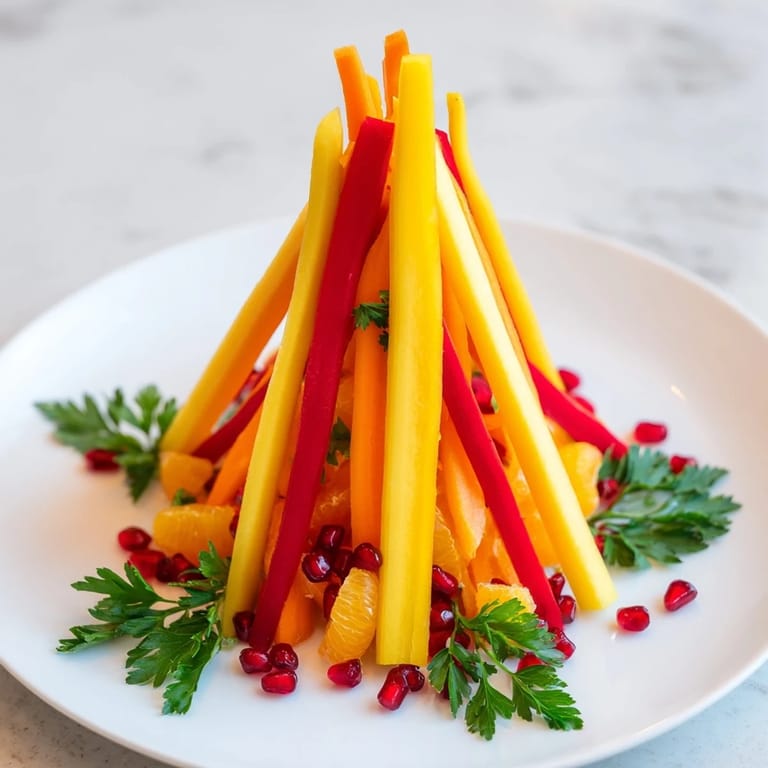
- Take your round serving plate and position the carrot sticks in the center, leaning them together like a teepee or like logs you're stacking for a real bonfire. They should stand mostly vertical but lean inward slightly toward each other. This creates the structural foundation and establishes the height of your piece.
- Layer in the flickering effect:
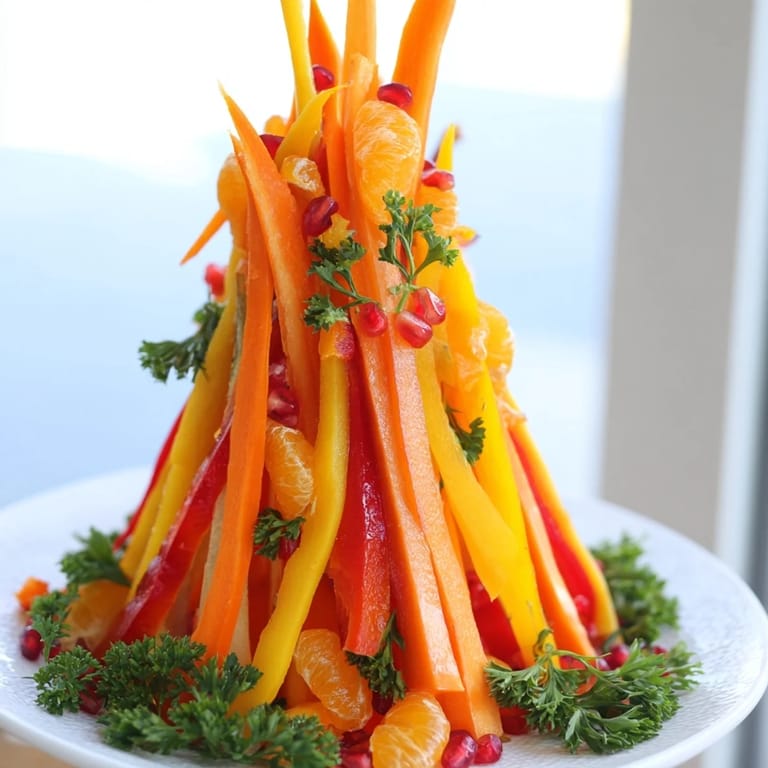
- Now comes the artistic part. Tuck your yellow pepper strips in among the carrots, letting them lean at slightly different angles. Then weave in the red pepper strips, spacing them so you see all three colors—orange, yellow, and red—throughout. Step back and look at it from above. Does it read as flames? If not, adjust the spacing and angles. This shouldn't take long, and there's no "wrong" way to do it.
- Add the glowing embers:
- Tuck your mandarin segments at various heights throughout the arrangement and especially around the base. These add dimension, sweetness, and that crucial orange glow that makes people think of actual firelight. Don't hide them—let them be visible and inviting.
- Frame it with ash and sparkle:
- Scatter your fresh herb sprigs around the very base, like ash or greenery growing around a campfire. If you're using pomegranate seeds, sprinkle them now for extra sparkle. Step back and admire your work. It should look like a small, edible bonfire.
- Serve with intention:
- If you're using the dip, place it in a small bowl nearby, not in the center (that would interrupt your bonfire scene). Let people know the whole thing is edible and encourage them to start with whatever color appeals to them.
 Save
Save There was a moment during one dinner party when a child pointed at the centerpiece and asked if it was a real fire, and the whole table went quiet for just a second. Then everyone laughed, and that simple moment of wonder reminded me why I love cooking—it's not just about feeding people, it's about creating tiny moments of delight and conversation. After that, I started telling people the story before they ate it, letting them know they were about to taste the warmth they were admiring.
Why This Works as Both Decoration and Food
The genius of this arrangement is that it lives in the space between art and appetite. Most centerpieces sit untouched, admired from a distance. But this one practically begs to be eaten. The raw vegetables are bright, fresh, and nutritious—nothing feels wasteful about guests dismantling your carefully arranged flames. In fact, the interactive nature of it makes the whole meal feel more relaxed and convivial. People aren't worried about disturbing something precious; they're invited to engage with it, to become part of the arrangement by eating pieces of it.
Timing and Preparation Strategy
Since there's zero cooking involved, this is one of the rare recipes where you can prep almost everything an hour or two ahead of time. Cut your vegetables, store them in water (carrots and peppers stay crispest this way), and peel your mandarins. Keep the herbs separate in a damp paper towel. Then, about 15 minutes before guests arrive, you can assemble everything while thinking about something else entirely. There's something calming about the simplicity—you're not monitoring temperatures or timing, just arranging colors until they sing.
Variations and Personal Touches
While this recipe is intentionally simple, I've played with it enough times to know where flexibility lives. Golden beets add an almost luminous quality if you can find them. Purple carrots add unexpected depth. Some seasons I use thin apple slices for extra sweetness. Once I even added thin strips of dried apricot for a more autumnal feel. The framework stays the same—vertical arrangement, warm colors, herbs at the base—but you can make it your own by choosing produce that's at peak season where you are. That's actually the best time to make it anyway, because perfectly ripe vegetables arrange more beautifully and taste better too.
- Try adding thin slices of golden beet for a luminous quality that catches the light
- Mix in purple or rainbow carrots for unexpected color depth
- Serve alongside artisan crackers, toasted baguette slices, or even grilled pita bread for a more substantial appetizer
 Save
Save This centerpiece taught me that the best food moments aren't always about complexity or technique—sometimes they're about paying attention to color, texture, and the simple joy of gathering around something beautiful. I hope it brings that same warmth to your table.
Recipe Questions
- → How do I arrange the vegetables to mimic bonfire flames?
Cut carrots and bell peppers into long, thin sticks and arrange them vertically on a round platter, leaning them together like a teepee to resemble flames.
- → Can I include other vegetables for color variety?
Yes, thin strips of golden beet or yellow carrot can be added for extra color and depth.
- → What garnishes create the ash or embers effect?
Fresh parsley or mint sprigs are scattered around the base to resemble green embers, enhancing the bonfire impression.
- → Is there a recommended dip to accompany this arrangement?
A small bowl of hummus or yogurt-based dip pairs well on the side, complementing the fresh produce.
- → How can I add sparkle to the centerpiece?
Sprinkling pomegranate seeds over the arrangement adds a festive sparkle and an extra burst of flavor.