 Save
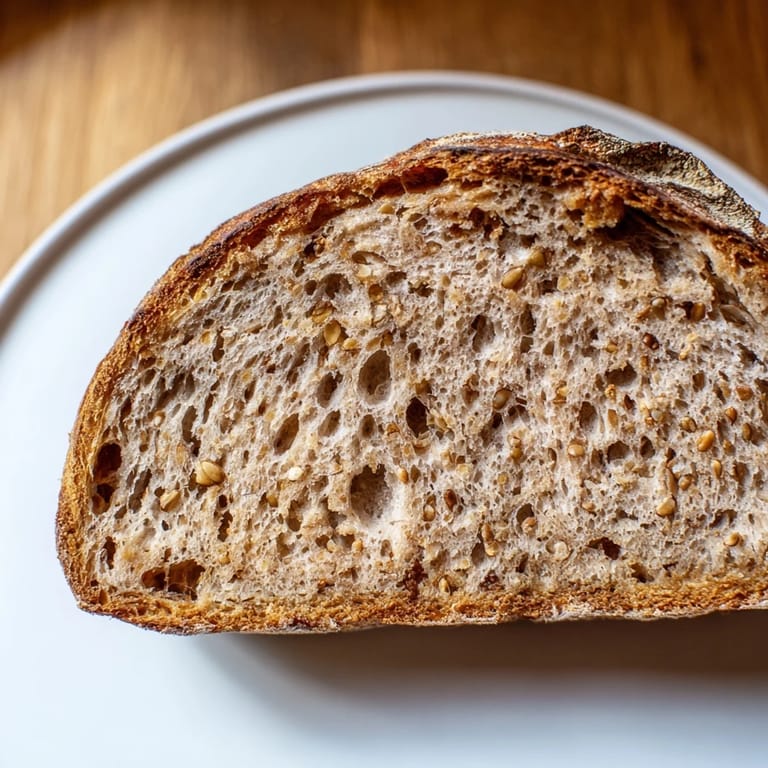
Save The first time I tasted authentic Estonian leib, I was standing in a small kitchen in Tallinn on a gray October morning, watching my friend's grandmother pull a dark, almost black loaf from the oven. The aroma hit me before anything else—deep, malty, tinged with caraway—and it made me understand why this bread has sustained Estonian people for centuries. She sliced it thick, spread it with butter still flecked with sea salt, and handed me a piece without saying much. That single slice changed how I thought about bread entirely.
I made this bread for the first time during a particularly long winter, when my sourdough starter had been sitting on my counter for months, and I was desperate to use it for something other than the usual sandwich loaf. I remember the dough looking almost soup-like in the bowl and thinking I'd made a terrible mistake, but by morning it had transformed into something with real structure and purpose. My neighbor smelled it baking and showed up unannounced with cheese and sliced onions, and we sat at the kitchen table eating warm bread for what felt like an hour.
Ingredients
- Active rye sourdough starter (100g): This is the heart of the bread—use one that's been fed and is actively bubbling, not one sitting dormant in your fridge. If your starter is new, give it an extra day to establish itself.
- Dark rye flour (400g): This flour is denser than wheat and gives leib its characteristic color and earthy depth; don't substitute with light rye unless you want a completely different bread.
- Bread flour (100g): The small amount of wheat provides just enough gluten structure to support the heavy rye without making the crumb light and airy.
- Lukewarm water (300ml): Temperature matters here—too hot and you'll kill your starter, too cold and the fermentation drags; aim for around 40°C if you have a thermometer.
- Dark rye malt or barley malt powder (50g): This adds color, subtle sweetness, and authenticity; it's worth hunting down online rather than substituting with regular flour.
- Molasses or dark honey (2 tbsp): Choose molasses for deeper flavor and a darker crust, or honey if you prefer something slightly gentler; they contribute both sweetness and fermentation food.
- Caraway seeds (1 tbsp, plus 1 tsp for topping): Toast them lightly in a dry pan first if you want their flavor to shine more boldly through the bread.
- Fine sea salt (2 tsp): Standard table salt works, but fine sea salt dissolves more evenly and tastes cleaner.
Tired of Takeout? 🥡
Get 10 meals you can make faster than delivery arrives. Seriously.
One email. No spam. Unsubscribe anytime.
Instructions
- Awaken your starter:
- In a large bowl, combine your active sourdough starter, lukewarm water, and molasses, stirring until the molasses dissolves completely and the mixture looks like thin chocolate milk. You're building the liquid foundation that will hydrate the flours and activate the fermentation.
- Build the dough:
- Add the rye flour, bread flour, malt powder, caraway seeds, and salt all at once, then mix with a wooden spoon or your hands until everything comes together into a thick, shaggy, definitely sticky dough. This isn't meant to be smooth or elastic like regular bread dough—think more like a porridge with structure.
- Let time do the work:
- Cover the bowl with a damp cloth and leave it at room temperature for 10 to 12 hours, or overnight. You'll watch it expand gradually, bubbles breaking through the surface, the smell growing richer and more intoxicating by the hour. This is the magic of long fermentation.
- Shape and proof again:
- Line your loaf pan with parchment paper or give it a light grease, then scrape the dough inside and smooth the top with a wet spatula—wet hands or spatulas prevent sticking with this sticky dough. Sprinkle extra caraway seeds on top if you want them visible and crunchy, then cover with a towel and let it rise another 2 to 4 hours until it's climbed close to the rim of the pan.
- Create steam and heat:
- Preheat your oven to 220°C (430°F) and place a pan of hot water on the bottom rack—steam is essential for developing a proper crust on dark rye bread. The moisture in the oven keeps the exterior flexible while the interior crumb sets.
- Bake with patience:
- Bake at 220°C for 15 minutes to set the crust, then lower the temperature to 190°C (375°F) and bake for another 30 minutes until the crust is dark and the loaf sounds hollow when you tap the bottom. A kitchen thermometer should read around 95–100°C in the center, but honestly, the hollow sound is the most reliable test.
- Cool completely:
- Remove the bread to a wire rack and wait—I know it's torture—until it's completely cool before slicing. Hot bread falls apart; cooled bread has structure and reveals its complex crumb.
 Save
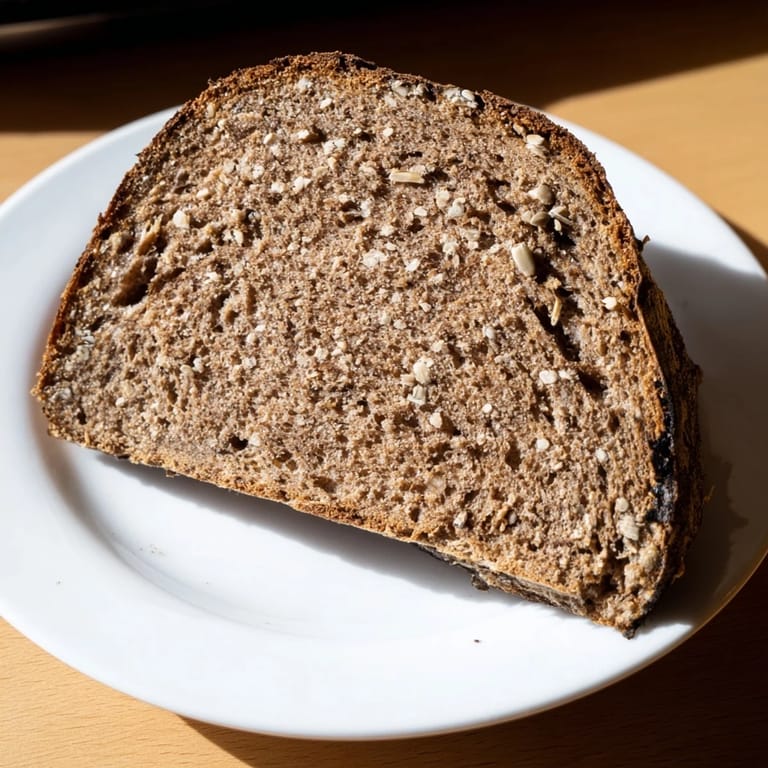
Save There's a moment, maybe an hour after pulling this bread from the oven when the kitchen has finally cooled down and the smell has settled into every corner, where you realize you're holding something that connects you to centuries of Estonian tables and kitchens. That realization hits differently with homemade bread, especially one as intentional and slow as this.
On Sourcing Your Malt
The dark malt is the ingredient most people struggle to find, and I've learned it's worth the small extra effort. Health food stores, specialty bread suppliers, and online shops carry it labeled as dark rye malt or barley malt powder. Some people substitute with cocoa powder or instant coffee in tiny amounts, and while it adds color, it changes the flavor profile noticeably—the result tastes more like chocolate bread than authentic leib. If you genuinely cannot find malt, increase the molasses slightly and accept that your bread will taste slightly sweeter and less authentically Estonian, but it will still be delicious.
Keeping and Slicing
This bread actually improves over a day or two as the flavors settle and mature. Wrap the cooled loaf in a clean kitchen towel and store it at room temperature for up to a week; the thick crust protects the inside from drying out. When you slice it, use a serrated knife and saw gently rather than pressing down—you're cutting through a substantial crust, and aggressive slicing can compress the tender crumb. Some people prefer to let the bread sit for a few hours after cooling before slicing, claiming it's easier to cut cleanly, and I've found this to be true.
Pairing and Serving
Estonian leib was born to carry other flavors, not stand alone. Thick slices with salted butter and a glass of something dark feels almost ceremonial. I've served it with smoked fish and dill, with creamy cheeses and pickled vegetables, with nothing but good olive oil and fleur de sel. It's also quietly perfect as toast the next morning, soaking up eggs or simply topped with jam—the bread's deep flavor complements both sweet and savory equally.
- Let warm slices sit with butter long enough for it to melt completely into the crumb.
- Pair it with bold flavors and aged things—this bread stands up to intensity.
- Save the last slices for toast, where the crust becomes crackling and the interior grows almost cake-like.
 Save
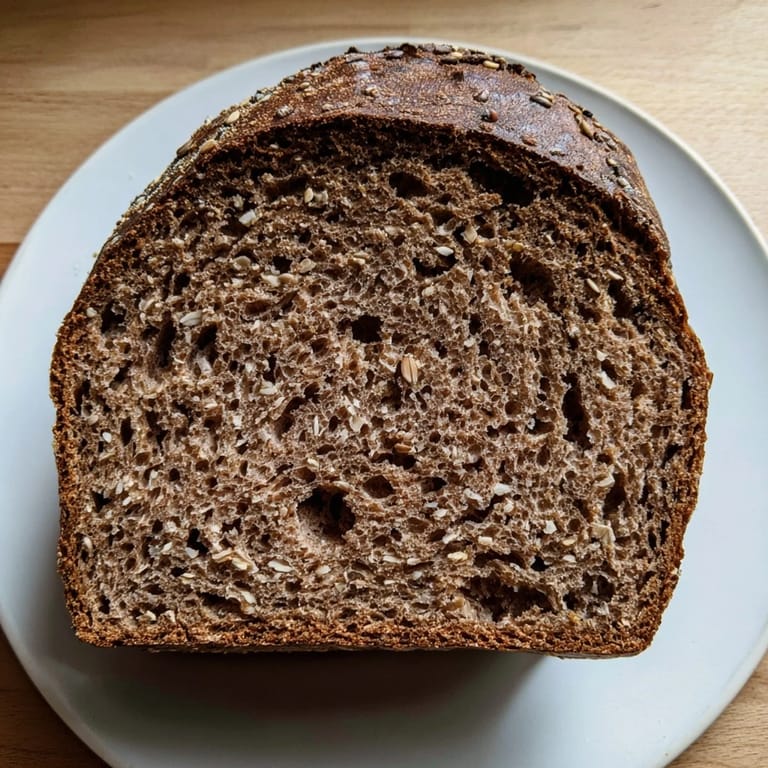
Save Once you've made Estonian leib, you understand why it's endured for so long—it's honest bread that tastes like exactly what it is. Make it often.
Recipe Questions
- → What type of flour is used in this bread?
The bread combines dark rye flour with some wheat bread flour to balance density and texture.
- → How is the distinctive aroma achieved?
Malt powder and caraway seeds add layers of depth and a traditional aromatic profile to the loaf.
- → Why is steam used during baking?
Introducing steam in the oven creates a crisp crust by slowing the crust’s initial formation, allowing better oven spring.
- → Can caraway seeds be toasted before use?
Yes, toasting caraway seeds intensifies their flavor and enhances the bread’s aromatic quality.
- → How long does the dough take to rise?
The dough rises slowly for 10-12 hours initially, then another 2-4 hours after shaping for optimal texture and flavor.
- → What are recommended pairings for this bread?
It pairs wonderfully with aged cheeses, smoked fish, or simply spread with butter for a hearty snack.