 Save
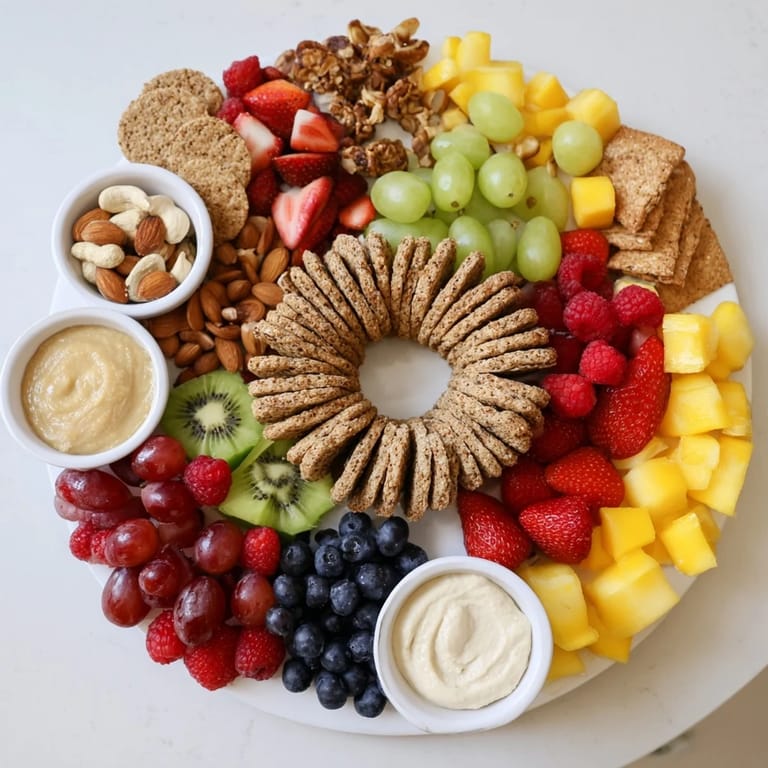
Save I discovered the magic of a well-arranged platter one spring when my sister showed up unannounced with her new partner. Nothing fancy was planned, but I had fresh fruit and some crackers sitting around, and suddenly I was arranging them in circles like I'd seen in those gorgeous food magazines. Watching their faces light up when they saw the colors radiating from the center—that bright ring of crackers and nuts framing jewel-toned berries and golden mango—made me realize something had shifted. This wasn't just snacking; it was a moment. It became my go-to way to make people feel welcomed without spending hours in the kitchen.
My favorite memory is when my friend brought this to a potluck and a kid who claimed he didn't like fruit suddenly couldn't stop sampling the kiwi slices. His mom was shocked, but I wasn't—there's something about picking your own pieces from a beautiful arrangement that makes even skeptical eaters curious. Food tastes better when you feel like you're discovering it yourself rather than being told what to eat.
Ingredients
- Assorted dry crackers (150 g): Water crackers, multigrain, and rye each bring their own texture and flavor, so mixing them keeps every bite interesting and prevents the platter from feeling one-note.
- Mixed roasted nuts (100 g): Almonds, cashews, and pecans add a salty crunch that anchors the sweetness of the fruit, and they're the edible border that tells people this is meant to be assembled and shared.
- Seedless grapes (1 cup): They're reliable, sweet, and roll across the platter invitingly—I always choose a mix of red and green for that pop of color contrast.
- Fresh berries (1 cup): Strawberries, blueberries, and raspberries are the jewels of the platter, so pick them when they're ripe and handle them gently so they stay glossy and perfect-looking.
- Kiwi (1 large), peeled and sliced: Those green slices with tiny black seeds are almost too pretty to eat, and they add a tartness that wakes up your palate between bites of sweeter fruit.
- Mango (1 small), peeled and cubed: Golden and fragrant, mango brings a tropical warmth that makes this feel like more than just an appetizer.
- Pineapple chunks (1/2 cup): The acidity balances richness and adds that fresh, bright note that keeps people reaching for more.
- Creamy hummus (100 g): This is your savory anchor, the thing that makes people linger and dip instead of just grabbing and going.
- Greek yogurt dip or tzatziki (100 g): Cool, tangy, and lighter than you'd expect, it bridges the gap between fruit and cracker beautifully.
- Honey or fruit compote (100 g): This is the sweet whisper, the thing that makes the fruit taste even more like itself and the crackers taste like dessert.
Tired of Takeout? 🥡
Get 10 meals you can make faster than delivery arrives. Seriously.
One email. No spam. Unsubscribe anytime.
Instructions
- Build your outer ring:
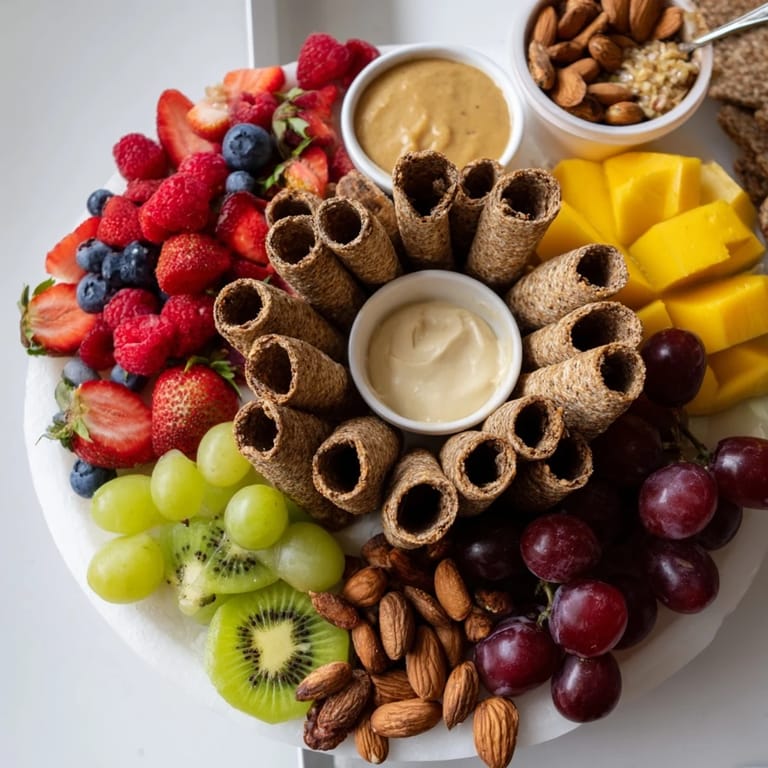
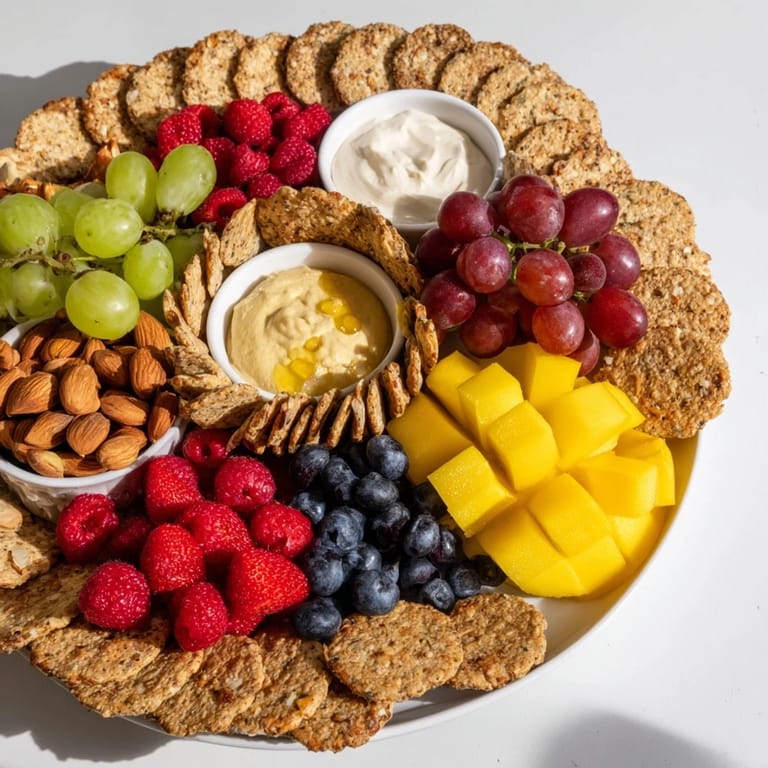
- Arrange your crackers around the edge of a large platter, standing them up or fanning them slightly for drama—this isn't about efficiency, it's about making people want to pick one up. Scatter the roasted nuts between the crackers to complete that satisfying crunch border that frames everything.
- Create your fruit crown:
- In the center, pile your fruits in order of color, alternating reds and yellows and greens so no single hue dominates. Think of it like painting—you're building a gradient that draws the eye inward and makes the whole thing feel intentional.
- Settle in the dips:
- Nestle your small bowls of hummus, yogurt, and honey right into the heart of the fruit. They should sit snug but visible, ready to be discovered.
- Chill if you have time:
- Covered in the fridge for up to an hour keeps everything cold and fresh, though honestly it's magnificent the moment it's done too.
 Save
Save There was a quiet moment at a dinner I hosted when I noticed someone turn the platter slowly, studying it like it was art, before choosing exactly which piece to try next. That's when I understood that presentation isn't vanity—it's care made visible. It says you thought about what would make people happy.
The Story Behind the Platter
This isn't really a recipe that came from anywhere grand or traditional. It came from necessity and laziness in the most honest way—needing to feed people and wanting to feel proud about it simultaneously. The beauty is that you don't need to be skilled in the kitchen to pull it off; you just need to see colors and flavors as something that goes together, which is half the joy of cooking.
Making It Your Own
The skeleton of this platter is flexible, which means it becomes different every time you make it depending on what's in season and what you're feeling. Winter might mean adding pomegranate seeds and dried apricots; summer could introduce fresh peaches or citrus. Vegan versions swap in plant-based yogurt and maple syrup without losing a beat. Some people add cheese cubes or pretzels for extra crunch, and honestly, they're not wrong.
Serving and Timing
The beauty of this dish is its flexibility around timing and occasion. Serve it immediately for maximum freshness, or cover and refrigerate for up to an hour if you're handling multiple tasks before guests arrive. It pairs beautifully with crisp white wine, sparkling water with lemon, or simply cool glasses of iced tea, and it works equally well as an appetizer, a light lunch, or the casual snack that keeps people talking longer than planned.
- Keep the dips cold in small bowls nested right into the fruit to maintain that fresh, inviting look.
- Arrange everything on the platter just before serving if you have time, so the fruit looks glistening and the nuts stay crisp.
- Don't stress about making it perfect—the slight imperfections are what make it feel homemade and genuine.
 Save
Save This platter teaches you something that sounds simple but changes how you cook: that feeding people well often means paying attention to beauty alongside flavor. Every time you make it, you'll remember someone's face when they saw it, and that's the real recipe.
Recipe Questions
- → What types of crackers work best for the platter?
Assorted dry crackers like water crackers, multigrain, and rye provide a crisp texture and visually appealing base.
- → Can the dips be substituted for dietary preferences?
Yes, plant-based yogurt can replace Greek yogurt, and maple syrup can be used instead of honey for a vegan-friendly option.
- → How should the fruits be arranged for best presentation?
Arrange fruits in a colorful mound at the center, alternating colors and shapes for an inviting, lush look.
- → What nuts complement this platter well?
Mixed roasted nuts such as almonds, cashews, and pecans add crunch and richness between the crackers.
- → What serving tools are recommended?
Use a large serving platter, small bowls for dips, a paring knife, and a cutting board to assemble efficiently.