 Save
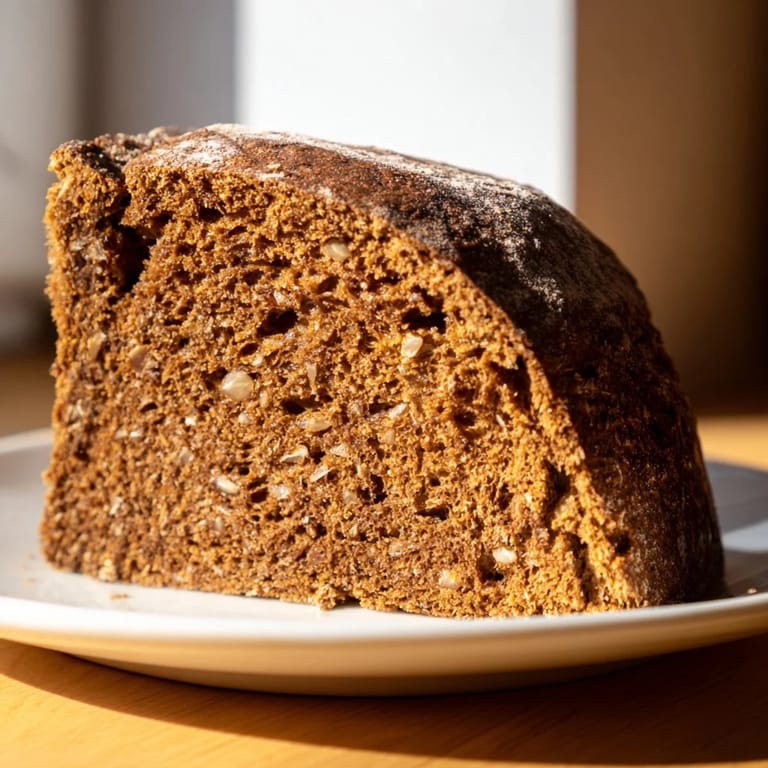
Save My first encounter with rupjmaize happened on a gray Riga morning, the kind where the air tastes like rain before it falls. A friend's grandmother pulled this dense, dark loaf from her oven, and the kitchen filled with a smell I'd never experienced before—earthy, slightly sweet, with something almost medicinal from the caraway. She sliced it thick, spread butter across the warm surface, and handed me a piece without ceremony. That bread taught me that sometimes the most memorable foods are the ones that don't try to impress you.
I brought this bread to a potluck years ago when I was still figuring out my way around a kitchen. Everyone else arrived with salads and casseroles, and there I was with this humble, dark brick of a loaf. A woman who grew up in Latvia spotted it immediately, broke off a piece, and got quiet for a moment. She told me it tasted like home. That's when I understood that some recipes carry more than flavor—they carry memory and belonging. Now I make it whenever I want to feed people the way that grandmother fed me.
Ingredients
- Dark rye flour (500 g): This is the soul of the bread—don't skip it or substitute with light rye, which will make the loaf too pale and lose that mineral depth that makes rupjmaize distinctive.
- Bread flour (100 g): Just enough to give structure without making the crumb too tight; rye dough needs this gentle scaffolding.
- Active dry yeast (1 packet, 7 g): The long fermentation means you won't need much yeast—the flavors develop slowly and gorgeously over time.
- Warm water (350 ml): Temperature matters here; if it's too hot, you'll kill the yeast, but if it's tepid, the fermentation will drag. Aim for the warmth of a comfortable bath.
- Molasses or dark honey (2 tbsp): This adds sweetness and depth without making the bread dessert-like; molasses gives a more authentic, earthy note.
- Salt (2 tsp): Don't reduce this—salt strengthens the gluten and brings out the bread's savory character.
- Caraway seeds (2 tsp): Toast them first if you have time; the heat releases oils that make them sing in the finished loaf.
- Vegetable oil (1 tbsp plus extra): Just enough to keep the dough from sticking to your hands and the bowl; rye dough is naturally sticky, and that's exactly what you want.
Tired of Takeout? 🥡
Get 10 meals you can make faster than delivery arrives. Seriously.
One email. No spam. Unsubscribe anytime.
Instructions
- Wake up the yeast:
- Combine warm water, molasses, and yeast in a bowl and let it sit for 10 minutes until it becomes foamy on top—this is your signal that the yeast is alive and ready to work. You'll see little bubbles breaking the surface, which feels almost alive when you look at it.
- Bring the dough together:
- Add the rye flour, bread flour, salt, and caraway seeds to the yeast mixture and stir with a wooden spoon until everything is incorporated into a shaggy, sticky mass. Don't expect this to look like typical dough; rye is wetter and more reluctant to come together, but that's the nature of the grain.
- Build strength into the dough:
- Drizzle in the oil and knead by hand or with a dough hook for 5 to 7 minutes until the dough becomes smooth and elastic, though it will remain sticky. You'll feel the dough begin to resist your hands as the gluten develops, which is your cue that you're close to done.
- Let time do the heavy lifting:
- Oil a large bowl, nestle the dough inside, cover with plastic wrap or a damp towel, and let it rise at room temperature for 12 to 16 hours, or overnight, until it roughly doubles in size. The long fermentation is where all the flavor happens; resist the urge to rush it.
- Shape and second rise:
- Punch down the dough gently, turn it out onto a lightly floured surface, and shape it into a round or oval loaf, then place it on parchment or in a greased pan. Cover and let it rise for 45 to 60 minutes until it looks puffy and springs back slowly when you poke it gently.
- Prepare for baking:
- While the loaf is rising, preheat your oven to 220°C (425°F). Dust the top of the loaf with rye flour and optionally score it with a sharp knife in a cross or diagonal pattern—this helps steam escape and creates a beautiful crust.
- Bake until deep golden:
- Place the loaf in the center of the oven and bake for 45 to 50 minutes until the crust is deeply browned and the bottom sounds hollow when tapped. This takes patience; the bread should look almost mahogany when it's done.
- Cool completely:
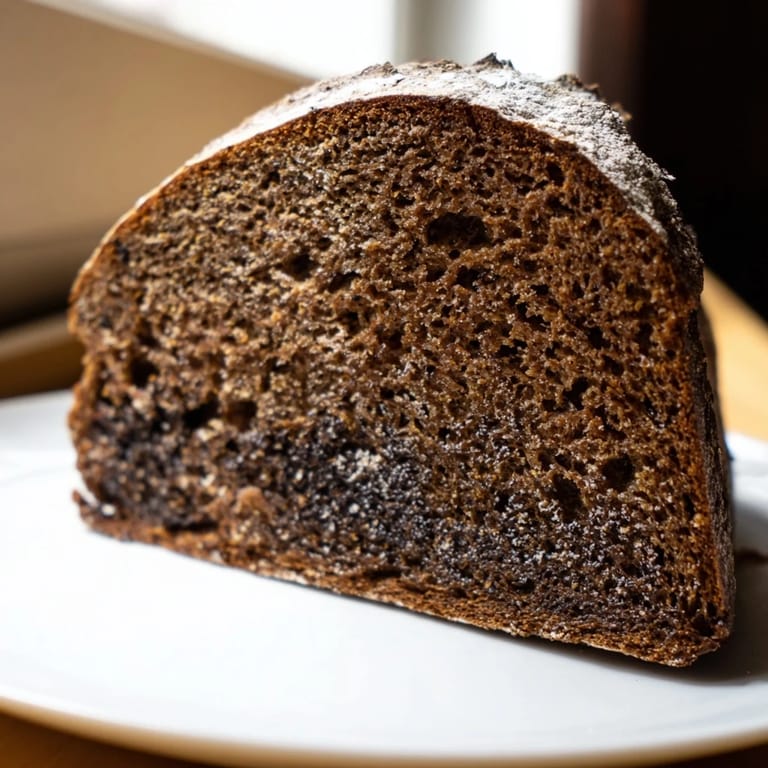
- Remove the loaf from the oven and let it cool completely on a wire rack before slicing, which can take 2 to 3 hours but allows the crumb to set properly. Slicing a warm loaf will compress the structure and make it gummy; I know it's hard to wait, but it's worth it.
 Save
Save The first time I served this bread to my partner, he tore into a warm slice with butter still melting on it, closed his eyes, and asked where I'd learned to make something this good. I hadn't—I'd learned from a grandmother I'd never met, whose recipe lived in a friend's kitchen and whose memory lived in every bite. That's when I realized this bread was never just about flour and yeast; it was about connection across time and place.
The Magic of Long Fermentation
The overnight rise is where rupjmaize develops its character. During those 12 to 16 hours, the yeast slowly consumes the sugars and the bacteria begin to create organic acids that give the bread its signature tang and depth. You'll notice the dough nearly doubling, becoming elastic and alive under the plastic wrap. This slow process is why you can't replicate this bread with a quick rise; speed destroys the chemistry that makes this loaf worth making.
Caraway: The Secret Nobody Talks About
Caraway seeds divide people sharply, but in rupjmaize, they're essential—they add an anise-like warmth that doesn't taste licorice-forward but rather herbaceous and slightly spiced. If you toast them gently in a dry pan for a minute or two before adding them to the dough, their oils release and distribute more evenly throughout the loaf. The difference between toasted and untoasted caraway is the difference between a good loaf and one that tastes like someone whispered the flavor into the bread.
Beyond the First Slice
This bread is best enjoyed sliced thick and toasted, especially on day two or three when the crumb has tightened and the flavors have melded even further. Serve it with salted butter, smoked fish, or alongside hearty stews where it can soak up the broth. It also freezes beautifully; slice it before freezing so you can pull out individual pieces to toast whenever you want a moment of that warm, earthy comfort.
- For a nuttier dimension, lightly toast the caraway seeds in a dry pan before mixing them into the dough.
- Store the cooled loaf wrapped in cloth or paper rather than plastic, which traps steam and softens the crust you worked hard to develop.
- If you want a slightly sweeter loaf, increase the molasses or honey by half a tablespoon, but don't go beyond that or the bread loses its savory soul.
 Save
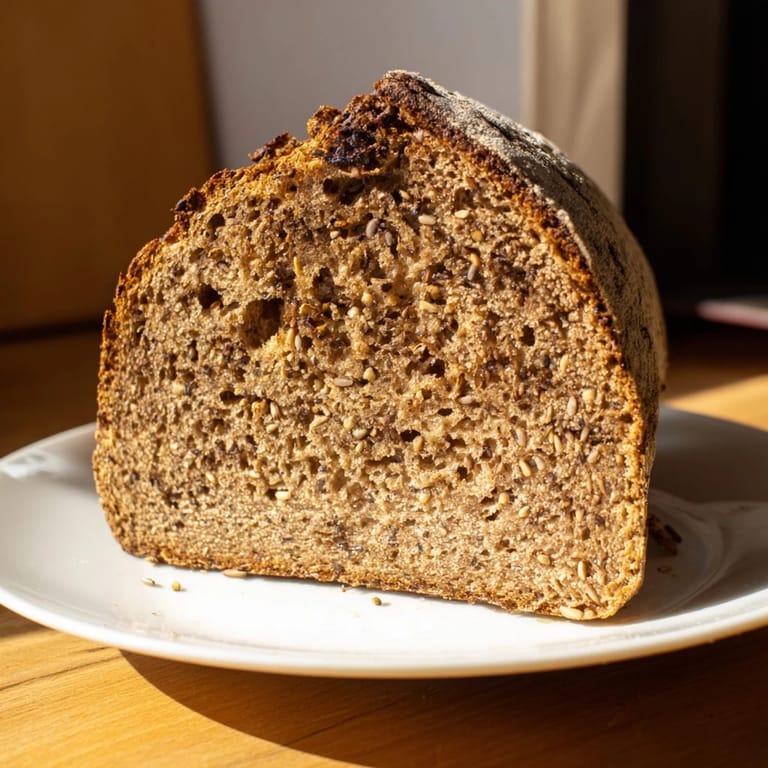
Save Rupjmaize isn't a bread you make for showiness—it's one you make because it connects you to something older and more honest than trends or Instagram-worthy plating. Once you've tasted it warm from your own oven, slathered with butter and maybe a thin slice of smoked fish, you'll understand why people protect this recipe like a secret.
Recipe Questions
- → What type of flour is used?
Dark rye flour combined with bread flour forms the base, giving a dense texture and rich flavor.
- → Why soak the yeast mixture before mixing?
Allowing yeast to foam ensures proper activation for a successful rise and light crumb.
- → Can caraway seeds be toasted?
Yes, lightly toasting caraway seeds enhances their nuttiness before adding to the dough.
- → How long should the dough rise?
The dough requires 12–16 hours for the first rise and an additional 45–60 minutes after shaping for optimal texture.
- → What is the best way to check if baked thoroughly?
The loaf should sound hollow when tapped on the bottom, indicating a well-baked interior.
- → Can this bread be frozen?
Yes, slice before freezing to allow easy toasting directly from frozen.