 Save
Save I'll never forget the moment I first assembled a masquerade mask platter at a New Year's Eve gathering three years ago. A friend had challenged me to create something so visually stunning that guests would gasp when they walked into the room. I spent an afternoon arranging colorful vegetables, cheeses, and fruits into an elegant mask shape on a wooden board, and when the first guests arrived, their faces lit up exactly as I'd hoped. That night, I realized that food could be pure art, and this platter became my signature celebration dish ever since.
The best part came at midnight when someone approached the platter, paused to admire it before taking a bite, and said it was almost too beautiful to eat. Almost. Within an hour, that stunning mask was completely devoured, which told me everything I needed to know about combining beauty with genuine, delicious simplicity.
Ingredients
- Large green or black olives (2): These become the mesmerizing eyes of your mask, and their dark color creates instant visual focus. Make sure they're pitted so guests can enjoy them without surprise.
- Cucumber slices (1 cup): Their cool crunch and pale green color form the perfect backdrop. Slice them thin for elegance and to make fanning easier.
- Colorful bell pepper strips (1 cup): Red, yellow, and orange peppers create those jewel-toned rays that make the mask truly shine. The variety matters more than the quantity here.
- Cherry tomatoes (½ cup, halved): These add bright pops of red and their natural sweetness balances savory elements beautifully.
- Red radish slices (½ cup): Their peppery bite and pink-white striped beauty add sophistication and contrast.
- Baby carrots (½ cup, halved lengthwise): These stay crisp longer than most vegetables and their golden color adds warmth to the overall design.
- Seedless grapes (½ cup): Choose red for drama or green for subtlety. They roll slightly, so position them thoughtfully.
- Assorted cheeses, cubed (1 cup): Mix cheddar, gouda, and Swiss for flavor variety and visual texture. These nestle beautifully between vegetables and add richness.
- Mini mozzarella balls (½ cup): Their round shape and creamy white color create elegant spacing and they're delightful to eat right off the board.
- Nuts, mixed (½ cup): Walnuts, almonds, or pistachios add crunch and earthiness. Toast them lightly first if you want deeper flavor.
- Dried fruits (¼ cup): Apricots, cranberries, or figs provide chewy sweetness and jewel-like pops of color throughout.
- Crackers or breadsticks (½ cup, optional): These become the mask's decorative flourishes at the bottom edge and give guests something to scoop with.
- Fresh herbs and edible flowers: Parsley and basil add green freshness, while edible flowers like pansies or nasturtiums turn this from party food into gallery-worthy art.
Tired of Takeout? 🥡
Get 10 meals you can make faster than delivery arrives. Seriously.
One email. No spam. Unsubscribe anytime.
Instructions
- Choose your canvas:
- Select a large oval or rectangular serving board—this is your foundation. The size matters because you want enough room for a dramatic display without everything feeling cramped together.
- Create the mask's gaze:
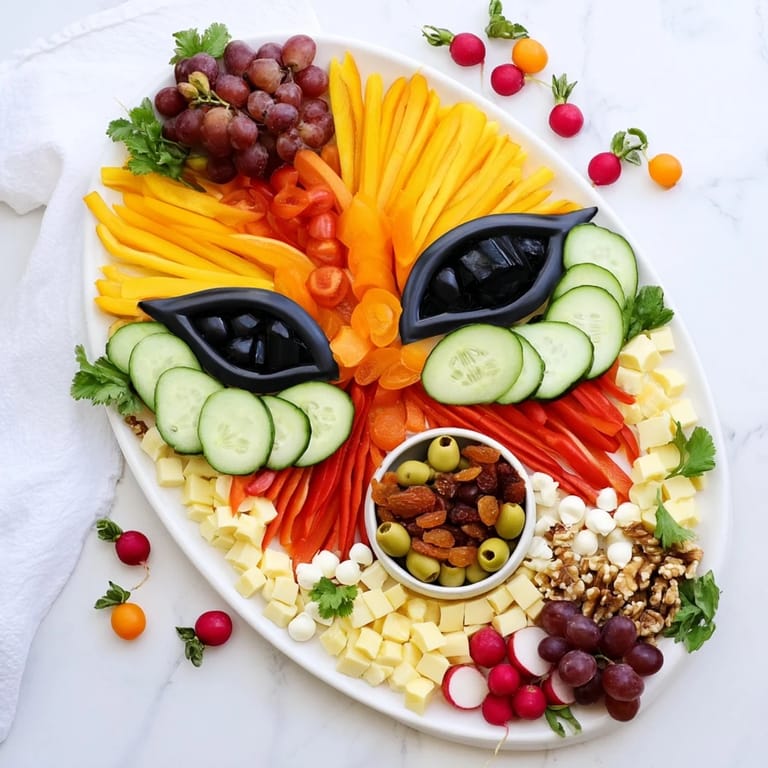
- Place your two olives or cheese cubes near the center top of the board, spacing them about three to four inches apart. These are the eyes of your mask, so position them with intention. They should feel like they're looking out at your guests with mystery and elegance.
- Fan out the feathers:
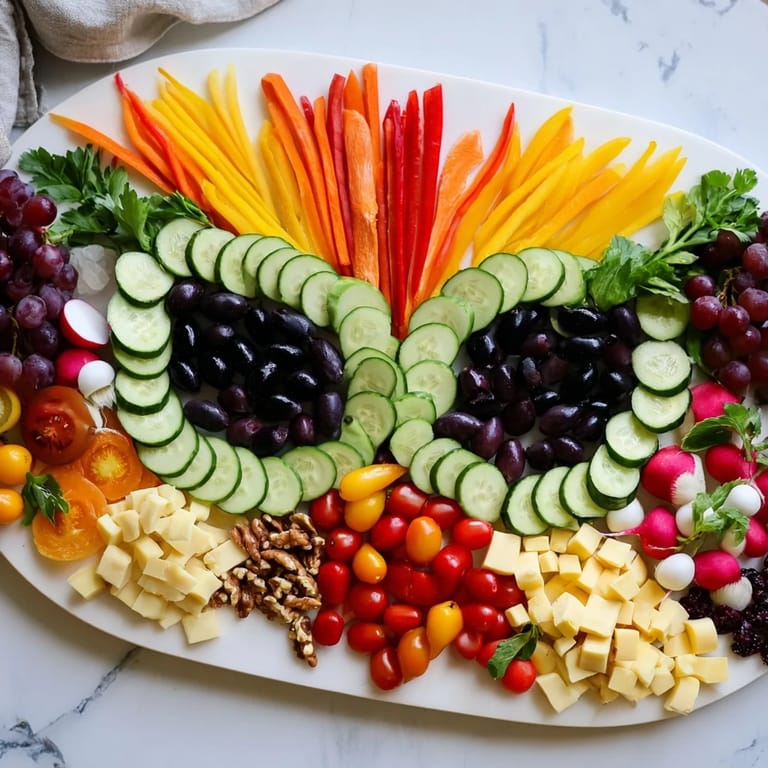
- Starting above and around those eye openings, begin fanning your vegetable slices and bell pepper strips in wide, symmetrical arcs. Think of a peacock's tail or the ornate feathers on an actual masquerade mask. Work from the center outward, layering as you go. The visual rhythm is everything here.
- Tuck in the treasures:
- Nestle your cheese cubes and mozzarella balls among the vegetables and fruits. Don't be shy—these create texture and break up the vegetable uniformity beautifully. Think of them as jewels studding the mask.
- Fill the gaps with personality:
- Scatter nuts and dried fruits throughout. These bits add both visual interest and flavor complexity. A handful of pistachios here, some golden apricots there—let your intuition guide you.
- Add the finishing frame:
- If using crackers or breadsticks, arrange them along the lower edge or sides of the board. They become the mask's decorative frame and give guests something to use as vessels for the other ingredients.
- Crown it with elegance:
- Garnish with fresh herbs tucked throughout and edible flowers scattered across the design. Step back, take a moment to admire your work, and breathe in the beauty of what you've created.
- Serve with ceremony:
- Present it immediately while everything is crisp and vibrant. Watch your guests' faces as they discover it's as delicious as it is beautiful.
 Save
Save There's a quiet magic in watching people gather around food that's been arranged with care. At that New Year's Eve party, it wasn't just about eating—it became a moment where everyone paused, appreciated beauty, and then connected over something made with joy. That's when I understood that the best recipes aren't always about complexity; sometimes they're about creating an experience.
Making It Your Own
The masquerade mask thrives on personalization. Some nights I lean into autumn and use figs, pecans, and golden vegetables. Other times, I embrace spring and load it with fresh herbs, pale green grapes, and delicate edible flowers. You're not just following a recipe—you're creating a seasonal portrait that reflects what's beautiful in your kitchen right now. This flexibility is exactly why I keep coming back to it.
Dips and Accompaniments
While the platter stands beautifully on its own, the right dips elevate the entire experience. I typically set out two or three options on small bowls positioned near the board. Creamy hummus brings earthiness, herbed cream cheese adds richness, and a bright lemon aioli cuts through the heavier elements. The best part is that guests discover their own favorite combinations as they graze, making every bite a small adventure.
Feeding Dietary Preferences
What I love most about this platter is how naturally it accommodates different needs. Vegetarians celebrate it as-is, while for vegan guests, I simply swap the cheeses for marinated tofu cubes and ensure the crackers are dairy-free. Those who want protein can top it with shrimp or smoked salmon tucked throughout. The mask remains stunning regardless, and everyone feels included at the celebration. That's the real magic of a board like this—it welcomes everyone to the table.
- Prepare ingredient categories in small bowls beforehand so you can arrange quickly and keep everything organized
- Choose items that won't brown or wilt quickly; avoid apples (they oxidize) or avocados (they bruise easily)
- Remember that odd numbers and asymmetrical arrangements often feel more natural and elegant than perfect symmetry
 Save
Save Every time I make this platter, I'm transported back to that first New Year's Eve when someone said it was too beautiful to eat—and then it vanished in an hour. That's the moment I realized the secret: when you create food that's both gorgeous and genuinely delicious, people don't just eat it, they celebrate it.
Recipe Questions
- → What ingredients create the mask's eye openings?
Two large olives or small cheese cubes are used to form the elegant eye shapes near the center of the platter.
- → Can this platter be adapted for vegan diets?
Yes, omit cheeses and replace them with marinated tofu cubes for a vegan-friendly version.
- → How can I add more texture to the arrangement?
Incorporate nuts like walnuts or almonds, dried fruits, and optional crackers or breadsticks to add crunch and variety.
- → What vegetables are best for vibrant colors?
Use colorful bell pepper strips, cucumber slices, cherry tomatoes, radishes, baby carrots, and seedless grapes for a dynamic display.
- → Is cooking required for this dish?
No cooking is needed; this platter is assembled fresh and served immediately for optimal freshness.
- → How can I enhance presentation for festive events?
Garnish with fresh herbs like parsley and basil, alongside edible flowers, to add color and a celebratory touch.